Entrepreneurship: detailed planning assumptions
Our iDEC translation roadmap asks how a research idea could become useful beyond an initial demonstration. It brings together stakeholder exploration, proposed applications, market analysis, development risks and community resources. The planning record below provides the detailed assumptions and context behind that roadmap.
Stakeholder dialogue and iDEC reflections · Business planning resources
An iDEC lens on translation
An improved biological function becomes useful only when its advantage survives the conditions that matter to users. We organise future translation around four questions:
| Question | Evidence to seek | Connection to stakeholder dialogue |
|---|---|---|
| What is being improved? | An explicit property, baseline and measurement | Explain the claimed benefit in terms a partner can question |
| Under which conditions does it hold? | Comparisons across relevant operating conditions | Identify constraints such as equipment access and workflow complexity |
| What is traded off? | Stability, resource use and other properties alongside the main score | Consider burdens that a single performance metric may conceal |
| What would make the improvement useful? | Reproducibility, practical implementation and user feedback | Connect research priorities to access, communication and responsible development |
This is our proposed decision framework for iDEC. It guides future evaluation and does not imply that the planning assumptions below have been experimentally demonstrated.
Exploration and Interviews
1. Why This Topic?
Drawing on our clinical research and practical experience, we recognize that gut infectious diseases have become a major global public-health threat. China and Japan each report more than 100 million cases of intestinal infection every year, with children under five and adults over 65 at highest risk.
Examining how these infections are routinely diagnosed and treated, we found that clinical practice still relies primarily on antibiotics, supported by stool culture and PCR. Overuse of antibiotics not only disrupts the gut microbiota but also fuels antimicrobial resistance. Today, more than 50% of Escherichia coli isolates from clinical specimens are resistant to fluoroquinolones. Conventional diagnostics also carry inherent limitations: long turnaround times, dependence on expensive instruments, and an inability to detect infection before symptoms appear. Because primary-care facilities generally lack specialized testing capability, the rate of blind antibiotic use is as high as 51% — harming patient outcomes and aggravating the public-health burden.
In our team discussions, rapid advances in synthetic biology pointed to a new solution. Quorum sensing (QS) is the key regulatory mechanism by which pathogens transition “from colonization to pathogenesis”: bacteria secrete signaling molecules before they express virulence factors or build biofilms. Therapies that target the QS system therefore impose no selective pressure on survival and do not drive resistance — and they allow intervention at the earliest possible stage. This is the rationale behind GutSentry: a theranostic engineered probiotic built on a coupled quorum-sensing recognition system.
Reviewing the landscape of existing engineered-probiotic research, we found that most current designs respond to QS signals from either Gram-positive or Gram-negative bacteria only, and very few integrate a diagnostic reporter with expression of a therapeutic effector in a single base strain. Rather than building separate engineered strains for detection and treatment, our team chose to construct a chimeric transmembrane protein that breaks this limitation, enabling a single probiotic strain to sense signals, report output, and activate therapy simultaneously.
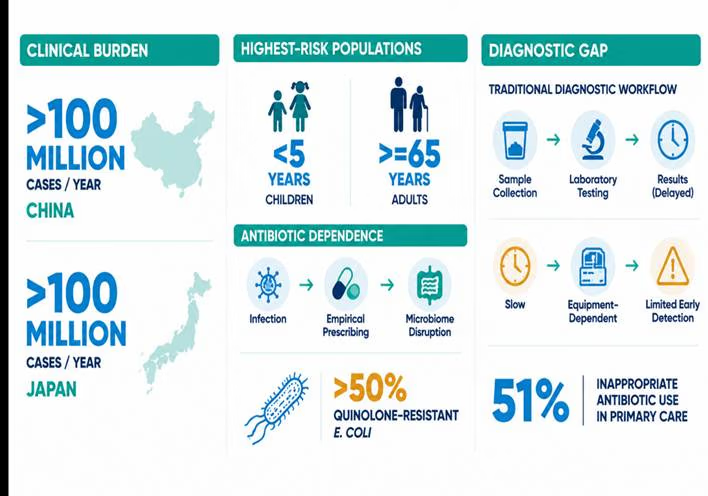
Figure 1 . The clinical burden of intestinal infections and the diagnostic gap: why GutSentry.
2. Our Exploration Journey: How the Topic Was Decided
The topic was not chosen in one step; it emerged from a series of systematic explorations, with each stage producing evidence that narrowed the direction.
Starting from first principles, we systematically studied the business plans of previous award-winning teams and multiple in-depth industry reports, building a foundation in commercial logic, market dynamics, and what makes ventures succeed. We then progressed through team workshops, innovation forums and competitions, field research, and stakeholder interviews, finally closing the loop with interview feedback through design iteration. The timeline below and the “key moments” that follow record this convergence.
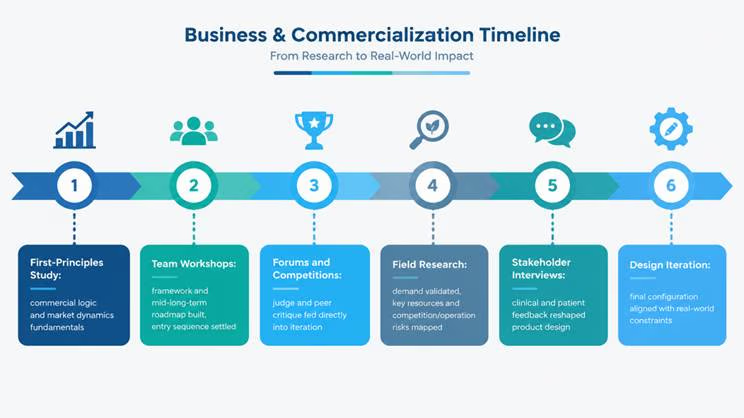
Figure 2. Our exploration journey: from first principles to design iteration.
Key moment 1 · Team debate: hospital version or primary-care version first?
Early in the design process, the team split into two camps: one favored prioritizing a clinical product for hospitals; the other argued for pushing the primary-care scenario first. Subsequent interviews with frontline physicians provided the decisive evidence — primary-care doctors told us plainly that they “can’t afford the instruments and can’t wait two days for stool culture; they need a result readable by eye within half a day” — which directly supported entering the market with the primary-care version first. Only after multiple rounds of deliberation and evidence collection did we finalize the market-entry sequence in the business plan: it was not laboratory preference that shaped the product, but the real constraints of the target setting.

Figure 3 . Team workshop: building the commercial framework.
Key moment 2 · Competitions and judge feedback: how the plan was iterated under criticism
As the commercial framework took shape, the team was invited to multiple innovation forums and startup competitions. These were not just showcases but stress tests: judges and peer teams raised extensive, targeted feedback on our commercial logic, differentiation, and presentation of evidence, and that feedback fed directly into the next round of iteration of the plan and core strategy. We gradually learned that a proposal is worth continuing to invest in only if it withstands external scrutiny.

Figure 4. Presenting at the inaugural Grand APiC.
Key moment 3 · Field research: does our assumed demand actually exist?
We went to the front line to test the assumption that “real market demand exists”, and engaged in in-depth exchanges with several outstanding startup teams. These conversations gave us a far more concrete understanding than desk research of which business models fit this industry, what key resources the project needs, and which competitive and operational risks lie ahead — and they validated the executability of our plan, moving us from “we believe there is demand” to “we have seen real demand and real obstacles”.
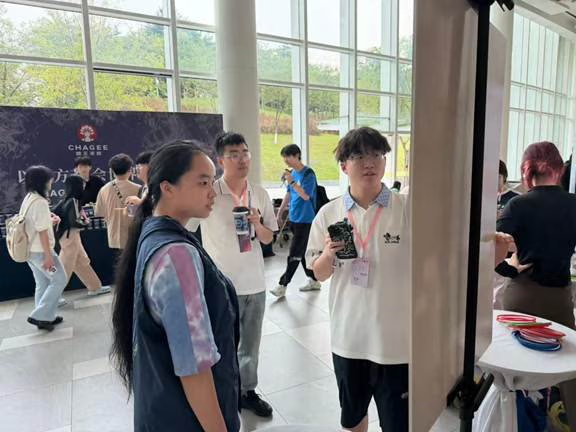
Figure 5 . Exchanging with the entrepreneurship community during field research.
Key Moment 4 · Industry Engagement: From Scientific Innovation to a Market-Ready Product
As GutSentry evolved from a scientific concept toward a potential healthcare venture, we recognised that eventual commercialisation would require more than clinical validation. We therefore expanded our exploration beyond hospitals and laboratories by engaging with representatives from Jinghong Health Products Ltd., Shanghai AWON Dental Technology Co., Ltd., and AWON (Shandong) Medical Technology Co., Ltd. Our goal was to explore a broader entrepreneurial question: How can a scientifically promising innovation become a credible and market-ready healthcare product?
Our discussion with Mr. Liu Jinghong, Founder and General Manager of Jinghong Health Products Ltd., helped us reconsider what constitutes a complete product. Mr. Liu emphasized that successful product development requires more than technology alone; formulation, product presentation, market communication, corporate identity, and collaboration across different teams must work together. He also highlighted the importance of rigorous product communication and intellectual property protection. These insights encouraged us to view GutSentry not simply as an experimental prototype, but as a future product requiring both scientific credibility and a coherent commercialization strategy.
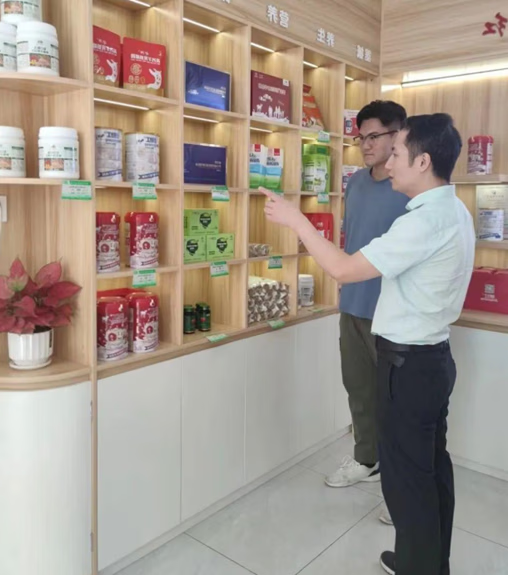
Figure 6. Industry interview with Mr. Liu Jinghong, discussing product development, intellectual property, and commercialization.
We further communicated with Shanghai AWON Dental Technology Co., Ltd. and AWON (Shandong) Medical Technology Co., Ltd. Through online discussions and introductions to their facilities and operations, we explored how medical products move beyond initial design toward organized production and real-world delivery. The exchange drew our attention to the importance of considering production processes, operational coordination, product consistency, and quality management alongside technological development.
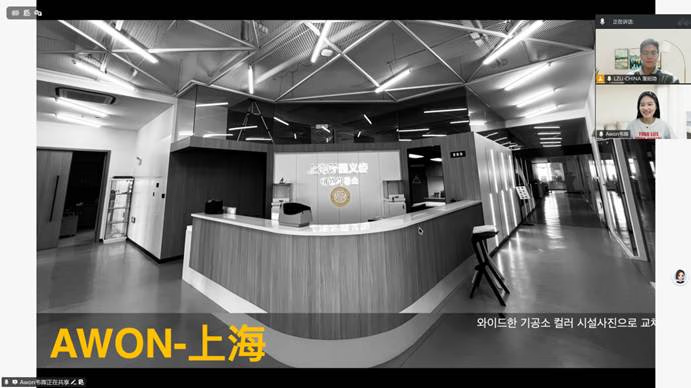
Figure 7. Online industry exchange with Shanghai AWON Dental Technology Co., Ltd., exploring medical-product operations and commercialization.
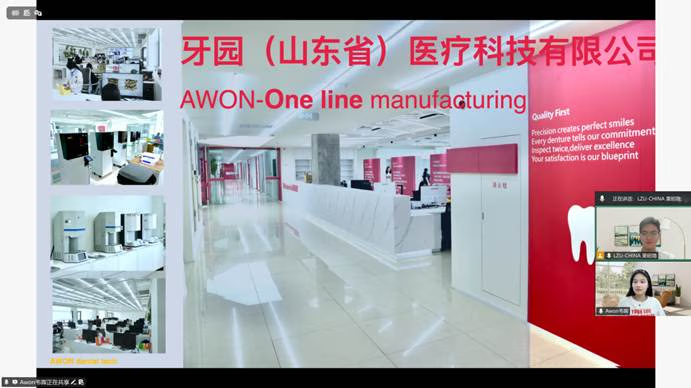
Figure 8. Industry exchange with AWON (Shandong) Medical Technology Co., Ltd., exploring medical-product manufacturing and production operations.
Together, these conversations broadened our understanding of commercialization. Rather than viewing R&D, product design, manufacturing, intellectual property, and market communication as separate stages, we began to consider them as interconnected elements that should develop alongside the technology.
Table1.From Industry Insight to Business Decision
| Industry Partner | Key Insight | Impact on GutSentry |
| Jinghong Health Products Ltd. | A successful product requires more than technology alone | Strengthened our focus on productization, IP protection, and evidence-based communication |
| Shanghai AWON Dental Technology Co., Ltd. | Product development must consider the realities of organized production and operations | Introduced manufacturability and operational feasibility into our development planning |
| AWON (Shandong) Medical Technology Co., Ltd. | Medical-product development requires attention to production consistency and quality management | Increased our focus on future quality control and scalable production |
Based on these industry insights, we expanded GutSentry's development roadmap beyond technical validation. We incorporated productization, intellectual property, evidence-based communication, manufacturability, and quality management into our business planning at an earlier stage. Industry engagement therefore shifted our thinking from a single question—
“Can GutSentry work?”
—to a broader entrepreneurial challenge:
“Can GutSentry become a reliable, manufacturable, and market-ready healthcare product?”
3. Voices from the Front Line
To go beyond desk research, we designed and carried out a series of targeted interviews spanning different parts of healthcare. The quotes below are taken from our interview notes; interviewee identities are anonymized, and exact dates are to be confirmed against our notes.
“Primary-care facilities can’t afford the instruments, and they can’t wait two days for stool culture; they need a result readable by eye within half a day.”
— Gastroenterologist at a tertiary hospital (2025 Q3). This directly led us to abandon the early “fluorescence-only” approach and redesign the primary-care version as a nitrocefin-based colorimetric card, readable by eye within 12 hours.
“Any intervention should not further disrupt an already imbalanced microbiome.”
— Gut-microbiome specialist (2025 Q3). This led us to replace the previously considered antimicrobial-peptide effector with angiogenin (ANG) — a multi-target agent that inhibits virulence without imposing bactericidal pressure.
“I don’t want to take another pill that upsets my stomach.”
— Representative target patient (2025 Q3). This drove the switch from a liquid suspension to an enteric-coated lyophilized capsule, together with a single-use stool sampler to reduce handling discomfort.
This patient feedback came from one representative respondent (n=1) and counts as a directional early signal; it cannot represent the attitudes of all high-risk patient groups. We plan to run larger-scale user interviews and surveys to validate acceptability across ages, geographies, and disease severities.

Figure 9 .Hospital site visit.

Figure 10 . Discussing with practicing physicians.
4. Alternatives We Considered and Rejected
Choosing a topic means eliminating alternatives, not just picking a “favorite”. The table below summarizes the main options we weighed and the evidence behind each decision.
Table 2 — Alternative approaches considered and rejected.
| Alternative | Why we considered it | Why we rejected or kept it |
| Fluorescence-quantitative readout | Sensitive and quantitative | Rejected for the primary-care version: primary-care facilities cannot afford the instruments or wait two days for results; they need a readout visible by eye within half a day (gastroenterologist interview) |
| Antimicrobial-peptide effector (bactericidal) | Potent, narrow-spectrum killing | Replaced by ANG: any intervention should not further disrupt an already imbalanced microbiome; ANG inhibits virulence without imposing bactericidal pressure (gut-microbiome physician interview) |
| Liquid-suspension formulation | Simple manufacturing | Replaced by an enteric-coated lyophilized capsule plus a single-use stool sampler to reduce handling discomfort (target-patient interview) |
| Hospital-only entry | High willingness to pay in hospital settings | Market-entry sequence re-decided after multiple rounds of deliberation and evidence collection; the business plan prioritizes the primary-care colorimetric readout (team deliberation + field interviews; provisional sequence pending alignment with the final plan) |
None of these rejections was a matter of theoretical preference; each was a decision based on interview evidence. We would rather give up a solution that “looks better” and choose one that the front line can truly afford and actually use.
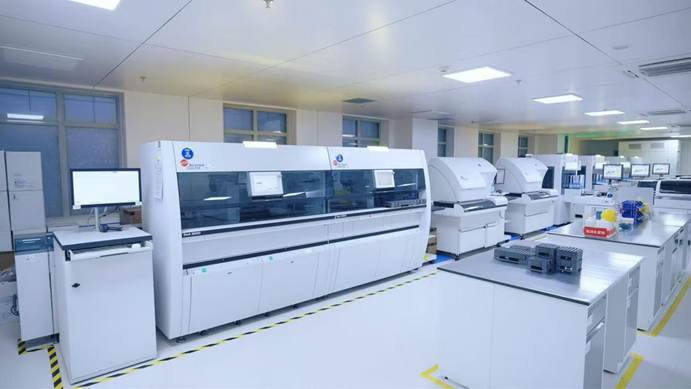
Figure 11. Clinical laboratory of a tertiary hospital: large automated analyzers (e.g., Beckman Coulter DxI 5000), illustrating the instrument dependence of conventional diagnostics.
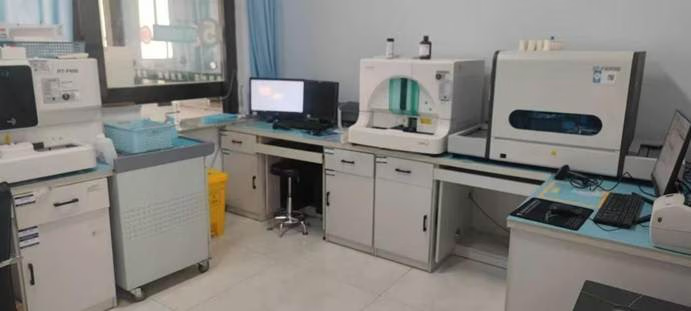
Figure 12 . Laboratory of a primary-care facility: only small routine instruments and no pathogen-identification capability, supporting our finding that primary care lacks specialized testing, where blind antibiotic use reaches 51%.
5. From Insight to Design: Our Feedback Loop
A hallmark of this project is that key design decisions were not made in isolation but refined through systematic stakeholder engagement. Each loop — from clinical insight to design change and back to re-validation — ensures the final product configuration is aligned with real-world constraints rather than laboratory ideals.
Table 3 — Design decisions refined through the feedback loop.
| Design dimension | Before (initial design) | After (current design) | Driver |
| Diagnostic readout (primary-care version) | Fluorescence-only approach | Nitrocefin-based colorimetric card, readable by eye within 12 hours | Tertiary-hospital gastroenterologist (2025 Q3) |
| Therapeutic effector | Antimicrobial peptide (bactericidal pressure) | Angiogenin (ANG): multi-target, inhibits virulence without killing | Gut-microbiome physician (2025 Q3) |
| Formulation | Liquid suspension | Enteric-coated lyophilized capsule + single-use stool sampler | Target patient (2025 Q3) |
6. Whom We Still Need to Hear From
Our exploration is ongoing. The table below shows what we have covered so far and where the gaps remain — that is, the stakeholders we plan to approach next.
Table 4— Stakeholder coverage and remaining gaps.
| Stakeholder side | Covered | To cover | Priority questions |
| Problem side | Gastroenterologist (tertiary hospital); gut-microbiome specialist; one representative patient | ICU surgeons; infection-control staff; clinical microbiology laboratory; nurses; patients across ages, geographies, and disease severities | Is diagnostic delay the biggest pain point at the front line? How acceptable is a live-bacteria product in practice? |
| Solution side | Peer startup teams | Live biotherapeutic product (LBP) R&D experts; IVD engineers; manufacturing experts | Scalability; regulatory data requirements for this product class |
| Access side | — | Hospital administrators/procurement; regulatory (NMPA) experts; ethics review | Reimbursement pathway; regulatory pathway for engineered live biotherapeutics |
| Payer side | Early feedback from innovation-forum judges and investors | Formal investor interviews; hospital procurement | Willingness to pay; viability of the business model |
Appendix — Field Research and Interview Summary
The table below consolidates the field research and interviews described above into a checkable, traceable record that maps one-to-one onto the quotes in the main text; interviewee identities are anonymized.
Table 5— Field research and interview summary
| Time & format | Interviewee | Representative key questions | Key takeaway | Implication for the project |
| 2025 Q3 · in-person visit | Gastroenterologist at a tertiary hospital | Unmet clinical needs; required performance targets; how to validate real-world utility | “Primary-care facilities can’t afford the instruments, and they can’t wait two days for stool culture; they need a result readable by eye within half a day” → primary-care version switched to a nitrocefin colorimetric card | Confirm the validation plan around sensitivity and specificity targets, and design the clinical validation process accordingly |
| 2025 Q3 · in-person visit | Gut-microbiome specialist | Clinical value of gut probiotics; standard clinical-trial process, milestones, and data requirements | “Any intervention should not further disrupt an already imbalanced microbiome” → replace the antimicrobial-peptide effector with angiogenin (ANG) | Clarify the regulatory and trial pathway before finalizing the development timeline |
| 2025 Q3 · interview | Representative target patient | Product functionality, usage scenarios, administration, safety, expected effect | “I don’t want to take another pill that upsets my stomach” → formulation changed to an enteric-coated lyophilized capsule + single-use stool sampler | Confirm user acceptability; safety communication and ease of use are decisive at the purchase-decision point |
| Ongoing · entrepreneurship community exchanges | Peer startup teams | Fit of mainstream business models; key resources; competitive and operational risks | Business-model fit and key-resource needs confirmed; plan executability validated | Basis for market-entry model selection and the risk checklist |
| Ongoing · forums and competitions | Innovation-forum judges and reviewers | Commercial logic, differentiation, evidence presentation | Differentiation claim stress-tested in multiple public showcases and progressively converged | Drives continuous revision of the plan and core strategy |
Note: interviewee identities are anonymized (see Section 3); consent documentation remains to be verified against the interview notes. As the project advances, we will keep adding interviewees, including clinicians from more departments, CDC personnel, manufacturing experts, and more patient participants. Every new interview record will add its discussion topics and implications; when new feedback contradicts earlier entries, we will revise them.
1 Theme and Vision
Sense Early. Decide Precisely. Act Locally. Stop Safely.
Intestinal infection is not simply a problem of eliminating pathogens. It is a dynamic process in which pathogen proliferation, host inflammation, and disruption of the gut microbiota interact with one another. Yet conventional diagnosis and treatment often begin only after infection has become clinically apparent: stool culture may require days, molecular testing is costly and equipment-dependent, and empirical use of broad-spectrum antibiotics can further disturb the fragile intestinal microbiota and accelerate antimicrobial resistance. We believe that the gut should not be treated as a place where disease is discovered only after it has fully emerged; it can instead become a site where biological signals are sensed, interpreted, and acted upon in real time. This belief forms the core of our theme.
1.1 The Problem: What We See
Intestinal infection is a dual challenge in clinical care and public health. It burdens perioperative and hospitalized high-risk patients — where intestinal barrier dysfunction and secondary infection are key drivers of systemic inflammatory response syndrome (SIRS), sepsis, and even multiple organ dysfunction syndrome (MODS) — and it is especially prevalent in primary-care settings. In China alone, more than 100 million intestinal infections occur every year. We have mapped five entrenched problems across the current care pathway:
• Early diagnosis is difficult, and the window for intervention is missed. Stool culture, still the routine option, takes two to three days and cannot meet the demands of the "golden intervention window." PCR (qPCR/mNGS), though sensitive, relies on costly instruments, has a high technical threshold, and cannot dynamically reflect the actual transcriptional and metabolic activity of pathogens in the gut lumen. Both approaches can only detect the pathogen after it has multiplied substantially and symptoms have appeared. Quorum-sensing (QS) signal molecules, by contrast, are secreted within hours of colonization — 24 to 48 hours ahead of typical symptoms. No existing technology can diagnose from QS signals, so patients are treated late, and the risk of severe complications and death rises accordingly.
• Primary care is weak, and antibiotic overuse is severe. More than 80% of township health centres in China have no capacity to test for enteric pathogens. Primary-care physicians can only diagnose and treat from clinical experience, unable to distinguish bacterial from viral diarrhoea, and the resulting rate of blind antibiotic prescribing reaches 51% — far above the 30% benchmark recommended by the World Health Organization. Overuse disrupts the gut microbiota and has bred widespread resistance; some multidrug-resistant infections are now effectively untreatable.
• Diagnosis and treatment are decoupled, and care is inefficient. In the conventional model, testing and treatment are two separate transactions: the patient waits two to three days for a result before receiving a prescription, during which the condition may worsen. Empirical antibiotics act as a "double-edged sword" — killing pathogens while further damaging the indigenous commensal microbiota, inducing Clostridioides difficile superinfection and the rapid enrichment of extensively drug-resistant strains (such as CRE and VRE); relapse and chronic intestinal disease follow.
• Medical resources are unevenly distributed, and the cost to patients is heavy. China’s best medical resources sit in large cities and large hospitals. A patient with an intestinal infection often has to travel to a major hospital to obtain an accurate diagnosis, at an average cost of RMB 300–500 (≈USD 44–74) per visit, of which testing accounts for more than 40%. This is a real financial burden on patients and concentrates demand on hospitals that are already stretched.
• No theranostic product exists — a substantial gap in the market. Multiple academic laboratories have reported proof-of-concept prototypes for engineered-probiotic theranostics in published papers, but none have completed systematic pre-clinical verification, registration transformation, and formal commercial launch, so finished market-available products remain absent. The intestinal infection market lacks any product that integrates detection, treatment decision-making, and follow-up.
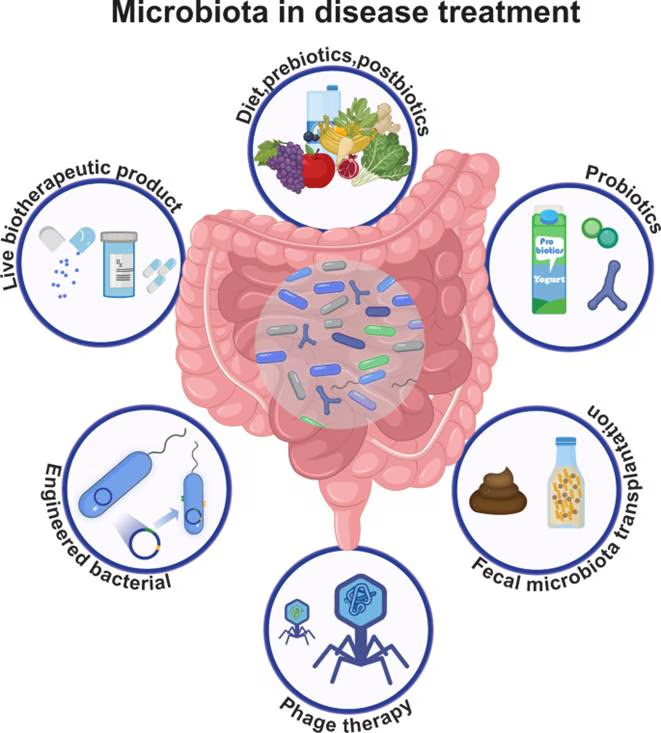
Figure 13 . The burden of intestinal infection across the care pathway.
1.2 The Deeper Contradiction: Why a Different Approach Is Needed
On the surface, the problems are "slow detection" and "widespread resistance." Look deeper, and the conventional paradigm is "infection first, diagnosis second, broad-spectrum killing third":
• Diagnosis late = window missed. By the time symptoms appear, the optimal window for intervention has usually closed.
• Broad-spectrum killing = indiscriminate attack plus selection pressure. Empirical broad-spectrum antibiotics, lacking precise targeting, both destroy the commensal microbiota and select for resistant strains — this is the root of the resistance spiral.
• Decoupled diagnosis and treatment = two workflows, two waits. The patient pays twice, in time and money, for a single "result."
Moreover, no single signal is sufficient to define an infection: normal physiological microbial activity can generate AI-2, and non-infectious tissue injury can also release inflammatory signals. Reliable early recognition therefore cannot depend on "detecting one molecule"; it must interpret a combination of biological conditions. This is where we intervene: sensing the pathogen’s intention to move "from colonization to pathogenesis" before it expresses virulence or builds a biofilm.
1.3 Our Theme
The guiding idea of this project is: early warning, precise diagnosis and treatment, defending the line of gut health. We aim to break the conventional pattern in which intestinal infection is treated only after it declares itself, and in which testing and treatment are carried out as separate acts — redefining anti-infection from "broad-spectrum killing after onset" to "sensing before pathogenesis, precise intervention at the colonization stage." In four phrases:
Sense Early — identify infection risk before symptoms appear;
Decide Precisely — interpret multiple signals with a logic gate to reject false positives;
Act Locally — deliver diagnosis and intervention at the site of disease;
Stop Safely — undergo programmed self-elimination once outside the gut, preventing environmental spread.
What the Theme Means — through the Lens of Disease Mechanism
Enteric pathogens achieve quorum sensing by secreting and sensing small signalling molecules. Once cell density passes a threshold, they switch on virulence gene expression and biofilm formation in concert, then breach the intestinal barrier and establish infection. Conventional diagnostics engage only after this point, when the optimal window for intervention has usually closed. The core logic of this project is to target the quorum-sensing signal itself: to identify infection risk 24 to 48 hours before clinical symptoms appear and to trigger diagnosis and treatment in the same moment — detection becomes intervention.
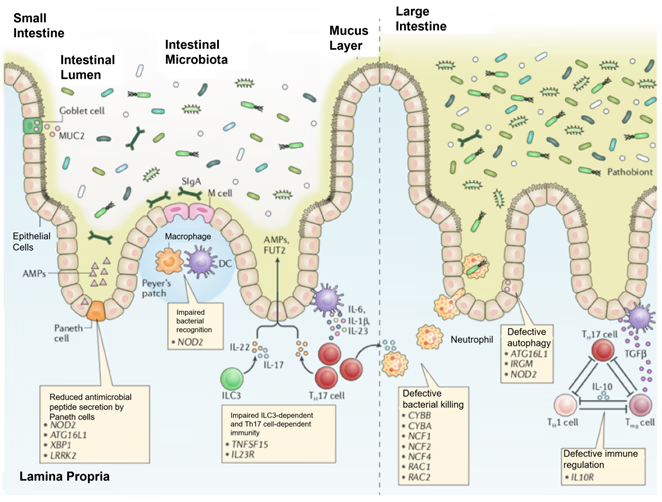
Figure 14. Host–microbiota interaction in intestinal disease.
It is worth clarifying that this advance-detection effect is conditional: the engineered probiotic can work only after target pathogens proliferate to a certain population threshold and secrete detectable QS signal molecules. When pathogens exist in extremely low quantities without releasing enough signalling molecules, our system cannot generate effective activation signals — just like other QS-based detection strategies.
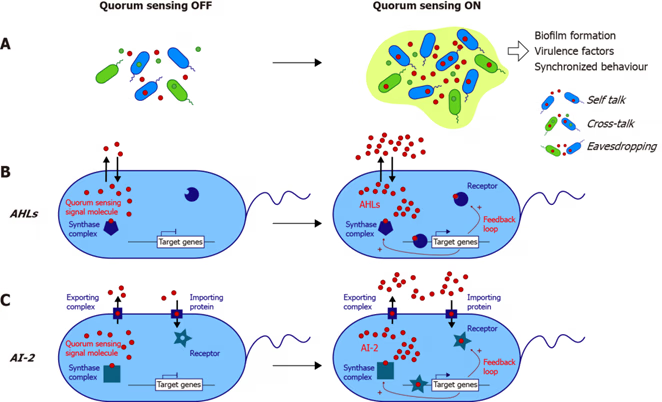
Figure 15. Bacterial quorum sensing and biofilm formation.
A Concrete Picture of the Theme in Practice
In a township health centre in Gansu, a patient presents with acute diarrhoea. The physician administers one GutSentry enteric-coated capsule orally — no mixing, no reconstitution. The capsule transits intact through the stomach and dissolves in the distal ileum, releasing the lyophilized engineered ECN-1917 strain (Escherichia coli Nissle 1917). Over the next 12–24 hours, these "living sentinels" colonize the intestinal mucosal layer and simultaneously sense the AI-2 quorum-sensing signals released by invading pathogens and the tetrathionate signals produced by mucosal inflammation; only when both conditions are met is the logic gate activated. The bacteria then express a LacZ reporter and locally secrete a narrow-spectrum antimicrobial peptide (e.g., Microcin J25). The following morning, the patient provides a small stool sample using the attached disposable sampler; without lysis or purification, a chromogenic substrate (X-gal or CPRG) is added directly to the sample, and a visible blue/magenta colour change indicates active infection, with intensity correlating with pathogen burden. The physician, without any instrumentation, can confirm the diagnosis and initiate supportive care or referral. At the end of each month, aggregated positive/negative counts are reported via SMS to the county CDC, enabling near-real-time surveillance. Crucially, the entire workflow — from ingestion to readout — requires no refrigeration, no electricity, and no specialized training, fitting seamlessly into existing primary-care routines.
1.4 Our Approach: Why Synthetic Biology, Why Us
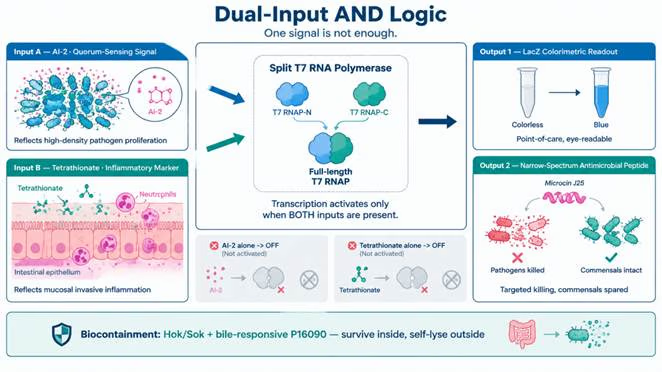
Figure 16. Dual-input AND logic: one signal is not enough.
This project reimagines the engineered probiotic not simply as a carrier of therapeutic molecules, but as a living sentinel within the gut — an integrated "five-in-one" intelligent live therapeutic system combining in-situ environmental sensing, dual-input logic computation, point-of-care colorimetric diagnosis, targeted in-situ antimicrobial action, and programmed ex-vivo self-limitation:
• Sensing: AI-2 quorum-sensing signals (reflecting high-density pathogen activity) and tetrathionate (reflecting mucosal invasive inflammation) serve as the dual inputs.
• Computation: a Boolean AND gate built on split T7 RNA polymerase activates transcription only when both conditions are satisfied simultaneously. The engineered bacterium does not merely detect a molecule; it interprets a combination of biological conditions before responding, avoiding the false-positive pitfalls of single biomarkers.
• Diagnosis: a LacZ colorimetric reporter module — a stool sample mixed with X-gal/CPRG chromogenic substrates yields an eye-readable readout, enabling point-of-care (POC) early screening.
• Treatment: a narrow-spectrum antimicrobial peptide module (e.g., Microcin J25) is continuously secreted into the local microenvironment, precisely eliminating pathogens without damaging the fragile commensal anaerobes, replacing broad-spectrum empirical antibiotics.
• Self-limitation: the Hok/Sok toxin–antitoxin system is deeply coupled with the intestinal bile-responsive promoter P16090, creating a "survive inside, self-lyse outside" biocontainment barrier that prevents environmental release of the recombinant construct.
A living therapeutic system must not only know when to act; it must also know when to stop. Biological containment is therefore designed as an integral part of this project rather than an afterthought: functional survival is supported within the intestinal environment, while loss of the intestinal signal triggers programmed self-elimination outside the host. Diagnosis and intervention become two outputs of the same sensing-and-response system rather than two disconnected steps.
1.5 Our Vision
1.5.1 Vision Statement
From Passive Diagnosis to Living, Precise and Responsible Care.
Our vision is a future in which intestinal infection is addressed before it progresses into a more severe clinical problem, with intervention guided by biological signals rather than by symptoms alone. Engineered living systems will function as an additional layer of intelligence within the gut: continuously exposed to the local microenvironment, capable of integrating multiple signals, and able to translate those signals into a timely and localized response. In this future:
• Biological signals replace delayed observation with earlier sensing;
• Logic gates transform complex biological information into more selective decisions;
• Localized responses reduce unnecessary systemic intervention;
• Theranostic functions connect diagnosis with action;
• Built-in containment makes biological safety part of the system architecture.
Engineered probiotics need not merely be microorganisms added to the body. They can become programmable biological systems that perceive, compute, respond, and ultimately deactivate according to defined rules. Ultimately, we hope to demonstrate that synthetic biology can move intestinal infection care from reactive treatment toward responsive intervention, from broad action toward precise action, and from engineered organisms that simply survive in the host toward engineered organisms whose behaviour is deliberately bounded in both space and time.
1.5.2 Long-Term Social Impact
• Reducing the incidence of intestinal infection and the risk of complications, and lightening the public health burden. With more than 100 million cases of intestinal infection a year in China, and with conventional care dogged by delayed testing, antibiotic overuse, rising resistance, and weak primary care, the pressure on both society and households is heavy. Built around the GutSentry theranostic engineered probiotic, this project delivers an integrated approach — in-situ sensing, dual-input discrimination, point-of-care diagnosis, in-situ antimicrobial action, and programmed self-limitation — that can measurably shorten the course of illness, reduce progression to severe disease, and cut hospital stays and repeat visits. With sustained adoption, we expect the incidence of severe outcomes from intestinal infection in the target population to fall by 15–20%, materially reducing outpatient and inpatient load and easing pressure on medical resources. (This 15–20% figure is a predictive estimate derived from published epidemiological literature and scenario simulation. Real-world performance will be affected by product penetration rate, user compliance, local disease spectrum, and other variables, and needs to be further verified by multicentre real-world studies after product launch.)
• Promoting rational antibiotic use and supporting the national effort against antimicrobial resistance. The rate of blind antibiotic prescribing for intestinal infection in Chinese primary care stands at 51%, far above the WHO standard. By targeting pathogens precisely with a narrow-spectrum antimicrobial peptide without damaging the commensal microbiota — in place of broad-spectrum empirical antibiotics — this project can directly reduce the misuse of broad-spectrum antibiotics and the resulting enrichment of resistance. As the product reaches the field, clinical anti-infective practice will move from "empirical prescribing" toward "precise intervention." We expect the rate of antibiotic misuse associated with intestinal infection to fall by more than 10 percentage points across covered areas within five years, providing front-line practice in support of the national action plan to contain antimicrobial resistance.
• Raising public understanding of gut health and spreading sound knowledge of infection and the microbiota. Both the public and primary-care institutions currently understand too little about intestinal infection, quorum sensing, and probiotic-based care; misconceptions such as "treatment over prevention" and "rely on antibiotics" are common. Through school programmes, community outreach, training for primary-care staff, and digital content, this project will convert knowledge of the gut microbiome, early recognition, and safe intervention into health literacy that people can actually act on. We aim to lift awareness of gut health among covered populations above 60% within five years, reducing the risk of infection at source.
• Serving the Healthy China 2030 strategy and closing the gap in primary-care public health defence. Intestinal infection is both highly prevalent at the primary-care level and a priority target of public health surveillance. Because this product needs no instrument, costs little, is simple to operate, and is stable at room temperature, it fits primary care and the home extremely well. It can push diagnostic capability down to where patients actually present and support tiered care, forming a closed loop from prevention through screening, diagnosis, and treatment to monitoring — serving the early detection, early handling, and early control of intestinal infectious disease.
1.5.3 Long-Term Industry Position
• Becoming the technology leader and a standard-setter in theranostics for intestinal infection. Built on the "five-in-one" intelligent live therapeutic architecture and the high discriminatory specificity of its dual-input AND logic gate, the project breaks through the conventional "testing apart from treatment" model, constituting a substantial technical moat. Over the long term we will keep improving the chassis strain, genetic parts, formulation process, and safety-control architecture, reinvesting more than 15% of annual revenue into R&D and building a patent pool across all core modules. Our goal is to become the reference project for synthetic biology applied to intestinal infection in China and to take part in writing the industry standards and clinical consensus documents covering engineered probiotics, rapid diagnostics, and microbiota-based intervention.
• Building the benchmark brand in precise intestinal infection care, recognized in both hospital and primary-care settings. The market today has no product that combines early diagnosis, precise therapy, and demonstrable safety. This project builds its competitive core on clinical data, authoritative validation, and primary-care accessibility, and offers a full scenario matrix: a perioperative clinical version, a primary-care version, a home self-test version, and a public health version. Multicentre trials, expert consensus, and real-world studies will continue to strengthen the evidence base, until the product becomes the first choice in hospital gastroenterology, paediatrics, and infectious disease departments and in primary-care institutions — moving the industry from "testing and treatment apart" to "diagnosis and treatment as one."
• Creating a collaborative "academia–industry–research–clinical–public health" platform that drives synthetic biology into medicine. The project will link universities, teaching hospitals, centres for disease control, manufacturers, and regulators, opening the whole chain from laboratory construction to clinical application and public health deployment. The platform will carry strain optimisation, clinical validation, primary-care demonstration, and policy research, offering a replicable, transferable model for Chinese synthetic-biology medical products and strengthening China’s voice in the global field of gut microbiota and anti-infective care.
1.5.4 Goals in Advancing Gut Health for All
• Near-term goal (years 1–3): consolidate the technical and clinical foundation. Complete verification of strain stability, safety, and function; complete pre-clinical studies and a pilot clinical trial; establish a standardized product prototype and manufacturing process; run pilot deployments at 3–5 tertiary hospitals and 20–30 primary-care institutions across Northwest China; build an expert consensus and academic promotion system; run small-scale outreach and public-good activities reaching more than 500,000 people; and establish preliminary evidence of efficacy and safety.
• Mid-term goal (years 4–8): national coverage and a mature system. Complete multicentre Phase III trials; obtain the required registration approvals and achieve GMP-scale manufacturing; cover secondary and higher-level hospitals in all 30 provinces together with priority primary-care networks; bring the home self-test version and the public health surveillance system to full operation; build a digital platform for gut health management and epidemic monitoring; establish a complete education and public-good system serving more than 10 million people a year; and become the mainstream protocol for standardized management of intestinal infection in primary care.
• Long-term goal (years 9–15): lead the industry and make it universal. Become a leading global brand in early warning and precise care for intestinal infection and take the product into international markets; build a national gut health service system spanning prevention, screening, diagnosis, treatment, rehabilitation, and monitoring; work towards the inclusion of gut health management in China’s basic public health service package; and keep using technical innovation to drive cost down and access up, until safe, precise, and affordable antibiotic-free care reaches every community and every household — the vision is realized: warning that comes early, diagnosis and treatment that work as one, care that reaches the grassroots, and health that everyone can share.
1.6 Beyond Our Project: The Ideas We Want to Leave Behind
For iDEC, this project also raises questions about how biological improvements become useful, reproducible and accessible:
• Science: to demonstrate that anti-infection can be earlier and more precise — sensing first, so that "killing" becomes narrow-spectrum, timely, and microbiome-sparing.
• Responsibility: biocontainment (Hok/Sok with bile-responsive control) ensures that the engineered bacteria "survive inside, self-lyse outside" — the bottom line of responsible design; replacing broad-spectrum misuse with narrow-spectrum precision is itself a responsible practice against resistance.
• Reflective: the product form is not a laboratory preference but is reshaped by front-line feedback — primary-care physicians who "cannot afford the instrument, cannot afford the wait," and patients who reject "the medicine that upsets the stomach," directly determined the readout format, the effector, and the dosage form.
• Society: equity of access in primary care — giving the institutions with the fewest resources the tools they need most.
• Education: helping the public understand "resistance" and "microbiota," and planting health literacy in communities.
Ultimately, our goal is not to make the gut simply more resistant to infection. It is to create a biological sentinel that can recognize the signs of danger, respond where the danger occurs, and know when its mission is complete —
Sense Early. Decide Precisely. Act Locally. Stop Safely.
2 Project Background
Intestinal infection is a dual challenge in clinical medicine and public health: in China alone, more than 100 million cases occur every year, and perioperative and hospitalized high-risk patients — together with primary-care facilities that lack diagnostic capacity — are the most vulnerable links in the chain. The conventional path of "disease first, diagnosis later, broad-spectrum eradication" repeatedly misses the optimal window for intervention. GutSentry aims to use a single engineered probiotic to sense infection risk before pathogenesis, decide precisely through biological logic, diagnose and intervene in situ within the intestinal lumen, and self-terminate upon leaving the gut — making detection itself the intervention.
2.1 The Clinical Problem: Intestinal Infection as a Hidden Threat in Vulnerable Patients
The gut is one of the largest micro-ecological environments in the human body and a major barrier against external pathogens. When the intestinal barrier is intact and the microbiota is stable, commensal bacteria suppress the colonization and expansion of opportunistic pathogens through nutritional competition, niche occupation and multiple antagonistic mechanisms. However, under severe infection, major surgery, shock, intestinal barrier injury, or prolonged exposure to broad-spectrum antimicrobials, the gut microbiota can be markedly perturbed: colonization resistance declines, pathogens and opportunistic bacteria gain room to expand, and they may breach the compromised mucosal barrier, triggering local infection or even systemic inflammatory responses (SIRS → sepsis → MODS). Children under 5 years and adults over 65 years are the highest-risk groups. The central question of infection management is therefore shifting from "how to kill pathogens" toward "how to identify the infection-associated state more accurately while minimizing disturbance to the normal microbiota"; the earlier infection is recognized, the wider the window for intervention.
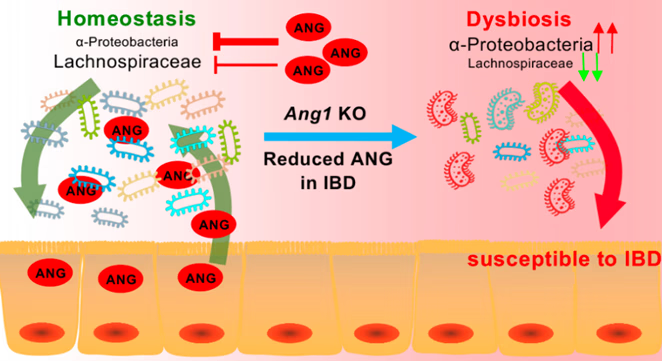
Figure 17. Intestinal homeostasis versus dysbiosis: ANG-mediated control of gut microbiota and susceptibility to inflammatory bowel disease, illustrating how loss of microbial balance predisposes to disease.
2.2 Why Current Care Falls Short: When Diagnosis Comes Too Late (The Detection Gap)
Conventional care follows a waiting chain — symptoms appear → sample collection → laboratory testing → pathogen identification → treatment selection — constrained by three realities: stool culture takes 2–3 days and misses the critical window; PCR/qPCR is sensitive but depends on dedicated instruments, reagents and laboratory conditions; and more than 80% of township health centres in China lack the capacity to test for intestinal pathogens. More fundamentally, diagnostics must answer a question about the point of use: where will patients use it? Who operates it? Does it require specialized equipment? Conventional tests answer "is this pathogen present in the sample?", whereas infection management really needs to know "is the pathogen reaching a clinically significant state of activity?" — these are not the same. If we can directly recognize biological changes as they occur, the detection window can be moved forward from "after the disease manifests" to an earlier stage.
Table 6. Comparison of the conventional care pathway and the GutSentry concept.
| Dimension | Conventional care | GutSentry concept |
| Onset of action | After clinical symptoms appear | Before pathogenesis (biological signals emerge) |
| Target of detection | Pathogen in a sample | Infection-associated state in situ |
| Detection modality | Stool culture / PCR (external laboratory) | In situ sensing by engineered bacteria |
| Intervention | Broad-spectrum antibiotics | Localized narrow-spectrum response |
| Detection window | Post-symptom, delayed | Pre-symptom, early |
2.3 The Biological Cost of Broad-Spectrum Treatment (The Treatment Gap)
Broad-spectrum antimicrobials rapidly reduce bacterial counts and are clinically valuable when the pathogen is unidentified or the patient is deteriorating quickly; but broad-spectrum action also perturbs the normal microbiota, weakening niche competition and colonization resistance and creating conditions for Clostridioides difficile superinfection and the enrichment of extensively resistant strains (CRE, VRE). In primary care, the rate of blind antibiotic prescribing reaches 51% (WHO recommends a 30% benchmark), and more than 50% of Escherichia coli isolates from clinical specimens are already resistant to fluoroquinolones. Treatment strategies must therefore answer not only "how to kill pathogens as effectively as possible" but also "how to control pathogens while minimizing impact on the normal microbiota?" Phage therapy, antimicrobial peptides, quorum-sensing interventions and engineered probiotics are pushing antibacterial practice from broad-spectrum killing toward precise, localized intervention.
2.4 The Gut as a Source of Biological Signals
Signal 1 — AI-2 (quorum-sensing signal).Signal 2 — tetrathionate (inflammation-linked signal).ion state directly in the gut, we need biological signals that reflect the infectious process — and disease itself changes the chemical landscape of the intestine.
AI-2 is a signal molecule of quorum-sensing systems in many bacteria, linked to population density and population-level behavior. When pathogens proliferate to high density, intestinal AI-2 rises and can serve as an input reflecting high-density microbial activity / pathogen proliferation; our chassis Escherichia coli Nissle 1917 (EcN) natively carries AI-2 sensing components (LsrACDB / LsrK / LsrR). Yet AI-2 is not an infection-specific switch — the normal gut microbiota also produces AI-2. AI-2 ≠ infection-specific.
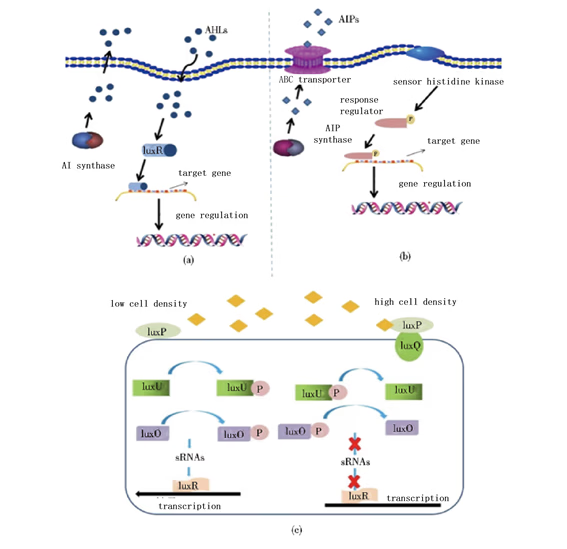
Figure 18. General mechanisms of bacterial quorum sensing: (a) AHL-mediated; (b) AIP-mediated; (c) cell-density-dependent AI-2 signalling via the LuxPQ–LuxU/O–sRNAs pathway. GutSentry detects AI-2 through the endogenous LsrACDB/LsrR system of EcN.
In an inflamed intestinal environment, host-derived ROS/RNS oxidize thiosulfate to tetrathionate, which reflects mucosal inflammatory status and can also serve as a respiratory electron acceptor for some enteric pathogens in inflamed tissue — providing an information dimension distinct from AI-2. Yet tetrathionate is not an absolutely specific infection marker either; non-infectious tissue injury or sterile inflammation can also produce it. Tetrathionate alone ≠ infection-specific.
2.5 One Signal Is Not Enough: Why Dual-Input AND Logic
The two signals provide different dimensions of information: AI-2 reflects microbial population activity and pathogen high-density proliferation; tetrathionate reflects intestinal inflammation and the oxidative environment. But either signal alone can arise from non-infectious sources. Rather than letting the engineered bacterium trigger on a single signal, we want it to answer a stricter question: do pathogen-associated microbial activity and intestinal inflammation occur simultaneously? This is the rationale for AND logic — AI-2 HIGH AND tetrathionate HIGH → infection-associated state → downstream transcription is activated; AI-2 alone → OFF; tetrathionate alone → OFF. Dual-input logic integrates two independent environmental cues and reduces, by design, the risk of false activation from a single biomarker.
2.6 Logic in Living Cells: Why Engineered Probiotics
Conventional diagnostic devices require samples to be taken out of the body and analyzed by external instruments; engineered probiotics offer an alternative — a biological system that enters the intestinal environment, senses changes in situ, and processes information inside the cell. We chose EcN as the chassis because of its mature track record as a probiotic and its well-developed genetic tractability, enabling it to carry a full chain of functions: Sense (recognize AI-2 + tetrathionate) → Decide (dual-input AND logic via split T7 RNA polymerase) → Report (LacZ colorimetric output) → Act (narrow-spectrum antimicrobial peptide for localized intervention) → Contain (Hok/Sok + bile-responsive P16090 environmental self-limitation). The enabling technologies are mature: gene editing makes multi-signal recognition and multi-target therapy routine, and probiotic lyophilization solves room-temperature storage and transport, allowing deployment in primary care and at home.
2.7 From Background to Our Project
2.7.1 Theranostics: Connecting Diagnosis and Intervention (The Diagnosis–Treatment Gap)
Conventional industry treats diagnosis and treatment as two separate products: the patient completes testing first, then chooses a treatment based on the result, leaving a time and workflow gap between diagnosis and intervention. Our design connects the two at a single biological decision node: environmental sensing → AND decision → simultaneous diagnostic output and localized intervention — directly addressing the separation of testing and treating.
2.7.2 Biocontainment: A Living System Must Know When to Stop
When engineered bacteria are designed to perform diagnostic and therapeutic functions in the human body, "being able to work" is not the only question — whether they can stop and remain controlled after leaving the target environment is equally critical. Biosafety is therefore not an afterthought but part of the system architecture: the Hok/Sok toxin–antitoxin system coupled with the bile-responsive promoter P16090 ties the bacteria’s survival to the gut environment — survive inside the gut, self-lyse outside it. The system must answer not only "when to start" but also "when to stop".
2.7.3 From Conventional Care to Our Product Form
Compared with conventional products, our design can be summarized as follows:
Table 7. Conventional care versus our proposed product form.
| Conventional care | Our proposed product form |
| External sample testing | In situ biological sensing |
| Single diagnostic output | Simultaneous diagnostic + therapeutic output |
| Broad-spectrum antimicrobial action | Targeted antimicrobial response |
| Separate diagnosis and treatment | Integrated theranostics |
| Function-focused design | Function plus biocontainment |
The value we emphasize is not a claim of blanket superiority over existing products, but the integration — within a single engineered living platform — of sensing, decision, diagnosis and intervention that are currently scattered across different products: Sensing → Computation → Diagnosis → Therapy → Containment.
Table 8. System architecture of GutSentry: functional modules, biological implementation and outputs.
| Module | Biological implementation | Output / effect |
| Sense | AI-2 sensing (LsrACDB / LsrK / LsrR) + tetrathionate | Recognizes infection-associated state |
| Compute | Split T7 RNAP dual-input AND gate | Activates only when both signals present |
| Report | LacZ colorimetric output (X-gal / CPRG) | Point-of-care visual readout |
| Act | Microcin J25 narrow-spectrum peptide | Localized antimicrobial response |
| Contain | Hok/Sok + bile-responsive P16090 | Survive in gut; self-lyse outside |
Our starting point can be stated in two sentences: one signal is not enough; one function is not enough. What we aim to build is a living system that can sense, decide, respond and stop safely — the technical embodiment of our theme and vision: Sense Early. Decide Precisely. Act Locally. Stop Safely.
3 The Product
3.1 Product Overview
3.1.1 Product Vision: What We Create Is Not an Engineered Bacterium but an Intelligent Living Diagnostic–Therapeutic System
We are not selling an engineered bacterium; we are developing an intelligent living diagnostic–therapeutic system. Built on a clinically validated medical probiotic chassis, it is taken orally and colonizes the intestinal mucosa of high-risk patients, where it determines the onset of infection before clinical manifestation through dual-input logic, delivers a visual diagnostic signal at the point of care, initiates targeted intervention in situ, and autonomously terminates by design after leaving the host. Its positioning is "the specialist in early warning and precise care for intestinal infection".
The product logic can be summarized in three questions:
• Why: Intestinal infection is recognized too late — stool culture takes 48–72 hours, primary-care facilities generally lack testing capacity (more than 80% of township health centres cannot test for intestinal pathogens), and the rate of blind empirical antibiotic prescribing reaches 51% (WHO benchmark: 30%), continuously fueling antimicrobial resistance.
• How: Using Escherichia coli Nissle 1917 (EcN) as the chassis, the product senses the quorum-sensing signal AI-2 and the inflammation-linked metabolite tetrathionate simultaneously, completes a logical decision through a dual-input AND gate built with split T7 RNA polymerase, and then outputs diagnosis and therapy together.
• What: An oral intelligent live biotherapeutic — an enteric-coated capsule loaded with lyophilized engineered bacteria, paired with an ex-vivo fecal colorimetric test card — realizing the five-in-one theranostic loop of in-situ environmental sensing, dual-input logic computation, point-of-care colorimetric diagnosis, targeted in-situ elimination and programmed ex-vivo self-limitation.
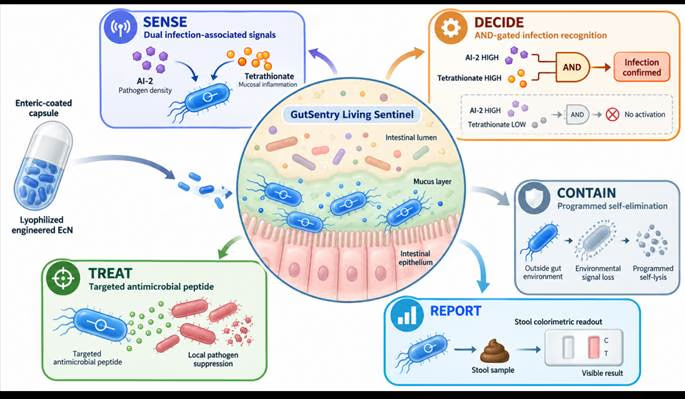
Figure 19. Product overview of GutSentry (product-perspective). A patient takes an enteric-coated oral capsule; engineered EcN is released into the gut and colonizes the intestinal mucosa as a sentinel; AI-2 and tetrathionate feed into an AND logic gate; dual outputs — a point-of-care colorimetric stool readout and targeted local elimination by a narrow-spectrum antimicrobial peptide — are activated, followed by programmed self-lysis once the bacteria leave the gut.
3.1.2 Product Architecture: Translating Technical Modules into Product Capabilities
The internal construction is not presented as "four genetic modules" but as five continuous product capabilities — answering first "what it can do", then "what it is made of":
• SENSE — recognize infection-associated signals: pathogen high-density proliferation (AI-2) and intestinal mucosal inflammation (tetrathionate)
• DECIDE — infection-specific computation: downstream response is activated only when both signals are present; a single signal does not trigger it
• REPORT — point-of-care visual readout: LacZ is excreted with the feces and develops an eye-visible color upon addition of chromogenic substrate
• ACT — targeted local therapy: a narrow-spectrum antimicrobial peptide eliminates pathogens in situ without disturbing the commensal microbiota
• CONTAIN — environment-dependent self-limitation: survive inside the gut; programmatically self-lyse outside it
Table 9. From technical language to product language
| Technical module (project description) | Product language |
| AI-2 sensing module (LsrACDB / LsrK / LsrR) | Pathogen high-density sensing |
| Tetrathionate sensing module (TtrS / TtrR) | Intestinal inflammation sensing |
| Split T7 RNA polymerase dual-input AND gate | Infection-specific logic computation |
| LacZ colorimetric output (X-gal blue / CPRG magenta) | Point-of-care visual reporting |
| Narrow-spectrum antimicrobial peptide (Microcin J25 / engineered Colicin) | Targeted local therapy |
| Hok/Sok toxin–antitoxin system + bile-responsive promoter P16090 | Environment-dependent biocontainment |
3.1.3 Patient Journey: From Oral Administration to Safe Elimination
Unlike the conventional "sample – send out – wait – result" workflow, this product completes its full lifecycle inside the human body. From the patient’s perspective, the product passes through six stages:
• Stage 1 Administration: an enteric-coated capsule is taken orally; the acid-resistant shell protects lyophilized live bacteria through the stomach and dissolves only at intestinal pH to release them.
• Stage 2 Gut residence: EcN colonizes the intestinal lumen through its superior mucosal adhesion, acting as a sentinel of the local microenvironment.
• Stage 3 Continuous surveillance: AI-2 (pathogen high density) and tetrathionate (mucosal inflammation) are monitored in situ and continuously, with no sampling required.
• Stage 4 Logical decision: the dual-input AND gate classifies the state as infection only when "pathogen high-density proliferation" and "invasive mucosal inflammation" are simultaneously satisfied; either signal alone (physiological AI-2 or sterile inflammation) does not trigger it.
• Stage 5 Dual response: on the diagnostic side, LacZ is excreted with the feces and develops an eye-visible color upon addition of chromogenic substrate; on the therapeutic side, the narrow-spectrum antimicrobial peptide is released via the Sec pathway to eliminate pathogens precisely without damaging gut anaerobes.
• Stage 6 Safe exit: once the bacteria are excreted outside the body, the bile-salt concentration falls below the response threshold and the Hok/Sok system triggers programmed lysis, preventing the spread of genetic elements into the environment.
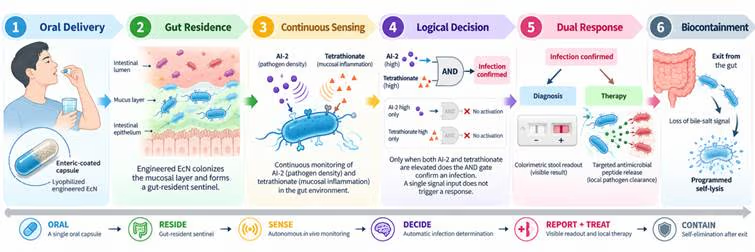
Figure 20. From oral administration to safe elimination: the product lifecycle of GutSentry. Six stages — oral administration, gut residence, continuous surveillance, logical decision, dual response (diagnosis + therapy), and biocontainment.
3.1.4 Target Users and Use Scenarios: One Platform, Three Scenarios
The same core technology platform gives rise to three product versions covering primary-care institutions, hospitals and home self-testing, forming a tiered coverage of intestinal-infection care needs:
Table 9. Product matrix of GutSentry (three versions)
| Version | Key features | Use scenario | Target users | Dosage form & supporting test card |
| Primary-care version | Instrument-free; low cost; eye-visible colorimetric readout; 12-hour turnaround; stable 3 months at room temperature | Township health centres; community health service centres | Primary-care physicians; patients presenting with intestinal infection | Enteric-coated oral capsules (one course, in-vivo intervention) + matched fecal colorimetric test card (diagnostic readout) |
| Clinical version | Fluorescence quantification; compatible with hospital microplate readers; 6-hour turnaround; sensitivity 10² CFU/mL; specificity >97% | Clinical laboratories and gastroenterology, paediatric and infectious-disease departments of secondary and higher-level hospitals | Clinicians; inpatients and outpatients with intestinal infection | Enteric-coated oral capsules (one course) + matched fecal fluorescence quantitative test card (laboratory readout) |
| Home self-test version | Self-read colorimetric test card; simple operation; no specialist knowledge needed; 12-hour turnaround; supported by online consultation | Home screening | Family members of high-risk individuals: infants, the elderly, the immunocompromised | Complete home package: oral enteric-coated capsules (one course) + disposable fecal sampler + fecal colorimetric test card + color-comparison reference chart |
3.1.5 Product Form: What the Customer Actually Receives
Customers do not buy "a tube of engineered bacteria" but a complete product package: oral enteric-coated capsules (lyophilized engineered bacteria) + a fecal colorimetric test card + user instructions + safety information. The capsule delivers the live bacteria; the test card completes the diagnostic readout; together they form the full theranostic loop.
This is a conceptual product format. The final commercial formulation (capsule, lyophilized powder, live suspension, etc.) and the dosing regimen will be determined after formulation, stability and dose-finding studies, and are not preset as an established commercial specification at this stage.
3.1.6 Value Proposition: Three Closed Loops
The core value of the product is not a single feature but three interlocking closed loops:
• Loop 1 — In situ: sensing and decision-making occur in the intestinal environment where pathogens actually proliferate, rather than after the sample has been taken out of the body, moving the detection window ahead of symptoms (24–48 hours earlier than conventional methods).
• Loop 2 — Dual-function: diagnosis and therapy are governed by the same infection-specific logic; local intervention starts at the moment of detection, compressing the "detect–intervene" time chain, shortening the disease course and lowering cost.
• Loop 3 — Self-contained safety: biocontainment is an intrinsic product property (Safety by Design) rather than an appended module — "survive inside the gut, self-lyse outside it", with safety and function belonging to the same system architecture.
In clinical-pathway terms, the product compresses the passive chain of "symptoms → sampling → laboratory testing → waiting → treatment decision → broad-spectrum antibiotics" into an active loop of "oral administration → continuous gut surveillance → infection-specific decision → colorimetric reporting and targeted local therapy".
3.1.7 Competitive Landscape: Who We Compete With and Where We Win
The competitors of this product are not "other engineered bacteria" but the diagnostic and therapeutic modalities patients actually use today, compared by category: diagnostics (stool culture, qPCR/mNGS), therapeutics (empirical antibiotics, targeted antibiotics, probiotics), and emerging entrants (engineered probiotics, live biotherapeutics).
Table 10. Competitive landscape comparison
| Dimension | Stool culture | PCR / mNGS | Empirical antibiotics | GutSentry |
| In situ sensing | ✗ | ✗ | — | ✓ |
| Continuous monitoring | ✗ | ✗ | — | ✓ |
| Infection-specific logic | Low | Single marker | — | ✓ dual-input AND gate |
| Targeted local therapy | ✗ | ✗ | ✗ broad-spectrum | ✓ |
| Antibiotic-sparing* | ✗ | ✗ | — | ✓* |
| Non-invasive | ✓ | ✓ | ✗ | ✓ |
| Built-in biocontainment | N/A | N/A | N/A | ✓ |
Three pillars of differentiation. First, specificity: the dual-input AND gate structurally reduces the risk of false activation, which single-marker diagnostics cannot offer. Second, theranostics: recognition, colorimetric reporting and in-situ therapy are integrated in one chassis, so intervention does not wait for a laboratory result. Third, accessibility: the primary-care version is instrument-free, simple to operate and low-cost (unit production cost about RMB 10, ≈ USD 1.5; selling price RMB 35–45, ≈ USD 5.2–6.6, far below the RMB 100–200, ≈ USD 15–29, of PCR), making it viable in China’s county-level and primary-care settings.
3.1.8 Validation and Development: Scientific Evidence Is Not Product Evidence
Scientific feasibility and product feasibility are two different questions: the former asks "does the circuit work as designed", the latter "can it become a deliverable product". We divide the development process into a clear ladder and honestly mark the current stage:
• Concept validation and circuit design → single-signal sensing (AI-2, tetrathionate verified separately) → dual-input AND gate → dual output (LacZ reporting + narrow-spectrum antimicrobial peptide) → integrated EcN → MVP (primary-care three-piece set: capsule + sampler + test card) → preclinical validation → clinical translation.
Current stage: the project is at the concept and circuit-design stage; specific milestones follow the team’s actual experimental progress. All clinical and market statements in this document are design goals rather than validated conclusions. The actual MVP deliverable and the information users can obtain will be clarified and updated as experiments advance.
3.2 Services
3.2.1 End-to-End Care
Each product version is supported by a differentiated service package:
• Primary care: free technical training and operational guidance so that primary-care physicians can use the product confidently; regular participation in academic conferences and training courses to raise the standard of intestinal-infection care; free trial products; and a fast-response after-sales service.
• Hospitals: clinical research support (joint studies and co-authored publications); customized products and services for institutional needs; a patient follow-up and outcome-monitoring system that gives clinicians an evidence base for adjusting treatment; and professional academic promotion through conferences and expert lectures.
• Home users: detailed instructions and instructional videos (capsule administration, fecal-sample collection, test-card operation); a 24-hour online consultation platform staffed by qualified physicians; a follow-up system for users who test positive, guiding treatment and recovery; and user communities sharing gut-health knowledge to build satisfaction and loyalty.
3.2.2 Public Health Surveillance
For centres for disease control and public-health authorities, we provide an intestinal-infection outbreak surveillance solution: regular screening of priority populations surfaces the first signs of an outbreak early enough for containment; a supporting digital management system collects, analyses and reports data in real time for epidemiological early warning; and in the event of an outbreak we supply emergency enteric-coated capsules with matched fecal test cards for rapid case screening and transmission control.
3.2.3 Technical Support and Customization
We provide synthetic-biology technical support and custom development to research institutions and companies, covering engineered-strain construction, functional validation and fermentation-process optimization; where a client needs it, we develop engineered probiotics against a specific pathogen or disease, extending the reach of the platform.
3.3 SWOT Analysis
Table 11. SWOT analysis: internal factors
| Strengths (internal) | Detail | Weaknesses (internal) | Detail |
| First-mover technology | Dual-signal (AI-2 × tetrathionate) dual-input AND-gate theranostic system that structurally reduces false-positive risk from a single biomarker; no comparable product is on the market worldwide. | Pre-clinical stage | No clinical data yet. Phase I–III trials, registration and GMP scale-up lie ahead — a long, capital-intensive road with real risk of failure at each gate. |
| True theranostics | Recognition, colorimetric reporting and in-situ therapy in one chassis; intervention starts at the moment of detection, with no waiting for a laboratory result. | Living-product constraints | A live biotherapeutic product carries stability and logistics demands despite lyophilization; the 12-hour turnaround of the primary-care version is slower than the 15–20 minutes of a colloidal-gold test. |
| De-risked chassis | EcN is recognized by the FDA and the EU, with close to a century of clinical use and a well-established safety profile — an advantage a novel chassis would lack. | Semi-quantitative readout | Eye-based interpretation in the primary-care version is less precise than instrument-based quantification, which may limit uptake where a numerical result is expected. |
| No resistance induction | Targets quorum-sensing/virulence-signal pathways rather than viability-essential functions; imposes no survival-selection pressure, induces no resistance, and leaves the commensal microbiota undisturbed. | Limited capital base | Registered capital is limited relative to the cost of taking a live biotherapeutic through clinical development. |
| Layered containment | Hok/Sok toxin–antitoxin system + bile-responsive promoter P16090 realize "survive inside the gut, self-lyse outside it"; combined with tight-copy plasmid low-leakage design, multiple layers reduce environmental release and gene-transfer risk. | Public scepticism | Public caution toward engineered microorganisms, compounded by a probiotic category legacy of overstated efficacy claims, must be addressed head-on. |
| Cost and speed advantage | 24–48 hours earlier than culture/PCR; instrument-free; unit production cost about RMB 10 versus RMB 100–200 for PCR. | Team inexperience | The student-led team has limited direct experience in regulatory affairs, GMP manufacturing and commercial scale-up. |
| Institutional backing | Research capability of the universities combined with the clinical resources of affiliated hospitals. |
|
|
| Formulation advantage | Lyophilized enteric-coated capsule supports room-temperature storage for grassroots scenarios and protects strain viability against gastric acid. |
|
|
Table 12. SWOT analysis: external factors
| Opportunities (external) | Detail | Threats (external) | Detail |
| Supportive policy | Synthetic biology is a designated strategic emerging industry under the 14th Five-Year Plan for the Bioeconomy; the National Action Plan to Contain Antimicrobial Resistance (2022–2025) targets ≥75% appropriate antibiotic prescribing. | Regulatory uncertainty | Engineered living therapeutics sit at the boundary between drug and special-medical-food regulation; an unclear classification or approval pathway could extend timelines and raise compliance cost. |
| Large unmet need | More than 100 million intestinal-infection cases a year in China; 51% blind antibiotic prescribing in primary care against a WHO benchmark of 30%; more than 80% of township health centres lack pathogen testing. | Technology leapfrogging | Phage therapy, antimicrobial peptides and microbiota transplantation are all advancing; a competitor could achieve a theranostic product first. |
| An empty market segment | No theranostic engineered probiotic is on the market anywhere in the world; there is no incumbent to displace. | Incumbent resistance | Established antibiotic and IVD manufacturers hold strong brands, distribution networks, manufacturing scale and procurement relationships. |
| Tiered-care tailwind | The tiered referral system pushes first contact into primary care, structurally creating demand for low-cost, instrument-free diagnostics. | Long payback period | A 5–8-year path to profitability may test investor patience and constrain financing options. |
| Growing home-testing market | Rising health awareness and willingness to pay for antibiotic-free therapy are expanding the home self-test segment. | Reimbursement risk | Innovative products may be excluded from insurance formularies, and centralized procurement exerts downward price pressure. |
| Category de-risked by others | Synlogic’s SYNB1618 reaching Phase III demonstrates that engineered probiotics can progress through clinical development and regulatory review. | Manufacturing scale-up | Holding viable count, genetic stability and unit cost at commercial scale is unproven for this construct. |
| Platform extensibility | The chassis and genetic circuit can be retargeted to other pathogens and diseases, opening licensing and technical-service revenue beyond the lead indication. | Category-wide reputational risk | Any biosafety incident or adverse event involving an engineered probiotic could trigger regulatory tightening across the entire category. |
|
|
| Export barriers | Overseas markets apply stringent approval processes to genetically modified organisms, along with tariffs that would erode export competitiveness. |
It should be emphasized that this SWOT analysis is built on our current understanding at the pre-clinical research stage. As more animal experimental data, safety-evaluation data and industry-policy updates become available, the individual items within strengths, weaknesses, opportunities and threats will be reassessed and revised accordingly.
Strategies Derived from the Matrix
• SO (build on strengths, seize opportunities): enter the primary-care market first, where the absence of testing capacity and the 51% misuse rate make an instrument-free theranostic immediately valuable, and where the national push on primary-care capacity supplies both funding and policy cover.
• WO (offset weaknesses with opportunities): turn the small capital base into an asset by pursuing the dual "drug + special medical food" regulatory pathway — the food route can generate earlier revenue while the drug route proceeds — and by using university and hospital affiliations to substitute for in-house regulatory and clinical experience.
• ST (use strengths to defuse threats): make layered containment (Hok/Sok + P16090 "survive inside the gut, self-lyse outside it") the centrepiece of both regulatory submission and public communication, converting the largest threat — biosafety concern — into a demonstrable advantage.
• WT (reduce weaknesses, avoid threats): do not compete on price against generic probiotic or antibiotic suppliers; enter through clinical validation and expert consensus; sell "product plus health-management service" rather than a commodity test; and bring manufacturing and regulatory expertise onto the team before Phase III.
4 Market Analysis
This chapter proceeds along the logic of “market need — market size — industry environment — segmentation and beachhead market — customers and payers — competitive landscape — entry and expansion”. It first confirms the unmet market need, then estimates market capacity, defines the segments and the beachhead market, identifies customers and payers, analyses the competitive landscape, and finally plans market entry and expansion pathways.
4.1 Market Need and Unmet Pain Points
4.1.1 The Typical Patient Pathway and Its Frictions
The current standard pathway for intestinal infection care is: onset of gastrointestinal symptoms → clinic visit → stool sampling → sample transport → laboratory testing (stool culture / PCR / antigen test) → waiting for results → physician decides whether to prescribe antibiotics. This pathway rests on an established clinical testing system, yet it contains six critical frictions:
• Detection and treatment are separated: diagnosis and intervention are bridged only by sample transport and waiting, and the testing step itself does not produce any treatment action.
• It relies on active sampling and the laboratory: patients must actively provide samples, samples must be transported to a laboratory, and testing depends on instruments and trained personnel.
• There is a time lag: from infection onset to diagnostic confirmation there is a substantial delay, with stool culture typically requiring 48–72 hours.
• Empirical prescribing during the waiting period: physicians often resort to empirical broad-spectrum antibiotics while awaiting results, with an empirical prescribing rate as high as 51% in primary care.
• Single-point sampling: a single sample reflects only one point in time and cannot continuously monitor the dynamic activity of pathogens.
• Results do not directly drive intervention: the diagnostic result does not by itself trigger treatment; the two steps are independent, lengthening the pathway from problem detection to action.
4.1.2 The Unmet Need Statement
Taken together, the unmet need addressed by this product is:
Current management of gastrointestinal infection lacks a solution that can continuously sense at the site of infection, distinguish a true infection state, and integrate diagnosis with local intervention in a single system.
4.2 Market Size: TAM—SAM—SOM
Integrated diagnostic-therapeutic engineered probiotics represent a brand-new segment with no commercial sales record to date, and third-party consultancies have not yet published an independent market-size estimate for it. To assess market capacity objectively, this section uses adjacent mature markets (traditional intestinal infection diagnostics and therapeutics) as the reference scope and adopts a three-tier TAM—SAM—SOM approach.
4.2.1 Overall Size and Growth
The global intestinal infection diagnostics and therapeutics market has grown steadily in recent years. A QYResearch report published in March 2025 puts global sales of bacterial intestinal disease detection at USD 3.239 billion in 2024, projected to reach USD 4.162 billion by 2031, a compound annual growth rate (CAGR) of about 3.7% (Fig. 18). Data from Bain & Company consulting indicate that the global intestinal infection diagnostics market was about USD 1.95 billion in 2023, with a 2023–2028 CAGR of about 6.4%. China has one of the highest incidences of intestinal infection worldwide, is growing faster than the global average, and accounted for roughly 20%–25% of the global market in 2024.
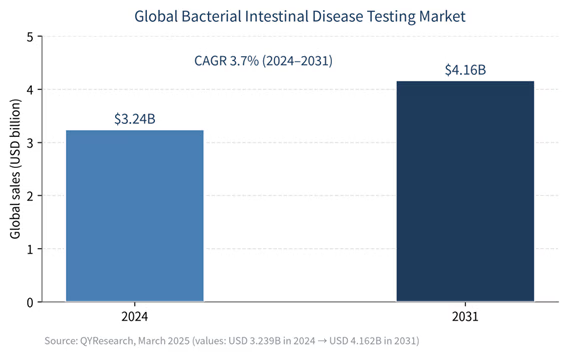
Figure 21. Global bacterial intestinal disease detection market size (2024–2031). Sales of approximately USD 3.239 billion in 2024, projected to reach USD 4.162 billion by 2031, CAGR of about 3.7% (Source: QYResearch, March 2025).
By product structure, colloidal-gold rapid test reagents account for about 60% of the diagnostic segment, PCR reagents about 30%, and other assays about 10%; on the therapeutic side, broad-spectrum antibiotics dominate (about 90%), with probiotics and other microbiome products at about 10% (Fig.22). Integrated diagnostic-therapeutic engineered probiotics represent a wholly new segment with no mature commercial product worldwide — a significant market gap.
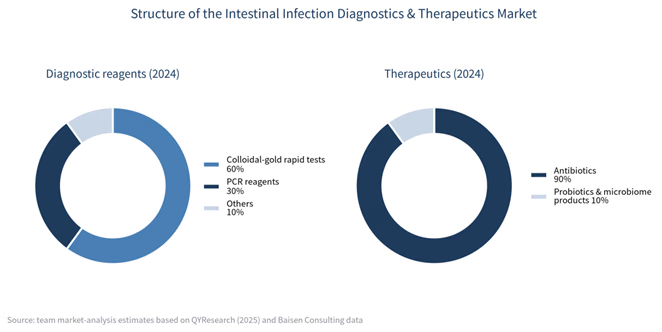
Figure 22. Product structure of the intestinal infection diagnostics and therapeutics market. Diagnostics: colloidal-gold rapid tests about 60%, PCR about 30%, others about 10%; therapeutics: antibiotics about 90%, probiotics and other microbiome products about 10% (Source: team estimates based on QYResearch and Bain & Company data).
4.2.2 Tiered Estimation: Top-Down and Bottom-Up Cross-Validation
Based on the above data, the addressable market is estimated in three tiers (Table 13). TAM uses a top-down (industry report) scope; SAM and SOM are simultaneously cross-validated with a bottom-up framework — “number of target patients × annual usage per patient × price per course × adoption rate” — rather than relying solely on industry report figures.
Table 13. TAM—SAM—SOM market estimation
| Tier | Definition | Estimation scope | Scale | Data source |
| TAM (global addressable market) | Global intestinal infection diagnostics and therapeutics market (maximum potential market) | Top-down: diagnostics (bacterial intestinal disease detection, 2024) + therapeutics (antibiotic-based antibacterial therapy market) | Diagnostics about USD 3.2 billion (2024); therapeutics scope to be measured on the antibiotics market basis [therapeutic-side value pending industry data; tentatively estimated as “diagnostics + therapeutics” combined] | QYResearch (March 2025); therapeutic-side source to be confirmed |
| SAM (serviceable available market) | China’s intestinal infection rapid diagnostics and precision-intervention market (portion reachable by this technology) | Top-down: China accounts for 20%–25% of the global market (2024); bottom-up: number of target patients in China × annual usage × price per course [patient numbers and frequency to be calibrated against epidemiological data] | Diagnostics about USD 650–800 million (2024, converted); plus the precision-intervention therapy segment [estimate] | Converted from global data; bottom-up framework to be calibrated |
| SOM (serviceable obtainable market) | Initially obtainable market: primary care facilities (township health centers / community health service centers) + at-risk household self-testing | Bottom-up: number of initially reachable primary care facilities / at-risk households × adoption rate × price per course [adoption rate to be calibrated against consumer survey and procurement interviews] | [To be determined: to be calculated from primary care visits, case numbers and procurement data] | Interviews and procurement data to be calibrated (see 4.5.3 Demand Validation) |
The initial SOM will be further calibrated with data from the consumer survey and primary-care procurement interviews described in Section 4.5.3. Table 6 presents the estimation framework and scope, not a verified commercial forecast.
4.2.3 Scope Notes
It should be noted that the market-size figures cited above mainly cover traditional intestinal infection diagnostic reagents and therapeutic drugs. No third-party consultancy has yet published an independent market-size estimate for the integrated diagnostic-therapeutic engineered probiotic segment, because the segment has no commercial sales record to date. These figures serve only as a reference framework for assessing market capacity and do not represent a forecast of actual sales of the new product.
4.3 Industry Trends and the Domestic Environment
4.3.1 Policy Environment
National policies strongly support the development of synthetic biology and innovative medical devices. The 2024 Government Work Report proposed actively fostering new growth engines such as bio-manufacturing; the 14th Five-Year Plan for Bioeconomy Development explicitly calls for advancing synthetic biology innovation and accelerating the output of new drugs and medical devices; and the National Action Plan on Containing Antimicrobial Resistance (2022–2025) tightens antibiotic stewardship and encourages R&D of novel antimicrobials and alternative therapies. Together, these policies create a favourable environment for this project.
4.3.2 Economic Environment
In 2025, China’s per-capita disposable income reached RMB 43,000 (about USD 6,300), and per-capita healthcare spending reached RMB 2,573 (about USD 379), accounting for 8.7% of per-capita consumption expenditure. Residents’ capacity to pay for health continues to rise. Meanwhile, the procurement budgets of primary care facilities have been growing at more than 10% per year, placing the primary-care version of this product within the purchasing power of primary care.
4.3.3 Social Environment
China records more than 100 million intestinal infection cases each year. Public concern over antimicrobial resistance driven by antibiotic overuse is growing, and acceptance of “fewer antibiotics” treatment options is rising. Heightened health awareness is also pushing more consumers toward home-based early screening, and the home self-testing market is expanding rapidly.
4.3.4 Technology Environment
Rapid advances in microbiome science, molecular biology and synthetic biology provide a solid technical foundation for engineered probiotics: CRISPR gene editing has matured, making strain construction more precise and efficient; high-throughput sequencing has lowered the cost of microbiome analysis; and breakthroughs in probiotic lyophilization have resolved storage and transport challenges.
4.4 Market Segmentation and the Beachhead Market
4.4.1 Segmentation Dimensions
The market is segmented along three dimensions — geography, application scenario and health state:
• Geography: rural northwest China, central-western primary care markets, and first- and second-tier cities. The rural northwest has a lower level of economic development, weaker primary care resources and higher intestinal infection incidence, making low-cost, easy-to-use products the most pressing need; central-western primary care markets prefer the primary-care version; hospitals in first- and second-tier cities value the accurate, quantitative clinical version, and the home self-testing market there is more mature.
• Application scenario: primary care, hospitals, home self-testing and public-health surveillance. Primary care values price and ease of use, hospitals value sensitivity and specificity, home users value convenience, and public-health surveillance values batch screening capability.
• Health state: high-risk populations (infants, the elderly and the immunocompromised), ordinary intestinal infection patients and healthy consumers. High-risk populations have the highest incidence and the most urgent need for early diagnosis and treatment, making them the core target population; ordinary patients are the main user population; healthy consumers care about prevention and gut-health maintenance, with a moderate need for home self-testing.
4.4.2 Defining the Beachhead Market
Before addressing the full market, the question “who exactly are we selling to first” must be answered. The beachhead market is defined along four dimensions — disease, population, setting and geography:
• Disease: bacterial intestinal infection — the infection type with the most pronounced diagnostic delay and empirical antibiotic treatment problem.
• Population: high-risk groups such as children under 5 and adults over 65 — the highest incidence, with the most urgent need for early diagnosis and treatment.
• Setting: primary care facilities (township health centers, community health service centers) — over 80% of township health centers lack pathogen detection capacity, and the need for integrated detection and treatment is most acute.
• Geography: China, prioritizing provinces with more developed primary care systems and faster implementation of the tiered healthcare system.
This yields the initial segmentation funnel (Fig. 23): intestinal infection → bacterial intestinal infection → target pathogen group → high-risk populations requiring rapid diagnosis and precision intervention → first launch population. Subsequent SAM and SOM estimates are based on this launch population rather than on all intestinal infection cases.
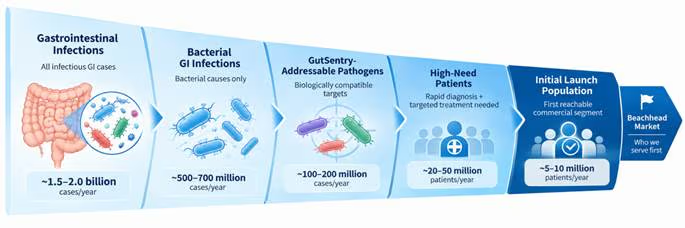
Figure 23. Market segmentation funnel from all intestinal infection cases to the first launch population. Levels: intestinal infection → bacterial intestinal infection → GutSentry-addressable pathogens → high-need patients requiring rapid diagnosis and precision intervention → first launch population (beachhead market). Population figures are team estimates, to be calibrated with epidemiological and procurement data.
4.4.3 Basis for Target-Market Selection
• Primary care — the core target market. Over 80% of township health centers in China lack intestinal pathogen detection capacity, and antibiotic misuse is severe in primary care, creating an urgent need for an integrated “detection + treatment” product. The primary-care version — instrument-free, simple to operate and low-cost — matches this setting well, and national capacity-building programmes for primary care provide policy support for market entry.
• Hospitals — gastroenterology, pediatrics and infectious disease departments of secondary and tertiary hospitals are the main venues for intestinal infection patients. These institutions require accuracy and quantitation; the clinical version meets this need through a fluorescence-quantitative solution compatible with existing hospital microplate readers. The integrated function also helps clinicians treat faster with less antibiotic use, aligning with hospital development directions.
• Home self-testing — as health awareness grows, more consumers wish to screen at home. The home version requires no professional knowledge to operate, suits families with at-risk members, and is an important future growth source.
4.4.4 Product Positioning by Market
• Primary care — positioned as an “integrated diagnosis-and-treatment solution for intestinal infection in primary care”, emphasising instrument-free, low-cost and easy-to-use features to help primary facilities improve diagnostic capacity and reduce antibiotic misuse; acceptance is built through free trials and public-interest training that let physicians and patients experience the product directly.
• Hospitals — positioned as an “early precision-intervention tool for intestinal infection”, emphasising early warning, integrated diagnosis-and-treatment and no resistance induction, helping clinicians diagnose early, treat precisely, and improve outcomes while reducing complications; professional recognition is built through academic promotion and clinical research.
• Home users — positioned as a “family guardian for gut health”, emphasising safety, convenience and non-invasiveness so that consumers can screen for intestinal infection at home and intervene in time; awareness and reputation are built through science communication and social media.
4.5 Customers and Payers
4.5.1 Stakeholder Map
In medical product markets, the patient, user, buyer, decision-maker and payer are not the same entity. Clarifying each role’s core needs and purchasing role is a prerequisite for pricing and channel strategy (Table 14).
Table 14. Stakeholder map
| Stakeholder | Core need from GutSentry | Purchasing role |
| Patients | Minimally invasive, convenient, fast, safe | Ultimate beneficiaries; actual buyers of the home version |
| Physicians | More reliable infection judgment, less empirical antibiotic prescribing | Advisors and prescription influencers |
| Hospitals / clinics | Shorter clinical pathways, lower testing burden | Primary purchasing entity in the hospital setting |
| Clinical laboratory | Reduced central testing pressure, intuitive readout | Participant in procurement decisions (device and reagent compatibility) |
| Payers (medical insurance / commercial insurance) | Fewer unnecessary tests, antibiotics and hospitalisation costs | Influencers of pricing and reimbursement scope |
| CDC / public health agencies | Batch screening and outbreak surveillance capability | Procuring entity for public-health surveillance settings |
| Regulators | Safety, genetic stability, biocontainment | Registration, approval and compliance requirements |
| Pharmaceutical / biotech companies | Scalability of a novel live biotherapeutic platform | Potential licensing and commercialisation partners |
4.5.2 Pain Points by Customer Type
• Primary care facilities — no detection instruments and no trained personnel, so precise diagnosis of intestinal infection is out of reach; resistance keeps worsening under antibiotic misuse; existing test prices exceed primary-care budgets; and after diagnosis there is no effective treatment option.
• Hospitals — routine testing cycles are too long to support early diagnosis; testing and treatment are separated, lowering clinical efficiency; antibiotics cause dysbiosis and resistance; and no integrated diagnosis-and-treatment product exists on the market.
• Home users — long outpatient queues and a risk of cross-infection; routine tests are invasive or complicated and cannot be performed at home; without early screening, patients often seek care only when symptoms become severe; and professional gut-health guidance is lacking.
4.5.3 Demand Validation: From Assumptions to Design Revisions
The reality of market demand is validated through stakeholder interviews and feeds back into product design, following a “assume → interview → revise” loop. Representative examples include:
• Assumption 1: the most urgent need of primary care facilities is “faster results”. Interviews with primary-care physicians and facility managers showed that the real pain point is “empirical antibiotic use caused by the lack of detection capacity”. The primary-care design emphasis was therefore shifted from mere speed to an “instrument-free, low-cost, integrated detection-and-intervention” solution, delivering results in 12 hours together with targeted intervention.
• Assumption 2: a single biomarker is sufficient to identify infection. Interviews with laboratory and clinical experts indicated that physiological signals and non-infectious inflammation can both produce false positives. Single-signal triggering was therefore revised to a two-input AND logic combining AI-2 and tetrathionate, reducing the risk of false activation by design.
These validation cases are consistent with the stakeholder interview data in the Exploration chapter; details of interviewees, timing and conclusions are provided in the Exploration chapter appendix.
4.5.4 Purchasing Decisions
• Primary care facilities — decisions are mainly made by the facility head and clinicians, with price, ease of use and practical utility as core considerations. This group is price-sensitive and prefers low-cost, simple, fast-acting products; government centralised procurement policies and recommendations from upper-level institutions have a notable influence.
• Hospitals — decisions are made jointly by the department head, laboratory director and procurement office, with sensitivity, specificity, clinical data and academic recognition as core considerations. Hospitals prioritise scientific rigour and clinical efficacy and are willing to pay a premium for quality; compatibility with existing equipment and after-sales service quality also matter.
• Home users — decisions are usually made by the family member responsible for health management (in practice, most often female), with safety, convenience and brand reputation as core considerations. Home users have an extremely high safety bar and prefer scientifically validated products endorsed by authoritative medical institutions; online reviews and KOL recommendations have a strong influence.
4.5.5 Channel Preferences
• Primary care facilities — mainly procured through medical device distributors, government centralised procurement and recommendations from upper-level institutions. Distributors have broad primary-care coverage and can reach township health centers and community health service centers quickly; centralised procurement is the main primary-care route, combining price and policy advantages.
• Hospitals — mainly procured through equipment tenders, academic promotion and direct sales. Tendering is the main route; academic promotion builds clinical recognition and helps products enter hospital procurement catalogues; direct sales facilitate after-sales support and technical service.
• Home users — mainly purchased through online platforms (JD Health, Ali Health, etc.), offline pharmacies and community health service centers. Online platforms are convenient with broad coverage; pharmacies offer face-to-face consultation suited to middle-aged and elderly consumers; community health centers can promote the product alongside health-management services.
4.5.6 Customer Segmentation Priority and Early Adopters
Building on the stakeholder map (4.5.1) and purchasing decisions (4.5.4), segmented customers are ranked by commercial priority into primary, secondary and future customers, guiding resource allocation (Table 15).
Table 15. Customer segmentation priority
| Segment | Pain point | Core need | Willingness to pay | Priority |
| Primary care facilities (township health centers, community health service centers) | No detection capacity, empirical prescribing, diagnosis–treatment separation | Instrument-free, low-cost, 12-hour-result theranostics | High (price-sensitive, reliant on centralised procurement) | Primary customer (beachhead) |
| Secondary and above hospitals (gastroenterology, pediatrics, infectious disease) | Long detection cycles, diagnosis–treatment separation, antibiotic misuse | Accurate quantification, clinical evidence, compatibility with in-house instruments | Relatively high (willing to pay for quality) | Primary customer (second stage) |
| Home self-testing users (families of at-risk individuals) | No at-home testing, inconvenient outpatient visits | Safe, convenient, non-invasive | Medium (rising with health awareness) | Secondary customer |
| CDC and public-health institutions | Gaps in batch screening and outbreak surveillance | Batch testing, digital data reporting | Medium (government budget) | Secondary customer (third stage) |
| Health-conscious consumers (prevention and gut-health maintenance) | Lack of early screening tools | Prevention, health management | Low | Future customer |
Early adopters are primary-care facility leaders and gastroenterology or infectious disease clinicians already exploring novel diagnostic or therapeutic options, together with health-conscious family users. They share clear pain points and strong willingness to adopt new approaches, making them potential sources of referrals in an initial market.
4.6 Competitive Landscape and Cost Economics
4.6.1 Four Categories of Alternatives in the Current Pathway
The competitors of this product are not “other engineered probiotics” but the diagnostic and treatment pathways patients actually use today, which can be grouped into four categories, each requiring GutSentry to answer a specific question:
• Laboratory diagnostics (stool culture, PCR, multiplex PCR) — why does the patient still need in-situ continuous sensing rather than continuing to send samples to the laboratory?
• Rapid diagnostics (antigen tests, point-of-care tests) — why in-situ real-time sensing and logic computation rather than single-point sampling?
• Conventional treatment (empirical broad-spectrum antibiotics) — why local precision intervention rather than systemic broad-spectrum use?
• Novel therapies (microbiome products, live biotherapeutics) — what is GutSentry’s diagnosis–therapy closed-loop advantage?
4.6.2 Conventional Diagnostic Products
Table 16. Competitive comparison of conventional diagnostic products
| Product type | Representative products | Strengths | Weaknesses |
| Stool culture | Bacterial culture kits | Diagnostic gold standard; identifies pathogen species and antimicrobial susceptibility | Requires 2–3 days; low sensitivity; complex operation; depends on instruments and trained personnel |
| PCR | Intestinal pathogen PCR kits | High sensitivity and specificity; results in 1–2 hours | Expensive instruments; complex operation; cannot distinguish live from dead bacteria; high per-test cost |
| Colloidal-gold rapid test | Intestinal pathogen antigen cards | Simple operation; results in 15–20 minutes; no instruments needed | Lower sensitivity and specificity; prone to false positives/negatives; detects only a single pathogen |
4.6.3 Conventional Therapeutic Products
Table 17. Competitive comparison of conventional therapeutic products
| Product type | Representative products | Strengths | Weaknesses |
| Quinolone antibiotics | Levofloxacin, ciprofloxacin | Strong bactericidal effect; broad spectrum | Disrupts the gut microbiota; induces resistance; gastrointestinal and other adverse reactions |
| Cephalosporin antibiotics | Ceftriaxone, cefixime | Strong bactericidal effect; relatively good safety profile | Also disrupts the gut microbiota and induces resistance; allergies in some patients |
| Conventional probiotic formulations | Bifidobacterium, Lactobacillus products | High safety; helps regulate the gut microbiota | No direct antibacterial effect; adjunctive use only; large inter-individual variation |
4.6.4 Engineered Probiotics: International and Domestic Progress
Internationally, teams at Stanford University and ETH Zurich have built quorum-sensing-based engineered probiotics capable of recognising quorum-sensing signals of specific pathogens and secreting antimicrobial peptides. However, most of these designs respond to a single type of pathogen signal and perform only a diagnostic or only a therapeutic function; no integrated diagnostic-therapeutic engineered probiotic has reached the market. The US company Synlogic has advanced its engineered probiotic SYNB1618 for phenylketonuria to Phase III clinical trials, laying the foundation for clinical application of engineered probiotics.
Domestically, a team from Inner Mongolia University and Jilin University has proposed a supramolecular quorum-sensing trap as a therapeutic strategy; Professor Shen Xihui’s team at Northwest A&F University has systematically mapped the quorum-sensing network of the human gut microbiota; and a collaborative team of Yangzhou University and the Chinese Academy of Sciences has constructed the efficient engineered E. coli strain EcN-CPM for the treatment of intestinal inflammation. Domestic research, however, still focuses on single-function engineered strains. As the project description points out, the vast majority of existing designs respond to quorum-sensing signals of either Gram-positive or Gram-negative bacteria only, and very few integrate a diagnostic reporter function with therapeutic effector-protein expression in the same chassis strain — an integrated engineered probiotic capable of sensing two signals simultaneously while combining diagnosis and therapy remains an open field. Although no fully similar commercial product exists today, several domestic research teams continue to invest in related technology branches, and with growing synthetic biology funding, parallel competing research outcomes may emerge within the next few years.
4.6.5 Differentiation Advantage
The differentiation of this product can be summarised in four dimensions:
• Continuous: rather than single-point sampling, the system continuously senses pathogen activity in the gut, advancing the detection window by 24–48 hours relative to conventional methods.
• Context-aware: two-input AND logic combining AI-2 and tetrathionate avoids relying on any single biomarker.
• Closed-loop: sensing, decision, reporting and intervention form a closed loop, with the diagnostic result directly triggering local treatment.
• Contained: programmed self-elimination outside the host makes biosafety part of the system architecture.
On the two dimensions of “whether treatment is simultaneously provided” and “whether sensing is continuous”, most existing solutions fall into the “diagnosis-only” or “treatment-only” quadrants, while GutSentry sits in the “continuous sensing + autonomous intervention” quadrant (Fig. 24) — a position not covered by any of the four categories of alternatives. It should be noted that these capabilities are product design objectives to be progressively validated by experiments and clinical evidence, and are not presented as verified commercial facts.
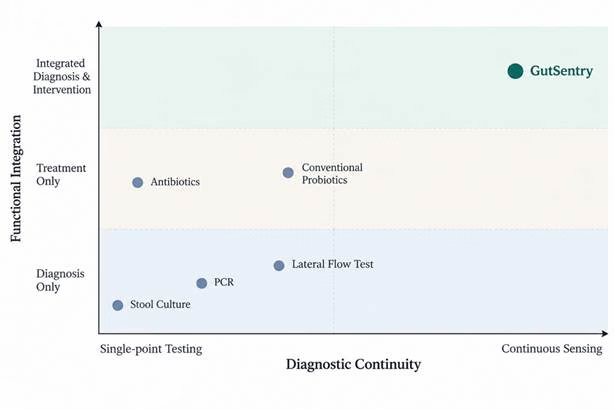
Figure 24. Competitive positioning map: diagnostic continuity (x-axis, from single-point testing to continuous in-situ sensing) versus functional integration (y-axis, from diagnosis-only or treatment-only to integrated diagnosis and intervention). Conventional alternatives cluster in the diagnosis-only or treatment-only quadrants, whereas GutSentry occupies the continuous-sensing-and-autonomous-intervention quadrant. Positions reflect product-design objectives to be validated by experimental and clinical evidence.
Taken together, the positioning statement of the product is: for (primary care facilities lacking intestinal pathogen detection capacity and high-risk intestinal infection patients), GutSentry is an (integrated diagnostic-therapeutic live probiotic product that continuously senses within the gut), providing (in-situ two-signal decision-making, bedside colorimetric diagnosis and local targeted intervention completed simultaneously), unlike (stool culture, PCR and empirical broad-spectrum antibiotics among existing pathways), because (sensing, logical decision-making, reporting and treatment are integrated in the same chassis strain, with built-in ex-vivo self-lysis biocontainment).
4.6.6 Cost Economics Comparison
From the patient and payer perspective, the value of integrated diagnosis-and-treatment is also reflected in cost and time. Table 18 compares existing alternatives with the primary-care version of this product.
Table 18. Cost economics: alternatives vs. the GutSentry primary-care version
| Option | Detection/intervention cycle | Per-use cost | Instrument dependence | Additional impact |
| Stool culture | 48–72 hours | About RMB 50–100 [estimate] | Culture equipment and trained personnel required | Diagnosis and treatment separated; reliance on empirical prescribing while waiting |
| PCR | 1–2 hours | RMB 100–200 | Dedicated instruments and laboratory conditions required | Inaccessible in primary care; cannot distinguish live/dead bacteria |
| Colloidal-gold rapid test | 15–20 minutes | RMB 10–30 [estimate] | No instruments required | Single pathogen only; low sensitivity |
| Empirical broad-spectrum antibiotics | Immediate prescribing | Depends on course length | No equipment required | Empirical prescribing rate as high as 51%; disrupts the microbiota and aggravates resistance |
| GutSentry primary-care version | Results in 12 hours; detection window advanced 24–48 hours vs. conventional methods | Production cost about RMB 10; price RMB 35–45 (concept form, to be validated) | Instrument-free, no sample transport | Integrated: simultaneous colorimetric diagnosis and narrow-spectrum antimicrobial intervention, reducing empirical prescribing |
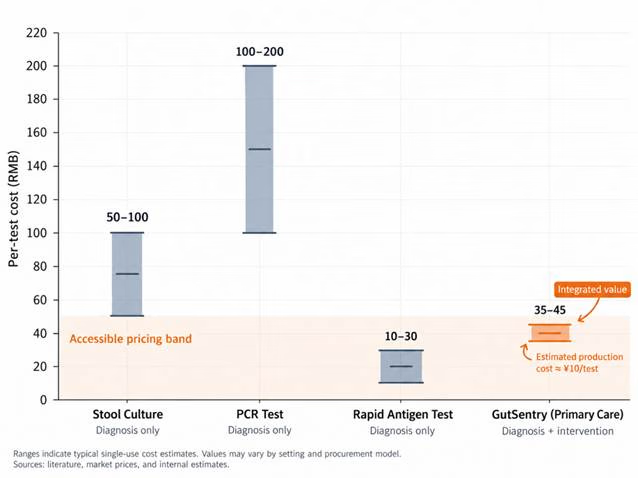
Figure 25. Per-use cost comparison: alternative pathways vs. the GutSentry primary-care version (labels inside the figure are in English). Stool culture RMB 50–100, PCR RMB 100–200, colloidal-gold rapid test RMB 10–30; GutSentry RMB 35–45 (production cost ≈ RMB 10, concept form, to be validated), matching rapid-test price while integrating diagnosis with local intervention. Alternative-pathway costs are industry estimate ranges referenced to public market prices.
GutSentry-related costs reflect the product-design scope (concept form, pending formulation and process validation); alternative-pathway costs in the table are industry estimate ranges referenced to public market prices, with the final pricing subject to actual market launch.
4.7 Market Entry and Expansion
4.7.1 Four-Stage Entry Pathway
Based on target-market selection (4.4.3) and channel preferences (4.5.5), a four-stage entry pathway is planned, corresponding one-to-one with the three-version product matrix:
• Stage 1 (beachhead market): primary care facilities. Over 80% of township health centers lack intestinal pathogen detection capacity, the empirical prescribing rate is as high as 51%, and the tiered healthcare system pushes first visits to primary care — the most painful, most policy-supported and least competitive entry scenario. Pathway: free trials and public-interest training to build acceptance → inclusion in government centralised procurement catalogues → distributor-based coverage of township health centers and community health service centers.
• Stage 2: secondary and tertiary hospitals. The clinical version (fluorescence-quantitative, compatible with existing hospital microplate readers) enters gastroenterology, pediatrics and infectious disease departments. Pathway: collaborative clinical research to generate evidence → academic promotion to build clinical recognition → entry into hospital procurement catalogues → direct-sales team for after-sales and technical support.
• Stage 3: CDC public-health surveillance. Provide intestinal infection outbreak-surveillance solutions to CDCs (regular screening of key populations, digital data reporting, emergency supply), generating public-health revenue and influence.
• Stage 4: home self-testing. As health awareness and online channels mature, a home self-testing version is launched for families of at-risk individuals, distributed through JD Health, Ali Health and offline pharmacies to form a consumer-side growth curve.
4.7.2 From the First Indication to Platform Expansion
Market entry is not limited to a single indication and is planned in three expansion stages:
• Stage 1 (beachhead indication): enter with the first-launch population for bacterial intestinal infection to validate product feasibility and the payment pathway.
• Stage 2 (indication expansion): extend the two-signal sensing module to more intestinal pathogens and patient populations, forming a multi-indication pipeline on the same chassis.
• Stage 3 (platform expansion): by exchanging sensing and effector modules, extend the platform to other gastrointestinal diseases, forming a reproducible engineered-probiotic diagnostic-therapeutic platform.
The four-stage scenario pathway and the three-stage platform expansion together define the route from the first patient to the broader market: first validate the commercial loop in the beachhead market, then deepen into hospitals and the public-health system, and finally release long-term value through indication and platform expansion — consistent with the segmentation (4.4), channel preferences (4.5.5) and the three-version product matrix.
4.8 Marketing Strategy and Validation Metrics
The marketing strategy answers how customers are reached, converted and retained, and connects with the channel preferences of Section 4.5 and the entry pathway of Section 4.7, following the logic of customer journey → channel matrix → conversion funnel → retention and growth → metric validation.
4.8.1 Customer Journey
The customer journey comprises six stages, each matched with the corresponding customer question and strategy (Table 19).
Table 19. Customer journey and stage strategies
| Stage | Customer question | Corresponding strategy |
| Awareness | What is this? | Academic science communication, policy and industry coverage, professional conferences |
| Interest | Why do I need it? | Clinical-value education, application case demonstrations |
| Consideration | Why GutSentry? | Comparative materials, clinical data, trial feedback |
| Trial | Can I try it? | Free trials in primary care, public-interest training, research collaborations |
| Purchase | Should we buy? | Centralised-procurement pricing, tender proposals, pricing and procurement policy |
| Retention & Referral | Will we continue? | After-sales support, data accumulation, word-of-mouth referral among institutions |
4.8.2 Channel Strategy Matrix
Each channel assumes a defined function, with corresponding metrics for measurement (Table 20).
Table 20. Channel strategy matrix
| Channel | Purpose | Target audience | Content | KPI |
| Government centralised-procurement platforms | Enter procurement catalogues, close batch deals | Primary care facilities | Product qualifications, pricing proposals | Number of provinces with procurement awards, purchase orders |
| Medical device distributors | Primary-care channel coverage | Township health centers, community health service centers | Product manuals, training materials | Number of facilities covered, trial volume |
| Academic conferences and clinical research | Build clinical evidence and professional recognition | Hospital departments, clinical experts | Research reports, case data | Number of partner hospitals, research output |
| Online science communication and media | Build awareness and reach households | Home users, health-conscious consumers | Science-communication articles, real cases | Readership, consultation conversion |
| CDC project collaborations | Public-health procurement | Centers for Disease Control | Surveillance proposals, data reports | Number of collaboration projects, testing volume |
4.8.3 Acquisition and Conversion Funnel
Converting exposure into paying customers follows a defined funnel: content reach → need confirmation (landing pages, presentations) → trial (free trials, research collaborations) → first purchase → repeat purchase or renewal → referral. Retention at each stage constitutes the conversion rate, which guides channel optimisation and budget allocation; conversion data are measured during the pilot phase (Section 4.8.5) rather than replaced by assumed figures.
4.8.4 Retention and Growth
After acquisition, growth follows the path of acquire → retain → refer → expand. On retention, after-sales technical support, accumulation of testing data and habitual usage sustain continued use; on referral, word of mouth among institutions, clinical academic networks and family communities generate introductions; on expansion, the three-stage route of Section 4.7.2 moves from the primary-care beachhead to hospitals, CDC programmes and home users, alongside indication and platform expansion.
4.8.5 Marketing Metrics and Validation
The proposed pilot would use the metrics in Table 21 to assess the marketing strategy.
Table 21. Marketing metrics and validation
| Metric | Definition | Validation |
| CAC (customer acquisition cost) | Marketing spend ÷ new customers | Per-channel attribution accounting during pilot [pilot data pending] |
| Conversion rate | Customers ÷ qualified leads | Free-trial-to-purchase tracking [pilot data pending] |
| Retention / repeat rate | Renewing or repeat customers ÷ initial customers | Follow-up and order records [pilot data pending] |
| Referral rate | Referred customers ÷ total customers | Institutional and family referral registration [pilot data pending] |
| LTV (customer lifetime value) | Revenue per customer × customer lifetime | Derived from retention and repeat-purchase data [pilot data pending] |
| LTV / CAC | Customer value relative to acquisition cost | Joint calculation as the resource-allocation threshold |
These metrics validate whether the market strategy is genuinely effective, drawing on the stakeholder interviews of Section 4.5.3, pilot-facility trials and the consumer survey, replacing assumptions with measured evidence.
5 Marketing Strategy
The marketing strategy follows the logic of market → customer → positioning → acquisition → conversion → retention → growth → measurement: it defines who the product serves, why customers choose it over alternatives, how they are reached and converted, how they are retained and grown, and how the strategy is validated with metrics.
5.1 Market Positioning and Brand
5.1.1 Brand Positioning and Core Value Proposition
Against a market marked by heavy antibiotic use and by diagnosis separated from treatment, the GutSentry engineered probiotic theranostic system draws on the research capability of Kyoto University and Lanzhou University and the clinical resources of affiliated hospitals to establish a differentiated position built on four words: early, precise, safe, integrated. Unlike conventional test reagents and antibiotics, this product focuses narrowly on the early diagnosis and treatment of intestinal infection, and positions the brand as “the specialist in early warning and precise care for intestinal infection”.
Our proposed value rests on four development goals: interpretable sensing, a measurable response, a practical workflow and responsible containment. For iDEC, each claimed improvement should be connected to a defined baseline, relevant operating conditions and a clear measurement. Earlier detection, reduced collateral effects and health benefits remain hypotheses requiring appropriate validation; they are not established by a project description or a competition label.
5.1.2 Target Customers and Segmentation Priority
Consistent with the market analysis (Section 4.4 and Table 8 of the Market Analysis chapter), the strategy prioritises primary care facilities (township health centers and community health service centers) as the beachhead customers, followed by secondary and tertiary hospitals, then CDC public-health programmes, and finally home self-testing users. Early adopters are primary-care physicians and gastroenterology or infectious disease clinicians already seeking novel diagnostic options, together with health-conscious families of high-risk individuals.
5.2 Go-to-Market and Promotion Channels
5.2.1 Customer Journey
Promotion follows a six-stage customer journey, each stage matched with a strategy:
• Awareness (“what is this?”) — academic science communication, policy and industry coverage, professional conferences.
• Interest (“why do I need it?”) — clinical-value education and application case studies.
• Consideration (“why GutSentry?”) — comparative materials, clinical data and trial feedback.
• Trial (“can I try it?”) — free trials in primary care, public-interest training and research collaborations.
• Purchase (“should we buy?”) — centralised procurement pricing and tender proposals.
• Retention and referral (“will we continue?”) — after-sales support, data accumulation and word-of-mouth referral among institutions.
5.2.2 Channel Strategy Matrix
Promotion is organised around a layered objective: build trust with professional audiences, build awareness with the general public. Multiple channels work together to deliver precise messaging (Table 22).
Table 22. Promotion channels and tactics
| Type | Specific activities | Target audience | Core content and tactics | Advantage |
| Academic | 1. Exhibit at the national congresses of gastroenterology and infectious disease, and at synthetic biology conferences | Clinicians, researchers, industry experts | Present the technology, pre-clinical data and research findings; discuss the prospects for engineered probiotics in intestinal infection care | Builds academic credibility and professional influence, and earns expert endorsement |
| Primary care | 1. Run public-interest training on building primary-care capability in intestinal infection | Primary-care physicians; managers of township health centers | Train physicians in using the product and in standardised care; let them experience the effect first-hand | Opens the primary-care market quickly and raises coverage at that level |
| Online | 1. Outreach on Douyin, WeChat, Weibo and Xiaohongshu | General consumers; families of high-risk individuals | Spread gut health knowledge; explain the product’s advantages and how to use it; answer consumer questions | Reaches a broad consumer audience and raises general awareness |
| Community | 1. Build user communities sharing gut health knowledge and product experience | Home users; families of high-risk individuals | Deepen engagement and extend reach through KOL word of mouth | Reaches the target group precisely and lifts conversion |
| Partnership | 1. Run clinical trials with tertiary hospitals including the Affiliated Hospital of Kyoto University and Lanzhou University | Medical institutions, CDCs, distributors | Leverage partners’ brand strength and channel resources to promote the product quickly | Gains authoritative endorsement, extends distribution and raises market penetration |
5.3 Pricing and Conversion
5.3.1 Pricing Logic
Pricing combines cost-based pricing with a competitive orientation. First, the total cost is estimated — raw materials, manufacturing, R&D and marketing — to ensure a reasonable margin. Second, the price is benchmarked against comparable products on the market and set roughly 20% below competitors to make the value-for-money case explicit. Third, differentiated prices are set for each product version and each target market, so that demand at every tier is served.
5.3.2 Prices by Product Version
Table 23. Pricing by product version
| Version | Unit production cost | Market price | Notes |
| Primary-care version | RMB 10 (≈USD 1.5) per test | RMB 35–45 (≈USD 5.2–6.6) per test | Volume purchases qualify for tiered discounts |
| Clinical version | RMB 40 (≈USD 5.9) per test | RMB 160–180 (≈USD 23.6–26.5) per test | Includes supporting reagents and technical service |
| Home self-test version | RMB 8 (≈USD 1.2) per test | RMB 25–35 (≈USD 3.7–5.2) per test | Family pack offers a further discount |
In addition, special pricing applies to centralised government procurement and to public-interest programmes. Long-standing customers receive annual rebates and priority allocation.
5.3.3 Cost and Price Comparison
Figure 12 compares unit production cost with market price across the three product versions. The price-to-cost ratio supports the value-for-money proposition while leaving headroom for tiered discounts under centralised procurement.
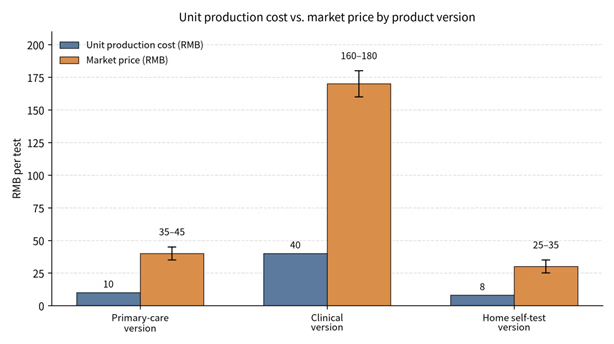
Figure 26. Unit production cost and market price by product version (concept form, to be validated). Production cost: primary-care RMB 10, clinical RMB 40, home RMB 8 per test; market price ranges: RMB 35–45, 160–180 and 25–35 per test. Source: team product-design scope.
5.3.4 Conversion Funnel
Converting exposure into paying customers follows a defined funnel: content reach → need confirmation (landing pages, presentations) → trial (free trials, research collaboration) → first purchase → repeat purchase or renewal → referral. Conversion at each stage is measured during the pilot phase (Section 5.6).
5.4 Customer Relationships and Growth
5.4.1 Customer Information Management
Customer data is gathered through online and offline channels — basic information, health status, purchasing behaviour and usage feedback — and stored in a database with tags (for example “primary-care physician”, “clinician”, “family member of a high-risk individual”) to build precise customer profiles. Needs analysis, behavioural analysis and value analysis then supply the evidence base for service and marketing, enabling precision marketing and personalised service.
5.4.2 End-to-End Service System
A service system spanning pre-sale, point-of-sale and after-sale strengthens both experience and trust. Before the sale, professional consultation helps customers understand the product and its applicable scenarios, and matches them to the right configuration. At the point of sale, the emphasis is on speed and convenience: order handling, payment and logistics work smoothly and waiting time is kept down. After the sale, usage guidance, flexible returns and efficient complaint handling resolve problems and defuse dissatisfaction. Clinical customers additionally receive regular academic support and technical training; home users receive online health consultation and follow-up.
5.4.3 Loyalty and Referral Growth
Growth follows the path of acquire → retain → refer → expand. A refined membership scheme, a developed points system and a referral rewards programme raise repeat purchase among existing customers while bringing in new ones through word of mouth. High-value customers receive exclusive benefits: free health checks, customised care plans and priority access to academic events. A feedback mechanism collects customer views continuously so that the product and the service keep improving, lifting both satisfaction and loyalty. Expansion beyond the initial base follows the staged route of Section 4.7 of the Market Analysis chapter — from the primary-care beachhead to hospitals, CDC programmes and home self-testing.
5.5 Competitive Landscape: Porter’s Five Forces
A five-force analysis summarises the competitive environment (Figure 27).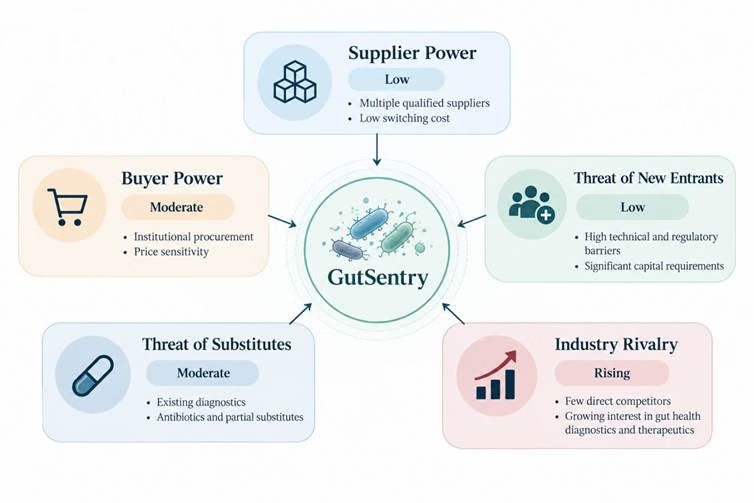
Figure 27. Porter’s Five Forces analysis for the GutSentry primary-care segment. Supplier power: weak — ample supply, mature processes, low dependence on any single supplier. Buyer power: moderate — centralised procurement negotiates hard while retail buyers have little leverage. Threat of new entrants: low — high technical, financial and regulatory barriers. Threat of substitutes: weak but to be monitored — conventional reagents and antibiotics cannot meet early, precise, antibiotic-free care. Intensity of existing rivalry: low today, rising — no theranostic engineered probiotic is on the market, and more entrants are expected as the industry develops.
5.5.1 Supplier Power — Weak
The principal inputs are strain culture media, gene editing reagents, lyoprotectants and packaging materials. Supply is ample, the number of suppliers is large, the production process is mature, and substitutes are readily available. Because the project uses an E. coli expression system and a straightforward process, dependence on any single supplier is low. Supplier bargaining power is therefore weak, which helps control manufacturing cost.
5.5.2 Buyer Power — Moderate
Buyer power varies by type. Centralised government procurement and large hospital chains buy in volume and negotiate hard; primary-care institutions and home users buy in small quantities and have little leverage. Because the product has a distinctive technological advantage and a differentiated position, and no directly comparable product exists, overall buyer power is moderate. High-quality service and value-added offerings can further reduce price sensitivity.
5.5.3 Threat of New Entrants — Low
Engineered probiotic theranostics is a technology-intensive field with high technical, financial and regulatory barriers. Technically, it requires core capability across synthetic biology, molecular biology and microbiology. Financially, early R&D and clinical trials demand large sums. Regulatorily, approval of a medical-grade engineered probiotic is a strict and lengthy process. Entry is therefore difficult, and new entrants are unlikely to pose a serious competitive threat in the near term.
5.5.4 Threat of Substitutes — Weak, but Watch
Substitutes on the market today are conventional test reagents and antibiotics. Conventional reagents are slow and instrument-dependent; antibiotics cause resistance and dysbiosis. Neither meets the demand for early, precise, antibiotic-free care. The advantages of this product — theranostics, early diagnosis, no resistance — are beyond the reach of conventional products, so the substitution threat is currently weak. As technology advances, however, alternatives such as phage therapy and novel antimicrobial peptides may emerge; sustained innovation will be needed to hold the lead.
5.5.5 Intensity of Existing Rivalry — Low Today, Rising
No theranostic engineered probiotic is on the market anywhere in the world, so competition today comes essentially from conventional diagnostic reagent makers and antibiotic manufacturers. These companies hold advantages in brand, channel and manufacturing scale, but have little accumulated capability in synthetic biology or theranostics. With the first conjugated quorum-sensing recognition technology and a differentiated position, this project has a clear advantage in its segment. As the industry develops, more entrants are likely, and competition will intensify.
5.6 Marketing Metrics and Validation
5.6.1 Key Metrics
The proposed pilot would use the metrics in Table 24 to assess the marketing strategy.
Table 24. Marketing metrics and validation
| Metric | Definition | Validation |
| CAC (customer acquisition cost) | Marketing spend ÷ new customers | Per-channel attribution accounting during pilot [pilot data pending] |
| Conversion rate | Customers ÷ qualified leads | Free-trial-to-purchase tracking [pilot data pending] |
| Retention / repeat rate | Renewing or repeat customers ÷ initial customers | Follow-up and order records [pilot data pending] |
| Referral rate | Referred customers ÷ total customers | Institutional and family referral registration [pilot data pending] |
| LTV (customer lifetime value) | Revenue per customer × customer lifetime | Derived from retention and repeat-purchase data [pilot data pending] |
| LTV / CAC | Customer value relative to acquisition cost | Joint calculation as the resource-allocation threshold |
5.6.2 Validation Sources
Validation draws on stakeholder interviews (Section 4.5.3 of the Market Analysis chapter), pilot-facility trials and the consumer survey (Fig. 13 of the Market Analysis chapter), ensuring the strategy rests on observed evidence rather than assumptions.
6 Risk Assessment and Mitigation
Risk assessment asks where the venture is most likely to fail, how those risks could be reduced and what the team would do if they materialised. This chapter follows five steps: identify, prioritise, mitigate, plan contingencies and monitor. It considers technical, clinical, regulatory and commercial uncertainties at successive stages of development.
6.1 Risk Identification
Risks are systematically identified in five categories covering the full chain from technology to commerce: technical risk, manufacturing and operations risk, market risk, regulatory risk and financial risk.
6.1.1 Technical Risk
• Insufficient strain stability. During storage or in the complex environment of the gut, the engineered probiotic may lose genetic segments or show reduced expression efficiency, degrading signal recognition, colorimetric reporting and therapeutic function below clinical requirements for stability.
• Clinical validation falling short. Phase I, II or III trials may fail to meet the expected targets for early-diagnosis sensitivity or treatment response rate, or may surface unknown safety problems — either outcome would block launch directly.
• Falling behind technologically. Synthetic biology and gut microbiome science move fast. A competitor that breaks through first on cross-species recognition or theranostics would erode this project’s technical moat.
6.1.2 Manufacturing and Operations Risk
• Supply chain disruption. Reliance on a small number of suppliers for the core strain, gene editing reagents and lyoprotectants means that any interruption halts production.
• Manufacturing quality variance. Inadequate environmental control during fermentation, purification or lyophilisation can produce substandard viable counts or microbial contamination, leading to quality complaints and regulatory penalties.
• Cost control difficulty. The production process for engineered bacteria is complex, and unit cost is high before scale is reached, squeezing margin.
• Enteric capsule formulation risk. Improper lyophilisation or enteric-coating craftsmanship may lead to low post-gastric survival rate of engineered probiotics and compromise in-vivo performance.
6.1.3 Market Risk
• Consumer trust barrier. The public has genuine safety reservations about engineered probiotics, and the probiotic category carries a legacy of overstated efficacy claims, so willingness to buy is low.
• Competitive squeeze. International probiotic majors and domestic players compete on brand, channel and price.
• Channel obstacles. Hospital formulary access is difficult, pharmacy listing fees are high, and the product may simply not get enough visibility — all of which hold back market penetration.
6.1.4 Regulatory Risk
• Unclear regulatory standards. Engineered probiotics sit in a grey area between drug and food regulation. An undefined approval pathway prolongs time to market and raises compliance cost.
• Policy change. Tighter regulation, or cost containment that excludes innovative products, would affect clinical adoption and patients’ willingness to pay.
• International trade barriers. Export markets apply stringent approval processes to genetically modified products, and tariffs may rise, eroding export competitiveness.
6.1.5 Financial Risk
• Heavy R&D and manufacturing investment. Pre-clinical research, clinical trials and construction of a GMP facility all demand large sums; delays in financing could cause a cash shortfall.
• Cash-flow pressure. In the early period after launch, sales volume is low while marketing and fixed costs are high, so monthly cash flow is negative and continuity is at risk.
• Long payback period. A medical-grade product takes five to eight years to reach profitability, and investors may lose patience and seek an early exit.
6.2 Risk Prioritization
Priority is assessed on two dimensions — likelihood × impact: likelihood reflects the probability of occurrence, impact the severity of consequences, and the combination determines priority and guides resource allocation. Ratings are team assessments to be updated with R&D and pilot data [to be complemented]. All risks are registered in Table 25.
Table 25. Risk identification and priority register
| ID | Risk | Category | Likelihood | Impact | Priority |
| R1.1 | Insufficient strain stability | Technical | Medium | High | High |
| R1.2 | Clinical validation falling short | Technical | Medium | High | High |
| R1.3 | Falling behind technologically | Technical | Low | Medium | Medium |
| R2.1 | Supply chain disruption | Manufacturing & operations | Low | High | Medium |
| R2.2 | Manufacturing quality variance | Manufacturing & operations | Medium | High | High |
| R2.3 | Cost control difficulty | Manufacturing & operations | Medium | High | High |
| R2.4 | Enteric capsule formulation risk | Manufacturing & operations | Medium | High | High |
| R3.1 | Consumer trust barrier | Market | Medium | Medium | Medium |
| R3.2 | Competitive squeeze | Market | High | Medium | High |
| R3.3 | Channel obstacles | Market | Medium | Medium | Medium |
| R4.1 | Unclear regulatory standards | Regulatory | High | High | Critical |
| R4.2 | Policy change | Regulatory | Medium | High | High |
| R4.3 | International trade barriers | Regulatory | Low | Medium | Medium |
| R5.1 | Heavy R&D and manufacturing investment | Financial | High | High | High |
| R5.2 | Cash-flow pressure | Financial | Medium | High | High |
| R5.3 | Long payback period | Financial | Medium | Medium | Medium |
Risks rated critical or high are the focus of management and resource allocation: one critical risk (R4.1 unclear regulatory standards) and nine high risks (R1.1, R1.2, R2.2, R2.3, R2.4, R3.2, R4.2, R5.1, R5.2). The risk distribution is visualised in Fig. 28.
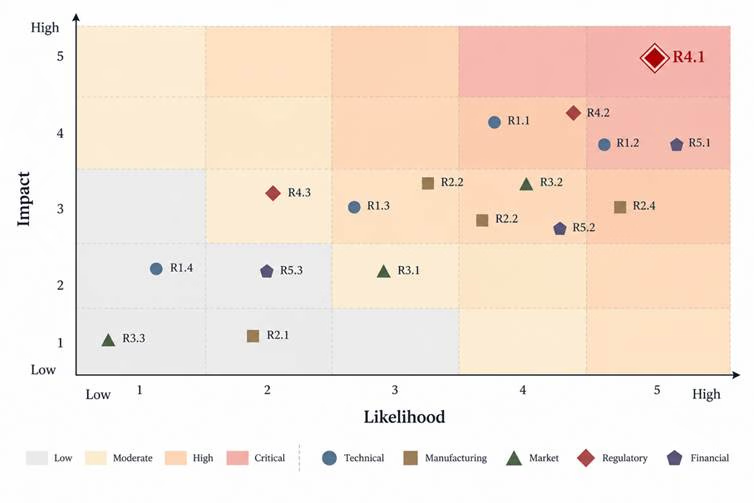
Figure 28. Risk matrix: likelihood (x-axis, low to high) versus impact (y-axis, low to high), with five-level colour bands indicating priority zones and the 15 identified risks (R1.1–R5.3) plotted. R4.1 (unclear regulatory standards) is highlighted in the upper-right high-priority zone. Ratings are team assessments to be updated with R&D and pilot data.
6.3 Mitigation Strategies
Mitigation strategies apply preventive actions before a risk occurs, reducing its probability or impact.
6.3.1 Technical Risk Mitigation
• Strain stability. Run accelerated ageing studies simulating gut temperature, pH and bile acid conditions to verify genetic stability and activity retention over a 12-month shelf life. Introduce a dual-promoter regulatory architecture so that no single element becomes a point of failure. Apply lyoprotectants and enteric coating to raise strain survival above 90%.
• Clinical risk control. Run a pilot study of 50–100 cases with tertiary hospitals to adjust dose and formulation before launching formal trials. Establish a real-time clinical data tracking system with periodic review by medical monitors; any anomaly triggers an immediate hold and an ethics review.
• Building the technical moat. Reinvest more than 15% of annual revenue in R&D and track frontier technologies such as CRISPR-Cas12 and base editing, with a formal technology iteration review every two years. File 10–15 invention patents on core elements and pursue PCT international filings to build a patent pool.
6.3.2 Manufacturing and Operations Risk Mitigation
• Supply chain management. Qualify two to three alternative suppliers for each critical input, with long-term supply agreements and emergency supply arrangements, and hold three months of safety stock. Run a supply chain risk alert system with monthly supplier risk assessment.
• Manufacturing quality control. Write standard operating procedures for every step, test in real time at each stage, and upload data to a quality traceability system so that every batch can be traced end to end. Calibrate and maintain equipment on schedule, train and assess production staff in aseptic technique, and fund a quality award scheme.
• Cost optimisation. Raise capacity from 5 million to 30 million units a year within three years to spread fixed cost, and adopt high-density fermentation to cut material consumption. Maintain a live production cost dashboard, review key metrics weekly, and correct immediately on any budget overrun.
• Capsule formulation validation. Perform stability assessment under simulated gastric-fluid conditions; optimise lyoprotectant formula and enteric-coating parameters to guarantee engineered-bacteria viability above 90% after gastric passage.
6.3.3 Market Risk Mitigation
• Consumer education and trust building. Work with authoritative institutions to explain the technology and publish safety data; run real-world studies and make clinical results and third-party testing reports public. Invite recovered patients to share their experience and produce case booklets and short videos, so that the marketing rests on evidence.
• Differentiated competition. Hold the position of “early warning plus theranostics plus no resistance”, and foreground the distinctive advantages of primary-care accessibility and cross-species recognition. Offer a “product plus health management service” package to raise perceived value rather than competing on price.
• Channel development. Build a clinical promotion team with medical backgrounds; work to get the product into enhanced-recovery-after-surgery recommendation lists; and offer continuing education credit courses to partner physicians. Online, run physician livestream consultations with platforms such as JD Health; offline, sign strategic agreements with pharmacy chains to secure prime shelf placement.
6.3.4 Regulatory Risk Mitigation
• Policy tracking and regulatory engagement. Set up a policy research group to track regulation weekly, take part in standard-setting through industry associations, and submit recommendations on approval procedures. Pursue a dual filing route — as a drug and as a special medical food — and engage a CRO to strengthen the dossier and shorten time to market.
• Adapting to policy. Work with commercial insurers to develop peri-procedural health insurance products that reduce what patients pay, and apply for local insurance listing once clinical data has accumulated. Establish an adverse-event monitoring system, file monthly reports with regulators, and undertake post-marketing re-evaluation proactively.
• International trade compliance. Before entering an export market, commission a local study of the applicable policy and prepare a compliance plan. Use cross-border e-commerce and overseas warehousing to reduce trade exposure, and take out export credit insurance to cover policy change and tariff losses.
6.3.5 Financial Risk Mitigation
• Diversified financing. Bring in angel investment, healthcare venture capital and strategic corporate capital in stages, reducing reliance on any single investor. Apply for specialised lending programmes for technology enterprises and for biopharmaceutical industry funds, and pursue government R&D subsidies and tax relief.
• Cash-flow management. Set an annual cash-flow budget, track variance monthly, and cut non-core spending immediately on any overrun. Shorten collection cycles in medical channels, negotiate payment terms with online platforms, and offer prepayment discounts on large orders.
• Investor relations. Submit progress reports monthly and hold investor meetings quarterly, communicating risks and mitigation measures transparently. Set expectations clearly around the five- to eight-year path to profit, and align interests through milestone-based performance agreements.
6.4 Contingency Planning
While mitigation reduces probability before a risk occurs, contingency planning provides fallback actions after a risk materialises. For risks rated critical or high, trigger conditions and backup actions are pre-defined (Table 26).
Table 26. Contingency plans for high-priority risks
| Risk | Trigger condition | Contingency action |
| R4.1 Unclear regulatory standards | Approval pathway remains undefined or timeline significantly exceeds expectations | Enter the market first via the sensing component in a research-use or narrow-indication scenario, while the therapeutic module proceeds through approval separately |
| R1.1 Insufficient strain stability | Accelerated ageing studies show genetic or activity retention below target | Switch to the dual-promoter architecture and adjust the formulation; delay launch until stability is met |
| R1.2 Clinical validation falling short | Early clinical sensitivity or response rate below target | Narrow the indication scope and re-validate in the highest-need subpopulation |
| R2.2 Manufacturing quality variance | Batch quality deviation or failed sampling inspection | Activate the backup production line with batch quarantine review; trace and correct the process before resuming |
| R3.2 Competitive squeeze | Leading competitor undercuts on price or channel advantage | Shift to a “product + health-management service” package, avoiding a price war and reinforcing differentiation |
| R5.1 Financing lag | Cash runway below planned threshold | Cut non-core spending, apply for government R&D subsidies, and seek strategic-partner prepayments |
6.5 Risk Monitoring and Continuous Improvement
6.5.1 Key Risk Indicators
Key risk indicators (KRIs) and warning conditions are set for priority risks, turning risk management from a static checklist into a dynamic control system (Table 27). Thresholds are to be calibrated with pilot and validation data .
Table 27. Key risk monitoring indicators
| Risk | Key risk indicator | Warning condition |
| R1.1 Strain stability | Accelerated ageing survival rate and genetic-stability pass rate | Survival below 90% or loss of genetic segments |
| R1.2 Clinical validation | Early clinical sensitivity and treatment response rate vs. target | Sensitivity or response rate below validation threshold |
| R2.2 Manufacturing quality | Batch pass rate, viable-count test results | Batch pass rate below target or contamination detected |
| R2.3 Cost control | Unit production cost and budget variance | Unit cost above target range |
| R3.2 Competitive squeeze | Pilot conversion rate, number of covered facilities | Conversion or coverage below stage target |
| R4.1 Regulatory approval | Approval milestone progress, policy-tracking events | Approval progress lagging or classification adjustment |
| R5.1/R5.2 Financial | Cash runway (months), monthly budget variance | Cash runway below planned threshold or consecutive overruns |
6.5.2 Monitoring Mechanism and Continuous Improvement
A project risk control committee is established, meeting monthly to review risk ratings and the status of mitigation measures. A risk early-warning system escalates high-risk events to the decision-making level within 24 hours to ensure a fast response. A risk review is held every six months to assess how well mitigation has worked and to update the Risk Assessment and Response Manual. In light of developments in technology, policy and competition, new risks are identified and contingency plans prepared, closing the loop from identification through assessment and response to review.
6.6 De-risking Roadmap
Risk management is ultimately implemented as a staged de-risking roadmap: each stage focuses on eliminating the largest remaining uncertainty, and resources for the next stage are committed only after validation, rather than building everything at once and launching (Figure 29).
• Stage 1 — Technical de-risking: prove whether the technology works as intended. Prototype validation, multi-condition in-vitro testing, sensitivity and specificity validation — answering “can the technology reliably perform its designed function”.
• Stage 2 — Clinical de-risking: prove whether the technology works in realistic biological conditions. A 50–100-case pilot study, safety assessment and performance validation — answering “is it stable and effective in the real gut environment”.
• Stage 3 — Regulatory de-risking: prove whether the product can legally and safely reach the market. Early regulatory classification assessment, staged safety and efficacy studies, and regulatory engagement — answering “is the approval pathway feasible”.
• Stage 4 — Commercial de-risking: prove whether the venture can scale sustainably. Manufacturing validation, unit-economics review, supplier diversification and distribution partnerships — answering “can it be delivered consistently at affordable cost”.
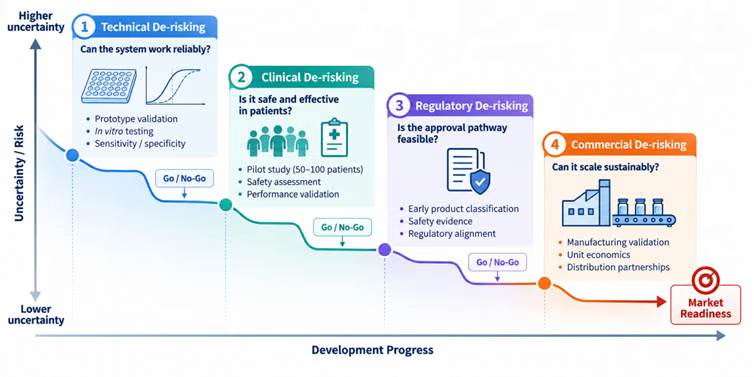
Figure 29. De-risking roadmap: technical de-risking → clinical de-risking → regulatory de-risking → commercial de-risking. Each stage targets the largest remaining uncertainty before further capital deployment: technology reliability, real-gut effectiveness, regulatory pathway feasibility, and sustainable scaling.
This roadmap demonstrates that the risks of GutSentry are identifiable, verifiable and progressively reducible: the team does not claim that no major barriers exist, but knows which key points remain to be proven and has designed a validation path that eliminates uncertainty step by step.
7 Investment and Financial Analysis
This chapter answers five questions: how the business model generates revenue, what the cost structure is, how much capital is required, when financial sustainability is reached, and what additional investment unlocks. The analysis follows the sequence of revenue model → unit economics → financial projections → break-even → funding requirement → use of funds and milestones → scenario and sensitivity analysis: the funding amount is derived from the financial model rather than set in advance.
7.1 Business Model and Revenue Model
The revenue model answers “what we sell, who pays, and how they pay”, organised into primary, supplementary and future revenue streams. The primary revenue stream is product sales across three versions (forecast in Table 19); collaborative pharmaceutical R&D, technology licensing and technical services form supplementary streams that provide stable early cash flow — in the baseline financial model this stream grows from RMB 1.20 million in 2026 to RMB 3.799 million in 2030 (consistent with the projected statements in Section 7.4.3).
7.1.1 Product Sales (Primary Revenue Stream)
• Primary-care version — RMB 40 per unit, for primary-care institutions (township health centres, community health service centres); instrument-free and sample-shipping-free, with results in 12 hours.
• Clinical version — RMB 170 per unit, for hospitalised and peri-operative high-risk patients in secondary and tertiary hospitals, purchased by clinical departments.
• Home self-test version — RMB 30 per unit, for post-discharge monitoring and high-risk families, sold through online and retail channels.
7.1.2 Institutional and Licensing Revenue Streams (Supplementary)
• Collaborative pharmaceutical R&D — pharmaceutical companies pay for project-based R&D covering strain development, functional validation and preclinical studies.
• Technology licensing — licensing fees (upfront fees combined with milestones or royalties) based on the patent pool, corresponding to the 10–15 invention patent portfolio in Section 6.3.1.
• Technical services — detection solutions and data services for medical institutions and the disease-control system, charged under service contracts.
7.1.3 Future Revenue Streams
• With platform expansion (Section 4.7.2), recurring revenue is expected from indication expansion and health-management services, together with cross-indication licensing.
7.2 Unit Economics
Unit economics examines selling price, unit variable cost, gross profit and gross margin per unit to determine whether selling one unit is profitable. The baseline unit economics of the three versions are shown in Table 28(conceptual form, pending formulation and process validation).
Table 28. Unit economics by version (baseline)
| Product version | Baseline price (RMB/unit) | Unit variable cost (RMB/unit) | Gross profit (RMB) | Gross margin |
| Primary-care | 40 | 10 | 30 | 75.0% |
| Clinical | 170 | 40 | 130 | 76.5% |
| Home self-test | 30 | 8 | 22 | 73.3% |
All three versions maintain a gross margin above 70%, consistent with the assumption of “gross margin above 60%” in the financial model (Section 7.4), and leave room for volume-based discounts and channel costs. Simplified projected user lifetime value (LTV) at the end-user level is shown in Table 29: this is a commercial-model assumption (not a clinical usage recommendation), to be replaced with pilot data. Simplified LTV = gross profit per unit × annual usage frequency × usage period in years.
Table 29. Simplified projected user LTV (end-user level)
| Product version | Usage period | Annual usage | Gross profit/unit (RMB) | Simplified LTV (RMB) |
| Primary-care | 1 year | 4 times/year | 30 | 120 |
| Clinical | 1 year | 2 times/year | 130 | 260 |
| Home self-test | 2 years | 6 times/year | 22 | 264 |
7.3 Cost Structure
Costs are divided into development costs and operating costs: development costs serve technical validation and regulatory preparation, are incurred before commercialisation and are covered by stage financing; operating costs are incurred with product delivery. The initial expenditure budget is RMB 490,000, structured as follows.
7.3.1 Development Costs
• Strain development: RMB 60,000 (development), RMB 76,000 (biosafety validation) and RMB 64,000 (in-vivo efficacy validation) — RMB 200,000 in total.
• Manufacturing-system build: high-density fermentation equipment RMB 150,000, encapsulation equipment RMB 23,000, purification equipment RMB 27,000 — RMB 200,000 in total.
• Direct materials (per unit): strain culture media about RMB 200/kg, prebiotics about RMB 100/kg, adjuvants about RMB 50/kg, packaging about RMB 1/unit.
7.3.2 Operating Costs
• Manufacturing and QC: labour, energy and quality-control costs of fermentation, encapsulation and purification (varying with volume).
• Sales and channels: clinical promotion team, channel costs and after-sales support (growing with sales scale).
• Management and compliance: IP maintenance, quality-management-system certification and regulatory filing amortisation.
• Annual fixed operating costs are about RMB 1.8 million/year (breakdown in Table 30), used for break-even calculation (Section 7.5); large-scale clinical trials and one-off R&D projects are excluded from fixed operating costs and covered by stage financing.
The initial expenditure budget of RMB 490,000 is split by stage in Table 29: the R&D stage accounts for the largest share (materials, equipment, personnel and animal studies), followed by the clinical stage and the compliance-and-commercialisation stage.
Table 30. Composition of the initial expenditure budget
| Stage | Main items | Amount (RMB 10k) |
| R&D stage | Materials, equipment, personnel, animal studies | 30.0 |
| Clinical stage | Trials, filings | 8.0 |
| Compliance & commercialisation | Patents 6.0, market access 4.0, logistics 1.0 | 11.0 |
| Total | — | 49.0 |
7.4 Financial Projections
7.4.1 Principal Financial Assumptions
• Accounting follows the Accounting Standards for Business Enterprises, with RMB as the functional currency and the accrual basis applied.
• Fixed assets are depreciated on a straight-line basis over 5 years; intangible assets are amortised over 10 years.
• R&D expenditure is accrued at 10% of sales revenue; bad-debt provision is 5%; inventory is accrued at 10% of sales volume.
• Under the tax relief for university student enterprises (“two years exempt, three years at half rate”), enterprise income tax is waived for the first two years and levied at half rate in years three to five; VAT is 13% and surcharges 12%.
• No dividends in the first three years; in years four and five, 20% of net profit is distributed.
7.4.2 Five-Year Product Volume and Revenue Forecast
The five-year revenue forecast uses a bottom-up institutional penetration model rather than assuming direct capture of a fixed percentage of TAM: annual unit sales are estimated from the number of institutions × monthly usage per institution, combined with home-channel users (Table 31), and cross-checked against the SOM defined in Section 4.2. Revenue = primary-care volume × 40 + clinical volume × 170 + home volume × 30.
Table 31. Five-year product volume and revenue forecast (baseline)
| Year | Primary-care (units) | Clinical (units) | Home (units) | Total volume (units) | Revenue (RMB 10k) |
| 2026 | 12,000 | 2,400 | 2,000 | 16,400 | 94.8 |
| 2027 | 60,000 | 10,800 | 15,000 | 85,800 | 468.6 |
| 2028 | 216,000 | 48,000 | 60,000 | 324,000 | 1,860.0 |
| 2029 | 630,000 | 180,000 | 180,000 | 990,000 | 6,120.0 |
| 2030 | 1,440,000 | 432,000 | 450,000 | 2,322,000 | 14,454.0 |
• 2026 (pilot/validation): primary care 5 institutions × 200 units/month × 12; clinical 2 hospitals × 100 units/month × 12; home 2,000 units. The year focuses on validating technical feasibility, clinical workflow and willingness to pay.
• 2027 (early adoption): primary care 20 institutions × 250 units/month; clinical 6 × 150 units/month; home 15,000 units.
• 2028 (initial scale): primary care 60 × 300 units/month; clinical 20 × 200 units/month; home 60,000 units.
• 2029 (regional expansion): primary care 150 × 350 units/month; clinical 60 × 250 units/month; home 180,000 units.
• 2030 (scaled commercialisation): primary care 300 × 400 units/month; clinical 120 × 300 units/month; home 450,000 units.
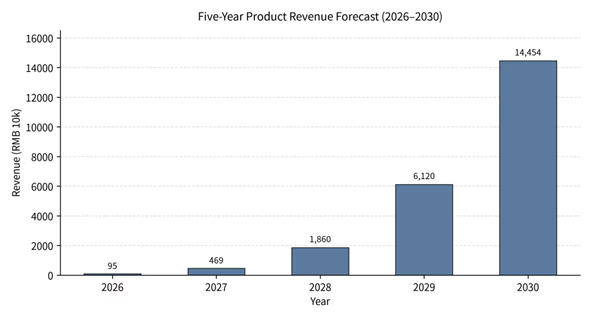
Figure 30. Five-year product revenue forecast (2026–2030, total of the primary-care, clinical and home versions). RMB 0.948 million in 2026, rising to RMB 144.54 million (≈ RMB 145 million) in 2030. Source: team baseline financial model.
7.4.3 Key Financial Indicators
The projected statements and indicators below are prepared on the early financial model (institutional and licensing revenue basis): the projected income statement is shown in Table 32, key cash-flow and balance-sheet items in Table 33, and the indicator summary in Table 34.
Table 32. Projected income statement (institutional and licensing basis, RMB 10k)
| Item | 2026 | 2027 | 2028 | 2029 | 2030 |
| Operating revenue | 120.0 | 144.0 | 208.8 | 286.6 | 379.9 |
| Operating costs | 36.0 | 43.2 | 62.6 | 86.0 | 114.0 |
| R&D expenses | 12.0 | 14.4 | 20.9 | 28.7 | 38.0 |
| Selling expenses | 10.0 | 12.0 | 17.4 | 23.9 | 31.7 |
| Administrative expenses | 15.0 | 18.0 | 26.1 | 35.8 | 47.5 |
| Financial expenses | 0.3 | 0.3 | 0.3 | 0.3 | 0.3 |
| Taxes and surcharges | 0.8 | 0.9 | 1.3 | 1.8 | 2.4 |
| Operating profit | 45.9 | 55.2 | 80.2 | 110.1 | 146.0 |
| Income tax expense | 0.0 | 0.0 | 10.0 | 13.8 | 18.3 |
| Net profit | 45.9 | 55.2 | 70.2 | 96.3 | 127.7 |
Table 33. Key cash-flow and balance-sheet items (institutional and licensing basis, RMB 10k)
| Item | 2026 | 2027 | 2028 | 2029 | 2030 |
| Cash inflow from operations | 127.2 | 148.3 | 183.7 | 246.8 | 329.6 |
| Net operating cash flow | 50.4 | 56.1 | 54.8 | 77.6 | 112.1 |
| Total assets | 154.4 | 163.6 | 193.5 | 241.2 | 309.4 |
| Total liabilities | 14.6 | 16.1 | 24.3 | 32.4 | 42.2 |
| Owners’ equity | 139.8 | 147.5 | 169.2 | 208.8 | 267.2 |
| Cash and equivalents | 105.4 | 117.6 | 145.3 | 189.3 | 251.9 |
Table 34. Financial indicator summary (institutional and licensing basis)
| Indicator | 2026 | 2027 | 2028 | 2029 | 2030 |
| Net sales margin | 38.3% | 38.3% | 33.6% | 33.6% | 33.6% |
| Return on total assets | 29.7% | 33.7% | 36.3% | 39.9% | 41.3% |
| Receivable turnover days | 146.42 | 95.31 | 27.75 | 14.74 | 19.12 |
| Inventory turnover days | 356.62 | 289.58 | 114.77 | 112.50 | 112.74 |
| Current ratio | 8.25 | 8.42 | 7.06 | 6.95 | 7.09 |
| Quick ratio | 8.00 | 8.16 | 6.80 | 6.68 | 6.83 |
| Interest coverage | 154.0 | 185.0 | 268.3 | 368.0 | 487.7 |
| Asset-liability ratio | 9.5% | 9.8% | 12.6% | 13.4% | 13.6% |
On this basis, net profit rises from RMB 459,000 in 2026 to RMB 1,277,000 in 2030, operating cash flow remains positive throughout, reaching RMB 1,121,000 in 2030, and the asset-liability ratio is kept below 15%. Full income-statement and cash-flow projections on the product-sales basis of Section 7.4.2 will be updated with the financial model.
7.5 Break-even Analysis
The break-even point answers “when the business no longer depends on external capital to operate”, calculated as: break-even volume = annual fixed operating costs ÷ (price − unit variable cost). Annual fixed operating costs are RMB 1.8 million (Table 35).
Table 35. Annual fixed operating cost structure
| Cost item | Amount (RMB 10k/year) |
| Core team and personnel | 90 |
| Laboratory/office and basic operations | 25 |
| Equipment depreciation and maintenance | 25 |
| Legal, IP, regulatory and administration | 25 |
| IT, insurance and other fixed costs | 15 |
| Total | 180 |
If a single version were to bear all fixed costs, theoretical break-even volumes would be 60,000 units for the primary-care version (1.8M ÷ 30), about 13,846 units for the clinical version (1.8M ÷ 130) and about 81,818 units for the home version (1.8M ÷ 22). The formal analysis uses the weighted contribution margin of the three-version portfolio: about RMB 41 per unit on the 2027 sales mix, giving a portfolio break-even volume of about 44,000 units. The 2027 baseline volume of 85,800 units exceeds this point; on an operating basis, the baseline model therefore reaches break-even in 2027 (Operating break-even: 2027).
7.6 Funding Requirement
7.6.1 Initial Registered Capital and Sources
Initial registered capital is RMB 1,000,000 (≈ USD 147,000), sourced as shown in Table 36. It covers the initial expenditure budget (RMB 490,000) in Section 7.3 and early working capital.
Table 36. Sources of initial registered capital
| Source | Amount (RMB 10k) | Share | Notes |
| Founding team | 64 | 64% | Contributed as intellectual property, fixed assets and cash |
| Venture capital | 8.4 | 8.4% | In exchange for 7% equity |
| Strategic partners | 20.4 | 20.4% | Bringing complementary industry resources |
| Bank borrowing | 7.2 | 7.2% | Debt financing at LPR plus 10% |
| Total | 100 | 100% | — |
7.6.2 Milestone-based Financing Plan
Follow-on financing follows a milestone-based structure: funding per round = expected cash burn of the stage × 1.25 (including a 25% safety buffer), and capital is committed in exchange for completing the next de-risking milestone (Table 37). The funding requirement is derived from the financial model rather than set in advance.
Table 37. Milestone-based financing plan
| Round | Timing | Expected burn (RMB 10k) | Funding raised (RMB 10k) | Main use | Milestone achieved |
| Angel/Seed | 2027 | 400 | 500 | Prototype optimisation, preclinical validation, personnel, equipment | Core performance and preclinical feasibility validated |
| Series A | 2028 | 1,200 | 1,500 | Multicentre clinical validation, regulatory preparation, personnel, pilot production | Complete multicenter clinical validation and achieve regulatory submission readiness |
| Series B | 2029–2030 | 2,400 | 3,000 | Regulatory execution, manufacturing scale-up, quality system, market entry | Commercial production and regional market expansion |
Seed-round allocation: R&D and prototype optimisation RMB 1.6M, preclinical performance validation RMB 1.2M, personnel RMB 0.8M, equipment and infrastructure RMB 0.4M — RMB 4.0M in total; Series A: multicentre clinical validation RMB 7.0M, personnel RMB 2.2M, regulatory and quality RMB 1.5M, pilot production and equipment RMB 1.3M — RMB 12.0M in total; Series B focuses on regulatory execution, manufacturing expansion and commercial deployment (RMB 24.0M).
7.7 Use of Funds and Milestones
The allocation of initial capital explains not only where the money goes but which milestones it would fund, mapped to the staged de-risking roadmap in Section 6.6 (Table 38).
Table 38. Use of initial capital and corresponding milestones
| Use | Share | Specifics | Milestone created |
| Core technology R&D | 40% | Strain construction, functional validation, safety testing | Technical de-risking: sensing and logic modules perform as designed (Stage 1 of 6.6) |
| Manufacturing-system build | 25% | Fermentation, encapsulation and purification equipment; workshop conversion; enteric-coating process validation; supporting test-kit consumables | Commercial de-risking: process feasibility and batch consistency (Stage 4 of 6.6) |
| Preclinical and clinical trials | 25% | Animal studies, multicentre clinical trials, regulatory filings | Clinical and regulatory de-risking: safety and efficacy evidence (Stages 2–3 of 6.6) |
| IP and compliance | 5% | Patent filings, regulatory consulting, QMS certification | Patent pool and compliance foundation (6.3.1 technology moat) |
| Commercialisation reserve | 5% | Channel development, marketing, working capital | Market validation: initial customer pipeline (6.3.3 channel development) |
The full logic of capital deployment is: capital → technical validation → risk reduction → regulatory progress → commercial readiness → scale; every investment purchases risk reduction and value creation, and each financing round in Section 7.6.2 is tied to a de-risking milestone.
7.8 Investment Analysis and Scenario & Sensitivity Analysis
7.8.1 Investment Analysis Indicators
The investment analysis below is prepared on the early financial model (institutional and licensing basis): net present value (NPV) at a 10% discount rate is RMB 2.559 million, greater than zero — the project is viable (details in Table 39); the payback period is 1.88 years on a static basis and 2.19 years discounted; the internal rate of return (IRR) is 18.7%, above the industry benchmark; cumulative dividends in years four and five exceed the initial investment, with a five-year return above 200%. Investment indicators on the product-sales basis will be updated with the financial model. As an early-stage biotech venture, investment value is better conveyed through market opportunity, gross margin, recurring-revenue potential and milestone-based valuation growth than through precise exit-return promises.
Table 39. Investment analysis detail (NPV calculation, 10% discount rate, RMB 10k)
| Item | Year 1 | Year 2 | Year 3 | Year 4 | Year 5 |
| Net operating cash flow | 50.4 | 56.1 | 54.8 | 77.6 | 112.1 |
| Discount factor (10%) | 0.9091 | 0.8264 | 0.7513 | 0.6830 | 0.6209 |
| Net present value | 45.82 | 46.36 | 41.17 | 53.00 | 69.59 |
7.8.2 Scenario and Sensitivity Analysis
The validity of the financial forecast is tested through three scenarios, with market penetration, manufacturing cost and full commercial launch timing as the core variables (Table 40). 2026–2027 are the pilot and early-adoption period, with 2028 as the baseline full-commercial-entry year; full-scale commercialisation shifts to 2029 in the conservative scenario and advances to 2027 in the optimistic scenario.
Table 40. Scenario analysis framework
| Scenario | Market penetration | Manufacturing cost | Full commercial launch | Portfolio break-even |
| Conservative | 0.5× baseline | 1.3× baseline | 2029 (1 year delayed) | Later than baseline |
| Baseline | 1.0× baseline | 1.0× baseline | 2028 | 2027 (operating basis) |
| Optimistic | 1.5× baseline | 0.8× baseline | 2027 (1 year earlier) | Earlier than baseline |
Sensitivity analysis covers three variables: market penetration (−50% to +50%), manufacturing cost (−20% to +20%) and commercial launch timing (−1 to +1 year). The impact of manufacturing cost changes on gross margin is shown in Table 41.
Table 41. Impact of manufacturing cost changes on gross margin
| Product version | Cost −20% | Baseline cost | Cost +20% |
| Primary-care | RMB 8 → 80.0% | RMB 10 → 75.0% | RMB 12 → 70.0% |
| Clinical | RMB 32 → 81.2% | RMB 40 → 76.5% | RMB 48 → 71.8% |
| Home self-test | RMB 6.4 → 78.7% | RMB 8 → 73.3% | RMB 9.6 → 68.0% |
Sensitivity conclusion: manufacturing cost changes significantly affect gross margin (a swing of about 5–10 percentage points across the three versions); commercial launch timing and market penetration more strongly affect cumulative cash requirements and the break-even point — volume uncertainty generally exceeds price uncertainty and is the dominant driver of early-stage financial outcomes.
8 Giving Back and Advancing Education
GutSentry was not developed in isolation. Our project builds upon open scientific knowledge, previous work in synthetic biology, clinical expertise, stakeholder feedback, and the collaborative culture of student biological research. As we move from a laboratory concept toward a potential real-world product, we believe that value creation should be reciprocal.
For us, giving back therefore means more than donating products or organizing one-time outreach events. It means transforming what we have learned into resources that others can understand, reuse, improve, and carry forward. An engineered living diagnostic–therapeutic system is the seed we sow for health, while science communication and social-access programmes are the soil in which that seed takes root: technology answers “whether it can be done”, while education and social mechanisms answer “who can understand it, trust it, and help shape it”. Our long-term goal is to create a knowledge ecosystem around living therapeutics in which patients can make more informed decisions, students can enter synthetic biology with lower barriers, future iDEC teams can avoid repeating the same translational challenges, and young innovators can better understand how a biological prototype becomes a responsible product.
8.1 From Innovation to Shared Value
GutSentry addresses bacterial intestinal infection through an integrated living diagnostic–therapeutic system. However, the social value of such a technology depends not only on whether it works, but also on whether people understand it, trust it, and have the opportunity to participate in shaping how it is developed. This creates three responsibilities for our team:
• First, we should make engineered living therapeutics understandable to non-specialists.
• Second, we should reduce barriers for students and future teams who want to work at the intersection of synthetic biology, medicine, and entrepreneurship.
• Third, we should document and share the practical lessons we gained while translating GutSentry from a biological concept into a potential product.
We therefore define our giving-back strategy around three principles:
• Open knowledge. Knowledge that does not depend on proprietary product information should be made reusable whenever possible.
• Active participation. Education should enable people to explore, design, question, and provide feedback rather than simply receive information.
• Long-term continuity. Resources should remain useful after the current iDEC season and should be designed so that future teams, teachers, and communities can continue improving them.
8.2 Who We Aim to Support
Different audiences encounter different barriers when approaching synthetic biology and living therapeutics. We therefore avoid a one-size-fits-all education model.
8.2.1 Public and Patients
For the public, the main barrier is not a lack of scientific detail, but uncertainty about what engineered bacteria are, how they differ from conventional probiotics, what benefits they may offer, and how biosafety is maintained. Our goal is to improve understanding of:
• engineered living therapeutics;
• bacterial infection and antimicrobial resistance;
• targeted versus empirical antimicrobial treatment;
• biological containment and programmed self-elimination;
• the role and limitations of point-of-care diagnostics.
The objective is not to promote GutSentry as a product, but to help people evaluate this emerging class of technology more critically and confidently.
8.2.2 School and University Students
For students, the barrier is often conceptual complexity. We aim to make key synthetic-biology ideas intuitive through modular learning activities covering biosensors, quorum-associated signals, AND logic gates, reporter systems, therapeutic effectors, and kill switches and biocontainment. Rather than teaching GutSentry as a finished solution, we use it as a case study through which students can understand how biological systems can be engineered to sense, decide, respond, and safely terminate.
8.2.3 Primary-care Health Workers
Primary-care clinicians face a core barrier of lacking rapid, reliable detection tools and evidence for prescribing decisions (corresponding to the beachhead positioning in Section 4.2 and the channel strategy in Section 5.3). Through continuing education and hands-on training, we plan to strengthen their judgement in infection-state identification, interpretation of test results, and rational use of antibiotics, deploying training materials in coordination with the product’s entry into primary care.
8.2.4 Future Research Teams
Student teams can design promising biological systems but face repeated difficulties when they begin considering commercialization. Common questions include: Who is the first customer? How should a beachhead market be selected? How can TAM, SAM, and SOM be estimated? What should be included in a competitor analysis? How should unit economics be approached before manufacturing data exist? How should technical, clinical, regulatory, and commercial risks be prioritized? Because we encountered these same questions while developing GutSentry, we aim to convert our experience into reusable tools rather than leaving the learning process undocumented.
8.2.5 Emerging Biotech Innovators
For students interested in biotechnology entrepreneurship, we aim to connect scientific thinking with translational thinking: a promising biological mechanism is only the beginning of a product journey. A successful biotechnology venture must also consider users, manufacturing, regulation, cost, access, safety, and long-term implementation.
8.3 Making Living Therapeutics Understandable
8.3.1 Living Therapeutics Education Kit
We propose a modular educational package that introduces engineered living medicines without requiring advanced biological knowledge. The kit is organized around five questions (Table 42).
Table 42. Living Therapeutics Education Kit: five modules
| Module | Core question | Content introduced |
| SENSE | What does the cell detect? | Environmental and disease-associated biological signals |
| DECIDE | How does the cell distinguish meaningful signals from noise? | Biological logic gates and multi-input sensing |
| REPORT | How can biological activity become a visible signal? | Reporter systems and point-of-care readouts |
| TREAT | How can a living system deliver a localized intervention? | Targeted therapeutic outputs |
| CONTAIN | How can an engineered organism be prevented from spreading outside its intended environment? | Biological containment and self-lysis strategies |
The material can be adapted into short slide decks, printable cards, classroom activities, and digital resources. This modular structure also makes the resource independent of GutSentry itself: teachers can replace the signals, outputs, or disease context to create new examples.
8.3.2 Build Your Own Living Sentinel
To move beyond passive science communication, we propose an interactive design activity called Build Your Own Living Sentinel. Participants are given modular cards representing biological inputs, sensing modules, logic gates, diagnostic outputs, therapeutic outputs, and containment systems. Their task is to design a hypothetical living therapeutic for a defined clinical problem. For example:
Signal A + Signal B → AND Gate → Reporter Output + Therapeutic Output → Containment
The activity encourages participants to consider not only whether a system can work, but also: what happens if only one signal is present; whether an intervention could affect healthy microorganisms; how false positives should be minimized; and what happens after the engineered organism leaves the body. In this way, biosafety and responsible engineering are treated as part of the design process rather than as an afterthought.
8.4 From Bench to Biotech: An Open Entrepreneurship Toolkit
One of the most reusable outputs of the GutSentry project is not a single experiment, but the framework we developed for thinking about commercialization. We therefore propose the GutSentry From Bench to Biotech Toolkit, designed primarily for future iDEC teams and student biotechnology entrepreneurs, converting the core analyses developed during our Entrepreneurship work into editable templates (Table 43).
Table 43. Open Entrepreneurship Toolkit
| Tool | Core function |
| Market Need Canvas | Distinguishes the biological, clinical, user and economic problems, preventing technically interesting problems from being treated as commercial opportunities |
| Stakeholder Map | Separates user → customer → decision-maker → payer → regulator, relevant in healthcare where product recipients and purchasers often differ |
| Beachhead Market Funnel | Narrows from broad disease space → target disease → technically addressable segment → high-need users → initial launch population |
| TAM–SAM–SOM Worksheet | Bottom-up framework: eligible population × annual use frequency × price × adoption, encouraging transparent assumptions |
| Competitive Landscape Template | Compares direct and indirect alternatives, including current clinical workflows, not only technologies resembling one’s own |
| Unit Economics Worksheet | Separates production cost, packaging, logistics, quality control, expected selling price and gross margin assumptions |
| Stage-Gated De-Risking Framework | Divides uncertainty into technical → clinical → regulatory → commercial, identifying the single largest uncertainty to resolve before additional resources are committed |
Together, these tools turn GutSentry’s own commercialization process into a reusable educational contribution.
8.5 Community Learning: From Outreach to Dialogue
Education should not be a one-directional process. Our initial assumptions about living therapeutics may differ substantially from the concerns of patients, students, teachers, clinicians, and communities. We therefore propose a simple iterative framework:
Teach → Listen → Adapt → Share Again
For example, if participants understand the therapeutic concept but remain concerned about engineered bacteria leaving the body, this indicates that future educational material should place greater emphasis on biocontainment. If students struggle with the concept of an AND gate, the explanation can shift from molecular terminology toward a two-key activation analogy. If future iDEC teams identify regulatory planning as the most difficult part of commercialization, additional regulatory decision tools can be incorporated into the entrepreneurship toolkit. In this model, feedback is not collected simply to demonstrate engagement. It becomes an input for improving both education and responsible product development.
8.6 Community Micro-Labs
Our original concept of a community “Micro-Lab in a Box” can be reframed as a lightweight education platform rather than a diagnostic service. Instead of providing clinical recommendations or collecting sensitive health data, community micro-labs would focus on safe, non-clinical demonstrations such as:
• microbiology observation activities;
• simulated biosensor experiments;
• paper-based logic-gate exercises;
• antibiotic stewardship demonstrations;
• discussions about beneficial and pathogenic microorganisms.
University volunteers and trained educators could facilitate these sessions using standardized materials. The aim is to create a space where community members can interact with synthetic biology concepts directly rather than encountering them only through online content.
Micro-labs adopt a “three-party co-build” model: the company provides standardized equipment and materials, the community provides venues, and universities provide volunteers and instructors. This model lowers the burden on any single party, allows sites to be replicated as community demand grows, and shifts education from one-off outreach to sustainably operated community facilities.
8.7 Building an Education Network
Long-term educational impact requires partners who can continue using and improving the material. We envision a distributed network involving university synthetic biology groups, clinical educators, science teachers, future iDEC teams, and community science organizations.
Rather than building a centralized education platform entirely owned by GutSentry, our preferred model is train-the-trainer: GutSentry develops reusable resources; educators adapt them to local contexts; participants provide feedback; and updated resources are then shared with the wider community. This structure allows educational impact to grow without requiring the GutSentry team to directly deliver every activity.
8.8 Measuring What Matters
The success of an education programme should not be measured only by the number of people reached. We therefore distinguish five dimensions of impact (Table 44).
Table 44. Education impact measurement framework
| Dimension | Measurement | Examples |
| Reach | Participants, schools/communities involved, resource downloads | Participants, schools, downloads |
| Learning | Pre- and post-activity questions assessing concept understanding | Biosensors, living therapeutics, AMR, biocontainment |
| Engagement | Activity completion rate, questions raised, share contributing to interactive design exercises | Completion rate, questions, design-participation share |
| Reuse | Whether teachers, teams or organizations independently adopt or adapt the resources | Second use, localisation cases |
| Continuity | Whether partners or future teams continue delivering or improving the material after the current season | Use in later seasons, continuously updated resources |
This distinction allows us to move from measuring how many people saw our work to asking whether our work changed what people can understand or do.
8.9 Building a Legacy Beyond One iDEC Season
The most meaningful form of giving back is not an isolated campaign. It is leaving behind infrastructure that others can continue using. We therefore define three long-term educational commitments:
• Open Educational Resources. Where intellectual property and safety considerations allow, educational slide decks, activity protocols, worksheets, and visual materials should remain openly accessible and editable.
• Open Entrepreneurship Resources. The From Bench to Biotech Toolkit should remain available to future iDEC teams and be updated as additional teams contribute new approaches and examples.
• Train-the-Trainer. Teachers, university volunteers, and future iDEC participants should be able to deliver the activities without requiring direct participation from the original GutSentry team.
In addition, no less than 2% of annual revenue will be committed to access and education, written into the company’s articles of association as a long-term commitment, ensuring that giving back does not lapse with a change of team or season. The long-term goal is therefore not to make GutSentry the permanent centre of every activity. It is to make the knowledge generated through GutSentry useful even when the original team is no longer present.
8.10 Access and Social Impact Commitment
Social giving back does not rely on large-scale product giveaways. It is organized around three executable, monitorable commitments that evolve with the project stage: exploring subsidized access for disadvantaged groups, investing in open educational resources as the primary contribution, and ensuring transparent disclosure through an annual report. Before clinical validation and pilots are complete, we do not commit to unvalidated patient numbers or resource scales. Our access and education activities operate within Gansu Province as the initial launch geography and 1–2 prefecture-level cities as early pilots, consistent with the SOM estimation in Section 4.2 and the pilot roadmap in Chapter 7, so that commitments never exceed what can be validated.
8.10.1 Pilot Scope and Subsidized Access
GutSentry will initially explore its social-access model alongside early deployment in 1–2 prefecture-level cities in Gansu Province, rather than launching a province-wide subsidy programme from the outset. Participating sites will be selected from the hospitals and primary-care institutions involved in early implementation, allowing the access programme to expand only after safety, operational feasibility, and real-world demand have been evaluated.
During the pilot phase, subsidized access will prioritize financially vulnerable patients with a clinically relevant need for bacterial gastrointestinal infection testing or follow-up. Eligibility will be determined through participating healthcare institutions using existing local assistance or financial-hardship criteria where available, rather than through a separate GutSentry-defined patient classification system.
Support may take the form of partial fee reduction, institution-supported access, or jointly funded testing, depending on the reimbursement and procurement environment of each pilot site.
The initial programme will not commit to a fixed number of subsidized patients before real-world utilization data are available. Instead, coverage will be reviewed after the pilot and expanded according to clinical need, utilization, available funding, and demonstrated impact.
8.10.2 Open Educational Investment
The Living Therapeutics Education Kit (8.3.1), Build Your Own Living Sentinel (8.3.2) and the From Bench to Biotech Toolkit (8.4) serve as the primary charitable investment, made freely available for reuse by schools, communities and future iDEC teams under open licenses and editable formats, consistent with the openness commitments in Section 8.9.
8.10.3 Impact Reporting and Transparency
GutSentry will maintain separate records for social-access expenditure, educational activities, resource distribution, and programme outcomes.
Key impact indicators will be reviewed internally on a quarterly basis, enabling the team to identify implementation problems and adjust programmes when necessary.
A consolidated Annual Impact & Education Report will be published once per year through GutSentry’s official website or other publicly accessible project channels. The report will summarize: resources invested in access and education; populations and institutions reached; subsidized-access activities; educational reach and learning outcomes; reuse of open educational and entrepreneurship resources; and major programme adjustments made in response to feedback.
Where external partners participate in programme delivery or funding, relevant records may be cross-checked with participating institutions before publication. As GutSentry develops toward a formal commercial entity, the reporting framework can be expanded to include appropriate independent financial or impact review mechanisms.
8.11 From a Product to a Shared Platform
GutSentry has been approved as a project of the Lanzhou University Undergraduate Innovation and Entrepreneurship Training Programme (provincial-level project). The project was approved in 2026 and covers GutSentry itself — the development and translational exploration of an oral intelligent living diagnostic–therapeutic system.
As a provincial-level undergraduate research training programme, this approval provides access to the university-level research training platform and supervisory resources, and represents institutional recognition of the project’s pathway from laboratory concept toward responsible product, laying a foundation for subsequent clinical validation, translation and commercial exploration.
This external recognition connects directly with the giving-back narrative of this chapter: the institutional support provides a sustainable resource and organisational basis for our social-access and education commitments, ensuring that “knowledge gained through innovation creates opportunities for further innovation” is not merely a team aspiration but a long-term action backed by formal institutional support.
8.12 From a Product to a Shared Platform
GutSentry began as an attempt to rethink the diagnosis and treatment of bacterial intestinal infection. However, the broader value of the project extends beyond a single product. The same work that forced us to think about sensing, biological logic, biosafety, clinical translation, market entry, regulation, manufacturing, and affordability can also help others understand how synthetic biology moves from the laboratory toward society.
For this reason, our approach to giving back is built around a simple principle: knowledge gained through innovation should create opportunities for further innovation. By opening educational resources, translating our entrepreneurship experience into reusable tools, creating interactive learning activities, and designing for long-term reuse, we aim to ensure that GutSentry contributes not only a potential living diagnostic–therapeutic platform, but also a framework that helps future students, teams, and communities participate more confidently in the development of responsible biotechnology.
References
[1] MAO Y, ZHANG N, ZHU B, et al. A descriptive analysis of the Spatio-temporal distribution of intestinal infectious diseases in China [J]. BMC INFECTIOUS DISEASES, 2019, 19(1).
[2] WEN H Y, YIN X, YUAN Z Y, et al. Comparative Analysis of Gut Microbial Communities in Children under 5 Years Old with Diarrhea [J]. JOURNAL OF MICROBIOLOGY AND BIOTECHNOLOGY, 2018, 28(4): 652-62.
[3] CAI Y J, CHEN L M, ZHANG S, et al. The role of gut microbiota in infectious diseases [J]. WIRES MECHANISMS OF DISEASE, 2022, 14(4).
[4] BUYANJARGAL B E, SHARMA M, HASSAN S H A, et al. Evaluation of sanitation-related pathogenic exposure and epidemiology: bacterial contamination in soil from pit latrines and association with childhood diarrhea [J]. ENVIRONMENTAL MONITORING AND ASSESSMENT, 2026, 198(4).
[5] MACIEL-FIUZA M F, MULLER G C, CAMPOS D M S, et al. Role of gut microbiota in infectious and inflammatory diseases [J]. FRONTIERS IN MICROBIOLOGY, 2023, 14.
[6] DUAN L X, LIU C X, WANG D. The General Population's Inappropriate Behaviors and Misunderstanding of Antibiotic Use in China: A Systematic Review and Meta-Analysis [J]. ANTIBIOTICS-BASEL, 2021, 10(5).
[7] WANG Y Z, GE H W, WEI X Y, et al. Research progress on antibiotic resistance of Salmonella [J]. FOOD QUALITY AND SAFETY, 2022, 6.
[8] SANTACROCE L, DI DOMENICO M, MONTAGNANI M, et al. Antibiotic Resistance and Microbiota Response [J]. CURRENT PHARMACEUTICAL DESIGN, 2023, 29(5): 356-64.
[9] XIAO Y P, ZOU H C, LI J J, et al. Impact of quorum sensing signaling molecules in gram-negative bacteria on host cells: current understanding and future perspectives [J]. GUT MICROBES, 2022, 14(1).
[10] ZHAO X H, YU Z X, DING T. Quorum-Sensing Regulation of Antimicrobial Resistance in Bacteria [J]. MICROORGANISMS, 2020, 8(3).
[11] SU Y, DING T. Targeting microbial quorum sensing: the next frontier to hinder bacterial driven gastrointestinal infections [J]. GUT MICROBES, 2023, 15(2).
Chinese Business Plan
Open original PDF · Download PDF