Education: the complete activity record
Our education programme connects children, school students, university peers and community residents through hands-on activities, dialogue and reusable learning materials. Explore → Understand → Engage → Connect provides a route through the full activity record below.
1 Opening
Education Beyond Communication
For LZU-CHINA, education is a sustained process of making science understandable, accessible and open to participation. Its value lies not only in what is explained during an activity, but also in whether participants can question the material, connect it with their own experience and continue using it afterwards.
Throughout 2026, we developed an education programme for audiences with different ages, educational backgrounds, languages and levels of scientific experience. Children, secondary-school students, university students, community residents and academic peers entered the subject through different questions, so we did not expect one format or one explanation to serve them all.
We began by listening. Questionnaires, conversations, observation and feedback helped us identify what each audience already understood, which concepts remained difficult, what concerns shaped their response and what might prevent them from taking part. We then adjusted the content, language, format and level of interaction accordingly.
A lecture or public event was therefore one stage in a longer process. Participant feedback informed later activities, effective materials were retained in editable form, and learners were invited to question and interpret scientific ideas rather than receive a finished message.
From the learner’s perspective, our programme followed this progression:
Understand → Participate → Contribute → Pass It On
This progression linked curiosity with understanding, dialogue with revision, and individual activities with resources that could be reused. It also gave us a consistent way to evaluate whether our work widened access to synthetic biology and enabled more people to participate in scientific discussion.
2 Where We Work
Lanzhou University in Northwest China
Lanzhou University is in northwest China, where distance and differences in local resources can limit access to science education. Within the university, we have access to laboratories, teachers and research opportunities. Students in rural schools and residents farther from scientific institutions may have fewer chances to encounter fields such as synthetic biology.
This setting shaped our priorities. Outreach needed to reach beyond campus, use explanations suited to different audiences and leave materials that could be used after a visit. Working with local schools and communities also meant adapting to differences in facilities, prior knowledge and language.
We therefore focused on resources that were easy to share and activities that invited participation. A lecture could introduce an idea, but follow-up questions, editable materials and continued contact were needed to support further learning.
These considerations led to three principles for our education programme in 2026: accessibility, participation and sustainability. Before choosing activities, we investigated which barriers people in Gansu considered most pressing and where our team could make a useful contribution.
3 Investigating Educational Equity in Gansu
From Regional Context to Educational Evidence
Our location in northwest China made us sensitive to differences in access to science and education. However, geographical context alone was not enough. We did not want to assume which barriers mattered most, or to describe educational inequality only from the perspective of university students.
Before deciding what educational support might be meaningful, we therefore asked a more direct question:
What forms of educational inequality do people in Gansu actually perceive, and where can a student scientific team realistically contribute?
To explore this question, we conducted an education-equity investigation together with LZU-GANSU, combining questionnaires with grassroots conversations and interviews. Rather than treating educational equity as an abstract social issue, we used the investigation to identify barriers that were directly relevant to our own educational work: access to STEM activities, digital resources, localized learning materials, opportunities for scientific participation, and the sustainability of educational support.
How We Listened
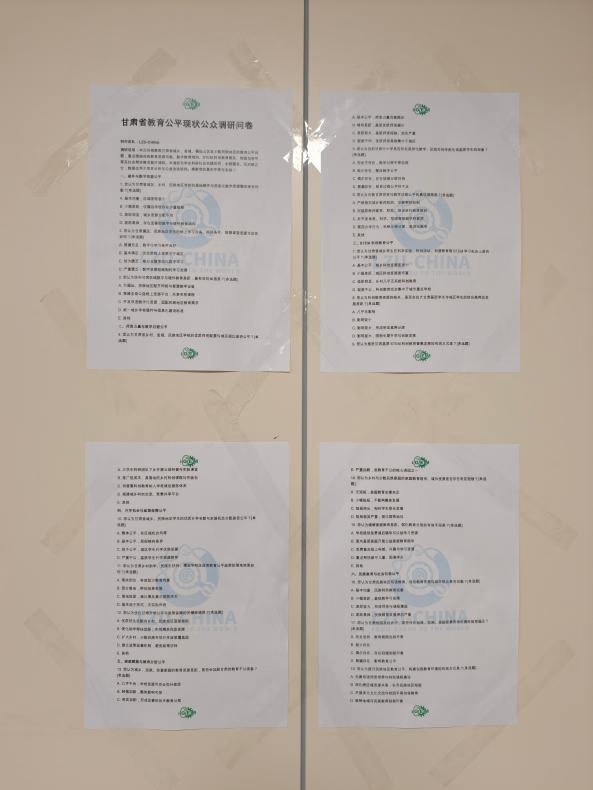
Our investigation used online questionnaires supplemented by offline distribution. A total of 168 questionnaires were distributed, of which 140 valid responses were collected. We also conducted conversations and interviews with 11 teachers, students, and parents from urban, county, township, and remote rural settings. Participants included people from Tibetan, Hui, and Dongxiang communities. This education-equity needs assessment was separate from the participant-feedback questionnaire used to evaluate our Inclusivity activities; the two surveys served different purposes and involved different participant groups.
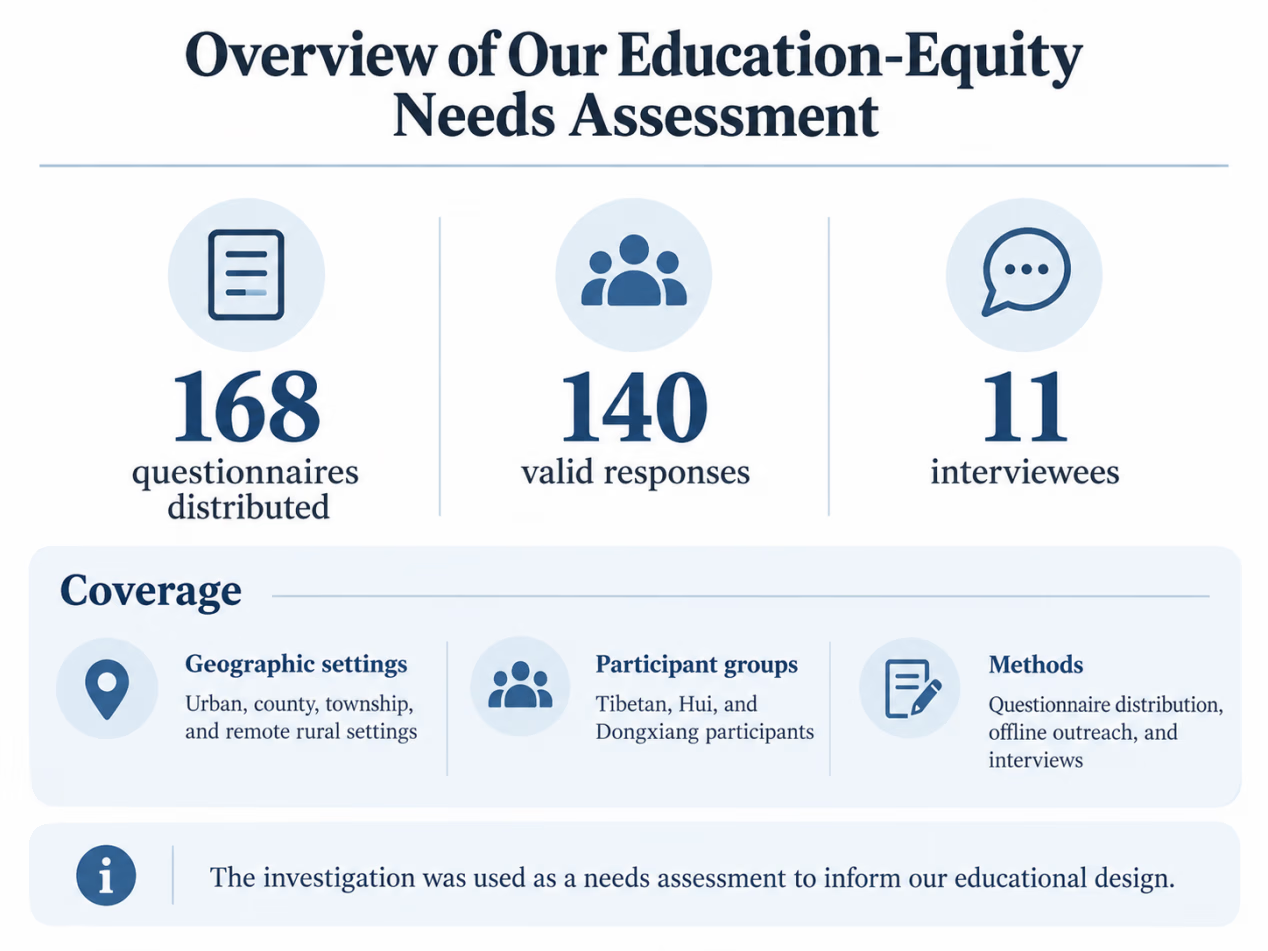
The questionnaire examined several dimensions of educational equity, including hardware and digital resources, teacher distribution, STEM education, opportunities for further education, family educational resources, ethnic and linguistic inclusion, and expectations for public-interest educational projects.
We did not use these responses to claim that a relatively small survey could represent every school or family in Gansu. Instead, we treated the investigation as a needs assessment: a way to identify recurring concerns, compare them with what we observed in educational activities, and decide which problems were realistically within the scope of a student research team.
This distinction was important. Educational inequity is shaped by structural issues that cannot be solved by a student team alone. Our role was therefore not to claim that we could “solve” educational inequality, but to identify where scientific education, reusable resources, and sustained outreach could make a practical contribution.
What We Found
The responses did not support a simple narrative that education in Gansu was uniformly unequal. In the overall evaluation, 67.14% of respondents described the current situation as generally fair, with gaps in some areas, while smaller groups perceived either a higher degree of balance or more substantial inequalities. This encouraged us to focus on specific barriers rather than making broad claims about the region as a whole.
One of the clearest concerns was access to STEM and scientific practice.
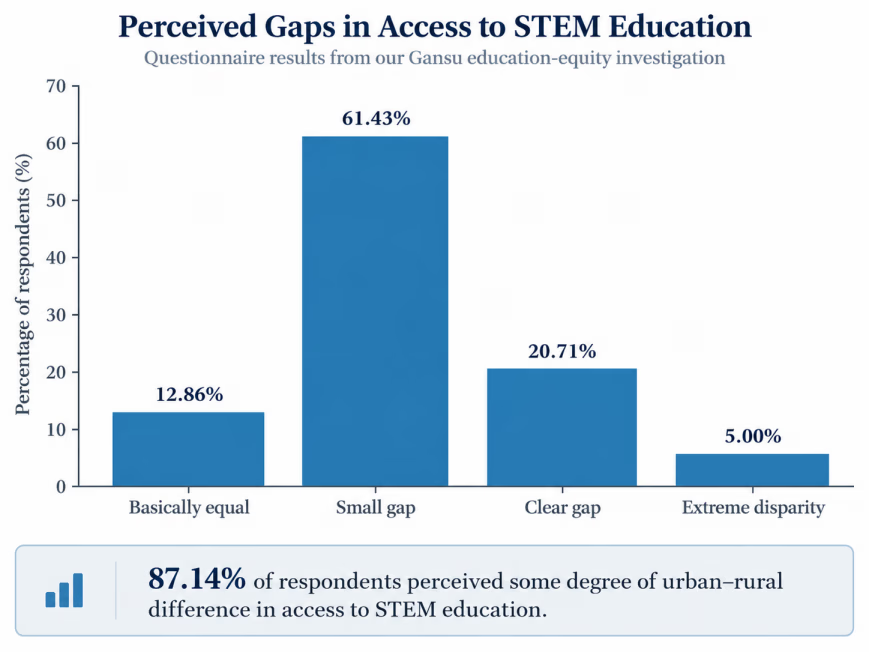
Only 12.86% of respondents considered urban and rural opportunities for scientific experiments, innovation activities, and popular-science education to be basically equal. In contrast, 61.43% perceived a small gap, 20.71% perceived a clear gap, and 5.00% perceived an extreme disparity. In other words, 87.14% of respondents perceived some degree of difference in access to STEM education.
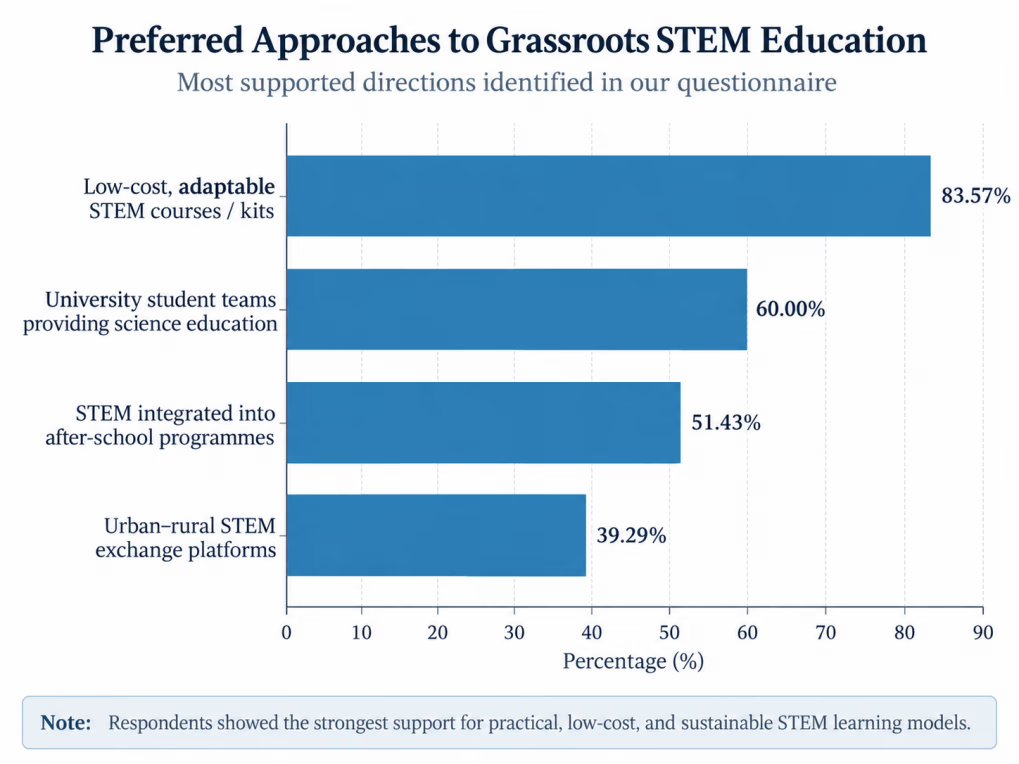
When participants were asked how grassroots STEM education could be improved, the most frequently supported approach was the development of low-cost and adaptable rural STEM courses and experimental kits (83.57%). 60.00% also supported university student research teams providing public science education, while 51.43% supported integrating inclusive STEM education into after-school programmes. Digital access revealed a similar pattern. Participants did not focus only on whether schools possessed equipment. They also raised the question of whether useful, high-quality educational content could actually reach learners. In responses concerning digital and hardware inequality, 77.14% supported a public online resource platform for sharing high-quality courses, while 40.71% supported the development of bilingual digital resources adapted to ethnic-region educational needs.
These responses suggested an important distinction:
Educational access is not only about whether infrastructure exists. It is also about whether meaningful content, scientific experiences, and understandable resources can reach the people who need them.
Our grassroots interviews reinforced this interpretation. Teachers and families repeatedly distinguished between basic hardware provision and access to high-quality teaching content, systematic scientific experiments, professional guidance, and localized or bilingual educational resources.
From Findings to Educational Design
The education-equity investigation did not create every part of our education programme from scratch. Several activities were already developing through schools, hospitals, communities, and university outreach. Instead, the investigation helped us validate, sharpen, and connect these activities around clearer educational needs.
We therefore used the findings in four ways.
First, we strengthened hands-on and low-threshold science education. The strong demand for practical STEM opportunities reinforced our use of demonstrations, guided experiments, visual models, observation tasks, and activities that did not depend on advanced laboratory infrastructure. For children and first-time learners, participation could begin with a dropper, an image, a drawing, a simple model, or a question rather than specialist equipment.
Second, we treated reusable resources as part of educational access. If an activity exists only while our team is physically present, its reach is necessarily limited. The demand for shared digital resources strengthened our decision to retain slides, activity designs, questionnaires, visual materials, videos, and teaching files in formats that could be circulated and adapted after an event had ended.
Third, we paid greater attention to language and localization. Feedback concerning bilingual and localized resources reinforced a broader lesson that also emerged from our multilingual work: translation alone does not guarantee accessibility. Language, examples, layout, prior knowledge, and cultural context all influence whether a resource can actually be understood and used.
Finally, we became more cautious about one-time outreach. Participants repeatedly valued approaches that could continue beyond a single visit. This strengthened our emphasis on editable materials, teacher and community reuse, digital circulation, and the gradual development of an LZU-CHINA Education Toolkit.
In this way, the investigation connected regional context with educational practice:
Listen to local needs → Identify barriers → Design realistic responses → Leave reusable resources
Educational equity therefore became more than a background motivation for our programme. It became another way of asking whether our educational design was reaching people who might otherwise have fewer opportunities to encounter synthetic biology and scientific practice.
For us, equality did not mean giving every audience the same lecture.
It meant creating different entry points into science so that differences in geography, language, age, previous education, and access to scientific institutions did not automatically become barriers to participation.
4 Our Approach to Education
From Communication to Participation
We believe that effective science education should do more than make scientific knowledge available. It should make science approachable, relevant, and open to participation.
Synthetic biology can appear highly technical and distant from everyday life. Differences in age, educational background, language, and prior scientific knowledge can all become barriers to understanding. Therefore, rather than delivering the same content to everyone, we adapted our educational methods to the audiences we hoped to reach.
Our work was guided by three principles: accessibility, participation, and sustainability.
Accessible
Different audiences need different ways of learning. Children may respond better to stories, visual models, and hands-on activities, while university students and the public may benefit more from real-world cases, discussion, and connections to health and daily life.
Accessibility requires us to adapt language, depth, examples and format to the learner.
Education should adapt to learners, rather than expecting learners to adapt to science.
Participatory
Education should not be a one-way transfer of information.
We encouraged participants to ask questions, express opinions, raise concerns, and share their own perspectives. Their responses also helped us understand how different groups perceive synthetic biology and how our educational approaches could be improved.
Our goal was to move from:
We speak → They listen
to:
We listen ↔ We communicate ↔ We learn together
Sustainable
We also wanted our education to continue beyond individual events.
Teaching materials, activity designs, multilingual resources, questionnaires, and participant feedback were documented so that they could be reused, adapted, and improved in future activities.
What we learned from one activity informed the next, allowing our education work to develop through continuous reflection and iteration.
Education should continue even after the educators leave.
5 Listening Before Teaching
Listen First, Educate Second
Before designing any educational activity, we first asked a simple question:
Who are we trying to reach, and what do they actually need?
Different audiences approach synthetic biology with different levels of prior knowledge, different concerns, and different barriers to understanding. A teaching method that works well for university students may be ineffective for children, while highly technical explanations may discourage members of the public who are more interested in the practical relevance of science to everyday life.
For this reason, we tried to understand our audiences before deciding how to communicate with them. Through questionnaires, conversations, observation, and feedback from previous activities, we focused on four questions:
Who are they? What do they already know? What makes the topic difficult to understand? What do they actually want to know?
These questions helped us identify differences in scientific literacy, learning preferences, language barriers, and areas of interest. We then adjusted the depth, format, examples, and level of interaction in our educational activities accordingly.
This process allowed us to move away from a one-size-fits-all approach and toward audience-centered education.
Rather than asking people to adapt to the way we explained science, we tried to adapt our education to the way different people learn.
From Research Context to Educational Questions
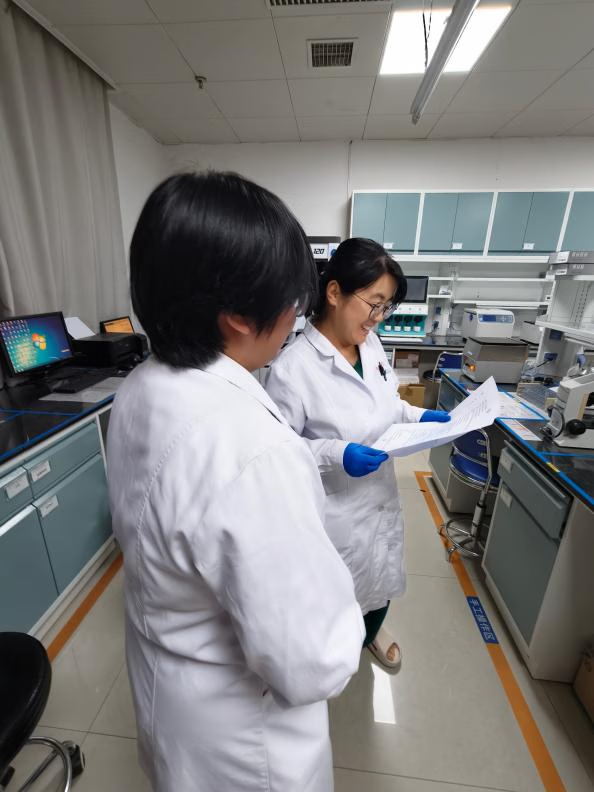
Our education programme grew from the same clinical and scientific setting as our project. In hospital laboratories, team members worked on an engineered Escherichia coli Nissle 1917 system designed to recognise pathogen-associated quorum-sensing signals, provide a visible indication of infection risk and express antimicrobial components in situ. This work showed us which ideas needed careful explanation before a public audience could evaluate the project: the difference between beneficial and pathogenic microorganisms, the role of bacterial signalling, the meaning of biological sensing and response, and the limits separating an experimental design from a clinical product.
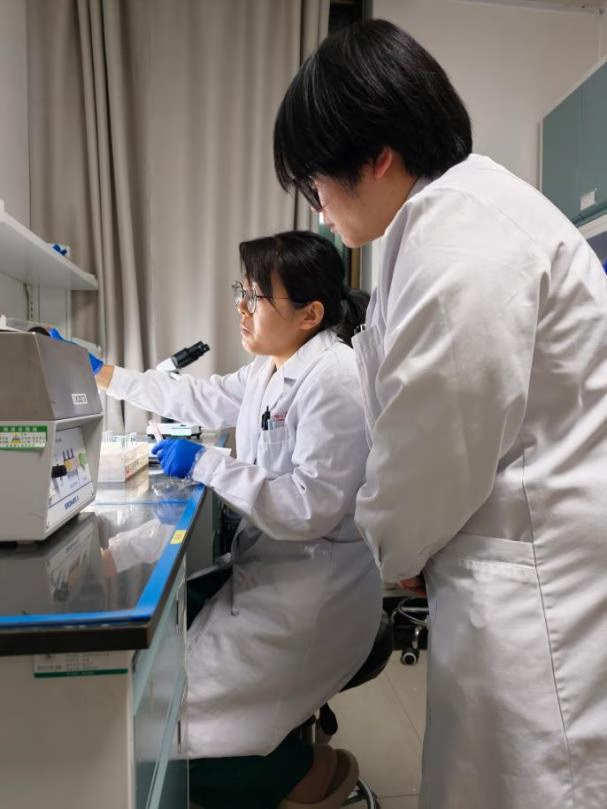
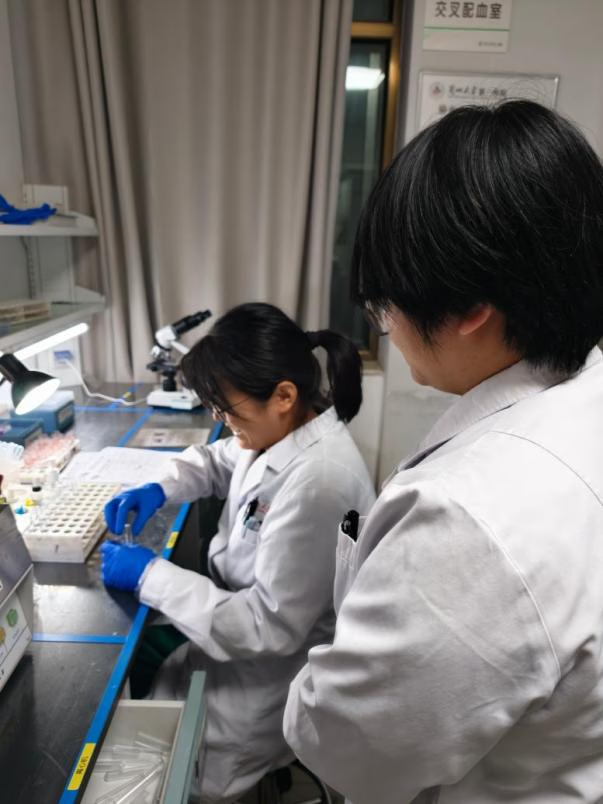
Questionnaires and Conversations in the Hospital
Questionnaires and face-to-face conversations in the hospital helped us understand how family members, caregivers, medical staff, and other participants approached intestinal health, postoperative recovery, antibiotics, probiotics, and engineered microorganisms. Their questions were practical. They wanted to know how an intervention would be controlled, what evidence would be required before clinical use, whether it might disturb beneficial gut bacteria, and how it would differ from familiar medicines or commercial probiotic products.These educational interactions were distinct from the clinical stakeholder co-design described on our Inclusivity page. For clinical co-design, we did not directly interview patients; patient-centered needs were collected indirectly through ICU geriatric nurses, grassroots laboratory physicians, and representatives of the Gansu Red Cross Society.
We used these responses to decide what later educational sessions needed to explain and in what order. Safety, controllability and the distinction between a research prototype and a medical product moved closer to the beginning of our presentations. Abstract descriptions were replaced or followed by examples drawn from infection, medication and gut health. The questionnaires therefore shaped the education programme rather than serving as figures added after the activities had ended.
Activities conducted in clinical settings or involving minors were carried out with appropriate supervision and attention to privacy. Educational discussions remained separate from individual medical advice, and identifying information is not reproduced in material prepared for public display.
6 A Layered Education Framework
At the programme level, we organised our educational activities around four complementary pathways:
Explore, Understand, Engage, Connect
After identifying the needs of different audiences, we organized our education work around four complementary pathways: Explore, Understand, Engage, and Connect.
These four pathways were not intended to divide audiences into rigid categories. Instead, they helped us decide what kind of educational experience would be most appropriate in different contexts. The same audience could move from one pathway to another as their familiarity with synthetic biology increased.
Explore
For people encountering science or synthetic biology for the first time, our priority was to spark curiosity.
Rather than beginning with complex terminology, we used intuitive explanations, visual materials, hands-on activities, and familiar examples to encourage participants to ask questions and explore scientific ideas for themselves.
Understand
Curiosity alone is not enough. We also wanted participants to develop a clearer understanding of how synthetic biology works and why it matters.
At this stage, we connected scientific concepts with real-world issues, including health and microbial interactions, and adjusted the depth of explanation according to the audience's background.
Engage
Understanding becomes more meaningful when learners are able to respond, question, discuss, and contribute.
We therefore created opportunities for participants to express their own perspectives, raise concerns, and take part in discussions rather than remaining passive recipients of information.
Connect
Finally, education should not be limited by language, location, educational background, or access to scientific resources.
Through different forms of educational materials and communication, we sought to make our content available to wider and more diverse audiences, while adapting the way information was presented to different contexts.
Together, these four pathways formed the practical structure of our education work:
Explore → Understand → Engage → Connect
They allowed us to move from simply presenting scientific knowledge toward building educational experiences that were increasingly understandable, participatory, and accessible.
7 Explore
Planting Curiosity
For people encountering synthetic biology for the first time, our first goal was not to teach as much as possible, but to make science worth exploring.
Scientific concepts can feel distant when they are introduced through unfamiliar terminology alone. This is especially true for children, older adults, and people with limited previous exposure to biology. In these settings, curiosity often needs to come before detailed understanding.
For this reason, activities in our Explore pathway were designed around familiar experiences, intuitive explanations, visual materials, simple demonstrations, and direct interaction. Rather than beginning with definitions, we began with questions that connected science to everyday life.
We wanted participants to feel that science was not something reserved for laboratories or specialists, but something they could observe, question, and discuss for themselves.
Child-Friendly Activities at Public Outreach Booths
At our public outreach booths, we designed a distinct learning route for children. Rather than asking them to follow a lecture, team members guided them through close observation, simple hands-on tasks, and one-to-one conversation. Children handled demonstration materials under guidance, used droppers and small containers, compared visible changes, completed drawing and labelling tasks, and explained what they thought was happening.
We began with questions that children could answer from direct experience: Where can microbes be found? Are all bacteria harmful? Why can some microorganisms help the human body? After they had observed, drawn, and asked questions, we introduced the idea that living systems can be understood and redesigned. In this way, synthetic biology emerged from their own observations instead of appearing first as an unfamiliar definition.
For us, the value of this activity was not simply whether participants could repeat the definition of synthetic biology afterwards. More importantly, we wanted them to leave with a stronger willingness to ask:
Why does this happen? Can biology be designed? What else could science help us do?
Science Outreach with Children in the Hospital
Our first encounters with children in the hospital began with familiar questions rather than specialist terminology. We asked where microorganisms might live, whether all bacteria are harmful and why some bacteria can help the human body. Images, simple models and direct conversation gave children several ways to respond, while team members adjusted the explanation to each child's pace and level of confidence.
Their questions often began with colour, shape, movement or an object they could see. These observations were valuable because they showed how children were organising new information. When a child asked why microorganisms on culture plates could appear in different colours and forms, the discussion opened naturally into microbial diversity and the distinction between harmful, harmless and beneficial organisms.
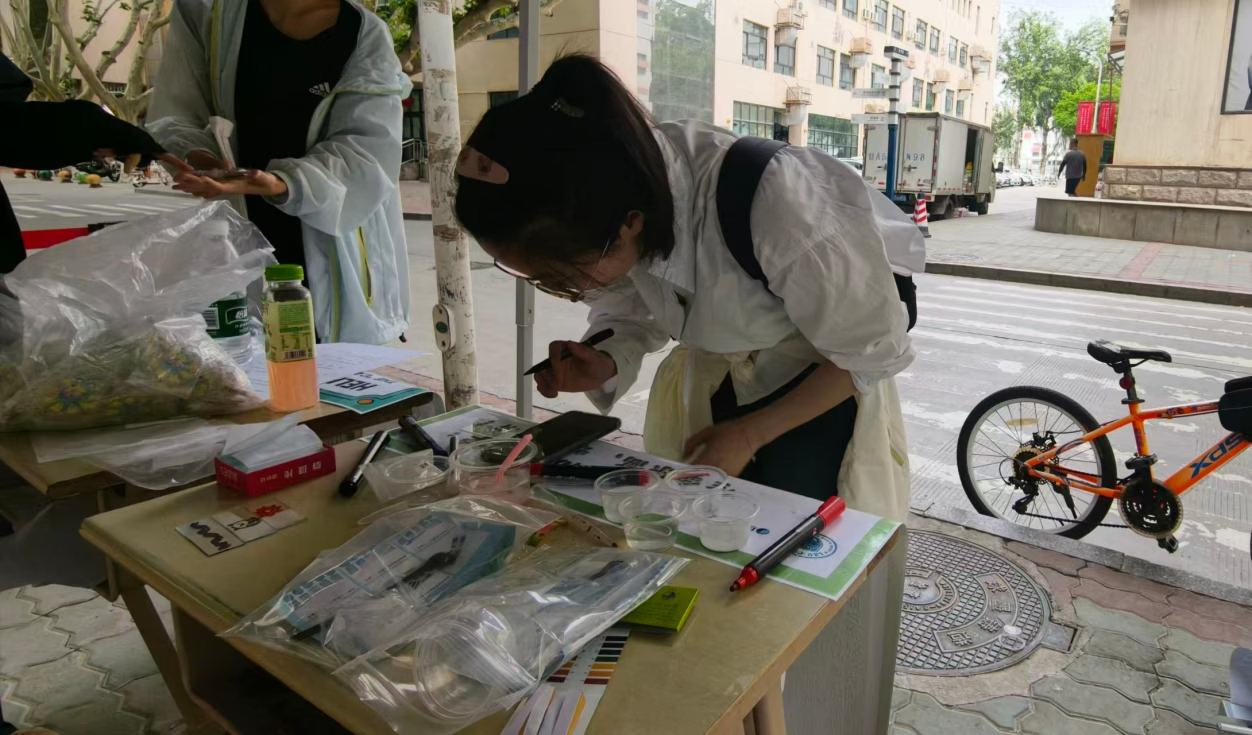
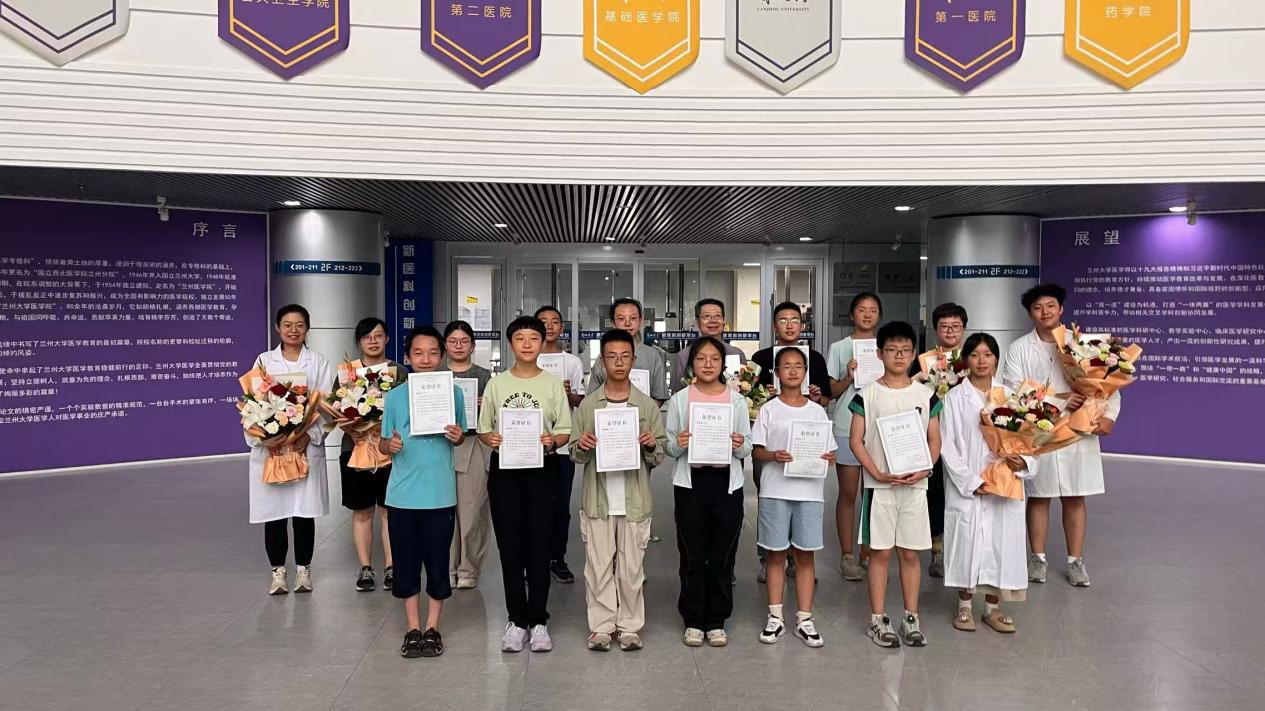
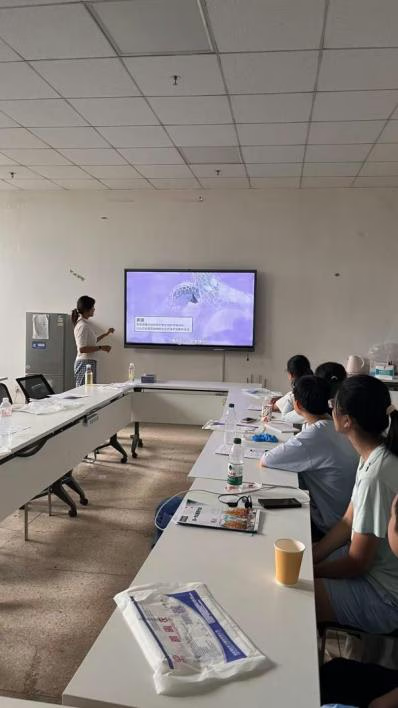
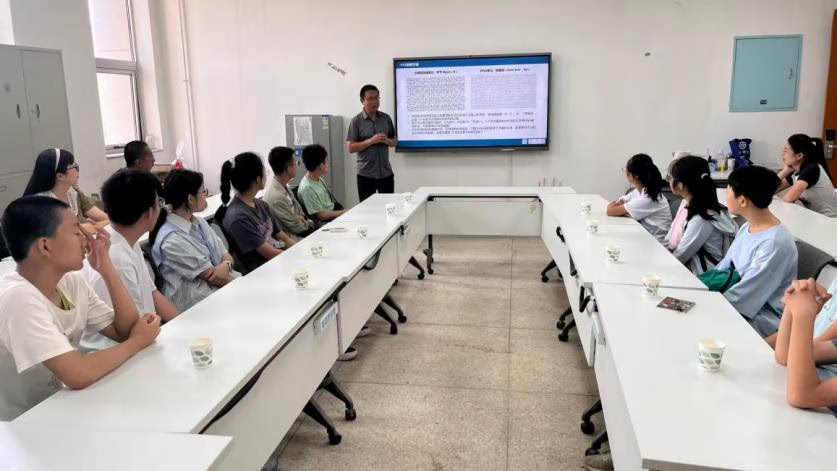
The hospital setting required particular care in both tone and pace. Some children were immediately curious, while others were cautious or tired. We therefore treated participation as optional and flexible. A child could listen, point to an image, answer a single question, or remain for a longer exchange. This approach allowed the activity to remain educational without turning the clinical environment into a formal classroom.
We used the contrast between beneficial and harmful microorganisms as the central thread. Instead of presenting bacteria as a single threatening category, we explained that the human body contains complex microbial communities and that the effect of a microorganism depends on its identity, location and behaviour. This distinction prepared children to understand why scientists might use a well-characterised bacterium as a carrier for a designed function.
A Guided Laboratory Experience
We then invited children into a supervised laboratory environment. Team members introduced the purpose of common instruments, demonstrated safe and age-appropriate procedures and encouraged the children to observe before offering an explanation. The visit made the laboratory more legible: equipment was no longer a collection of unfamiliar objects, but part of a process in which researchers form a question, control conditions, record observations and revise an interpretation.
This experience also changed our teaching. Early explanations placed too much emphasis on the names of instruments. We revised the sequence to observe, predict, try and explain. Technical sentences became shorter, demonstrations were divided into visible steps, and children were asked to describe what they noticed before a team member supplied the relevant scientific term.
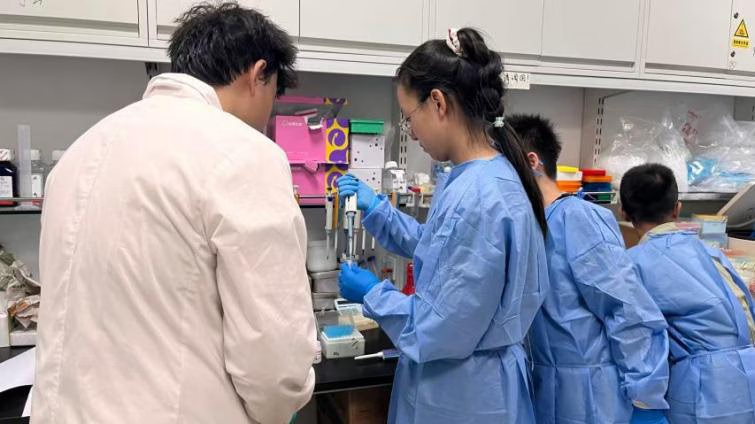
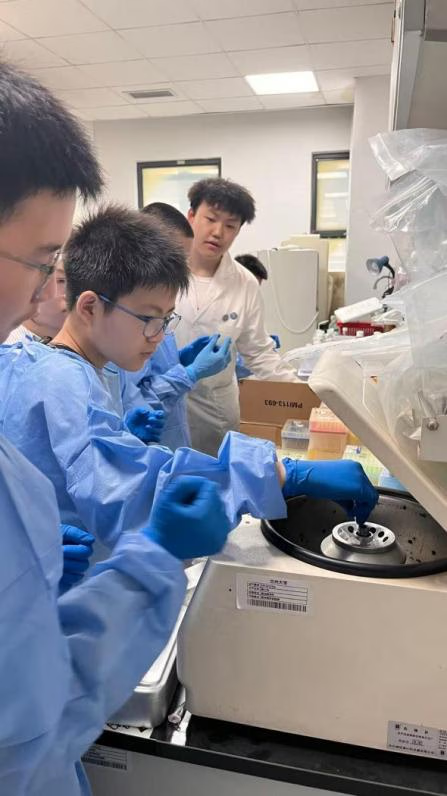
Before the laboratory visit, we explained that the children would enter a working scientific environment and that safety rules were part of scientific practice rather than restrictions added to the activity. Team members demonstrated where to stand, what could be touched and why certain materials remained under adult control. This made laboratory safety visible as a form of shared responsibility.
Inside the laboratory, the children moved through a simple sequence: identify an object, predict its purpose, observe a demonstration and describe what changed. The task did not require them to reproduce a protocol. Its purpose was to reveal the logic behind experimental work: researchers define a question, keep conditions controlled, record observations and avoid drawing a conclusion before examining the evidence.
The visit also gave us an opportunity to separate scientific reality from the dramatic image of laboratories often seen in popular media. Children saw that research involves preparation, labelling, repetition, cleaning and documentation as well as moments of visible experimentation. Their questions about instruments and samples became an entry point for discussing patience, accuracy and teamwork.
Micro World on a Petri Dish
We named the activity "Micro-World on a Petri Dish: Laboratory Equipment Art Challenge." It involved 48 pupils aged approximately 8-11 from the Primary School Affiliated to Lanzhou University. Using glass slides, Petri dishes, and centrifuge tubes as the three visual starting points, the pupils drew directly on safe, empty Petri dishes and transformed familiar laboratory equipment into imaginative representations of cells, microorganisms, and healthy bodies. The activity connected artistic creation with age-appropriate explanations of microorganisms and chronic-disease-related health knowledge.
All 48 pupils completed an artwork, and 40 voluntarily explained their design or asked a question. One representative question was: "Why do microorganisms in Petri dishes grow into different colours and shapes, and are all of them harmful?" The children responded especially well when they could point to colours and shapes in their own paintings while explaining an idea. Their enthusiasm turned the activity from a drawing task into a conversation about the diversity of microorganisms and the difference between harmful and beneficial bacteria.
Our first explanation relied too heavily on naming laboratory equipment. We therefore revised the child-facing sequence to "observe - imagine - draw - explain", shortened technical sentences, added colour-and-shape prompt cards, and introduced the idea that not all bacteria are harmful before discussing synthetic biology. This change allowed children to build an explanation from their own artwork rather than repeat vocabulary supplied by us.
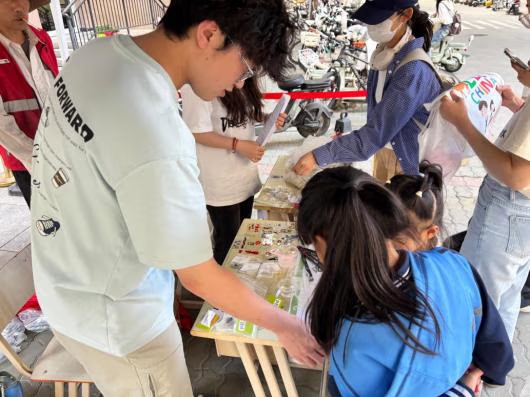
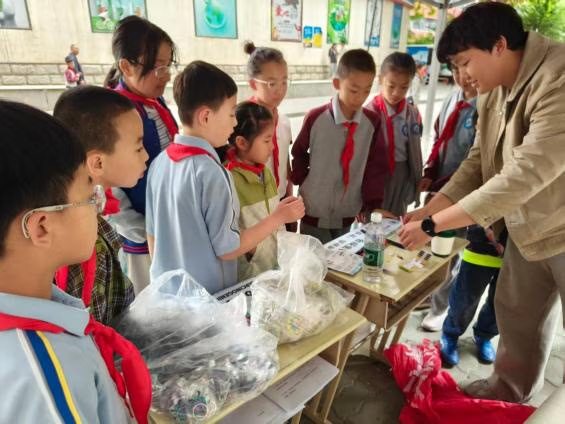
The Petri-dish drawing activity gave children a way to externalise what they had understood. Their drawings did not function as decorative products added after the explanation; they allowed us to see which ideas had become memorable. Some pupils focused on microbial shapes, some drew imagined laboratory scenes, and others linked microorganisms with the intestine, food or the body.
When pupils explained their work, team members responded with a scientific idea connected to the drawing rather than correcting every imaginative detail. A colourful microbial community could lead to a discussion of diversity; a “guardian bacterium” could introduce the idea of beneficial microorganisms; and a drawing of a signal moving between cells could lead to a simplified account of bacterial communication.
This combination of art and explanation helped us avoid two common problems in child-facing science communication: reducing the activity to entertainment, or overwhelming children with terminology. The creative task sustained attention, while the follow-up conversation returned the activity to observation, interpretation and biological meaning.
Making Science Approachable for Older Adults
In Jiayuguan Road and Baiyin Road subdistricts, we worked directly with older adults through home visits, outreach in elderly-care settings, and small-group health conversations. Instead of treating them as a secondary audience, we designed communication around the questions they raised most naturally: diet, constipation, probiotics, medication, antibiotic use, and the relationship between intestinal microorganisms and everyday health.
For this audience, we deliberately avoided beginning with synthetic biology terminology. Instead, we started from familiar topics such as health, intestinal microorganisms, infection, food, medication, or everyday experiences with disease prevention.
These topics provided a bridge between participants' lived experience and scientific ideas that might otherwise appear distant.
Our goal was not to turn older adults into experts in biotechnology. Rather, we wanted to create an environment in which they felt comfortable asking questions about science and health, including questions that might appear simple but were meaningful to them.
This activity also reminded us that accessibility is not only a matter of simplifying vocabulary. It requires understanding what experiences people already have and using those experiences as the starting point for communication.
Across Jiayuguan Road and Baiyin Road subdistricts, we engaged approximately 64 older adults, mainly aged 58-82. The most frequent questions concerned whether probiotics could be taken with other medicines, whether long-term constipation always indicated intestinal disease, and why antibiotics should not be used whenever abdominal discomfort occurred. Participants told us that the health-based starting point made the science feel relevant, but several found dense text and technical diagrams tiring to follow. We therefore replaced text-heavy explanations with larger type, step-by-step pictures, food and medication examples, and a clear distinction between general science education and individual medical advice.
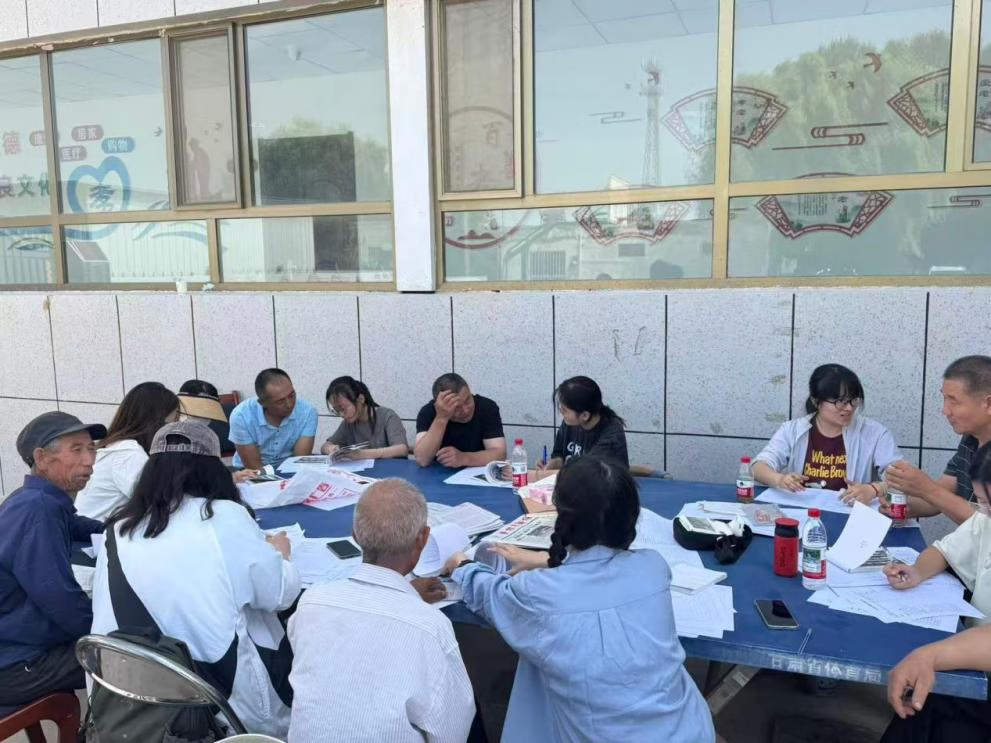
Jiayuguan Road Subdistrict
At Jiayuguan Road Subdistrict, the discussion began with medication, diet and the everyday management of gastrointestinal discomfort. Participants were most willing to speak when the conversation acknowledged what they already did in daily life: taking antibiotics, purchasing probiotic products, adjusting food after illness and caring for family members during recovery.
We used these experiences to distinguish three questions that are often merged together: what a medicine is intended to do, what microorganisms normally do in the intestine and what an engineered microorganism would be designed to do. This sequence helped prevent the project from being mistaken for an existing medicine or an ordinary commercial probiotic.
The most useful change was to slow the transition from health discussion to synthetic biology. Once participants had described familiar decisions and concerns, we introduced sensing, response and biological control as possible design functions. Questions about interactions with other medicines and long-term safety were recorded for later explanation rather than answered with unsupported certainty.
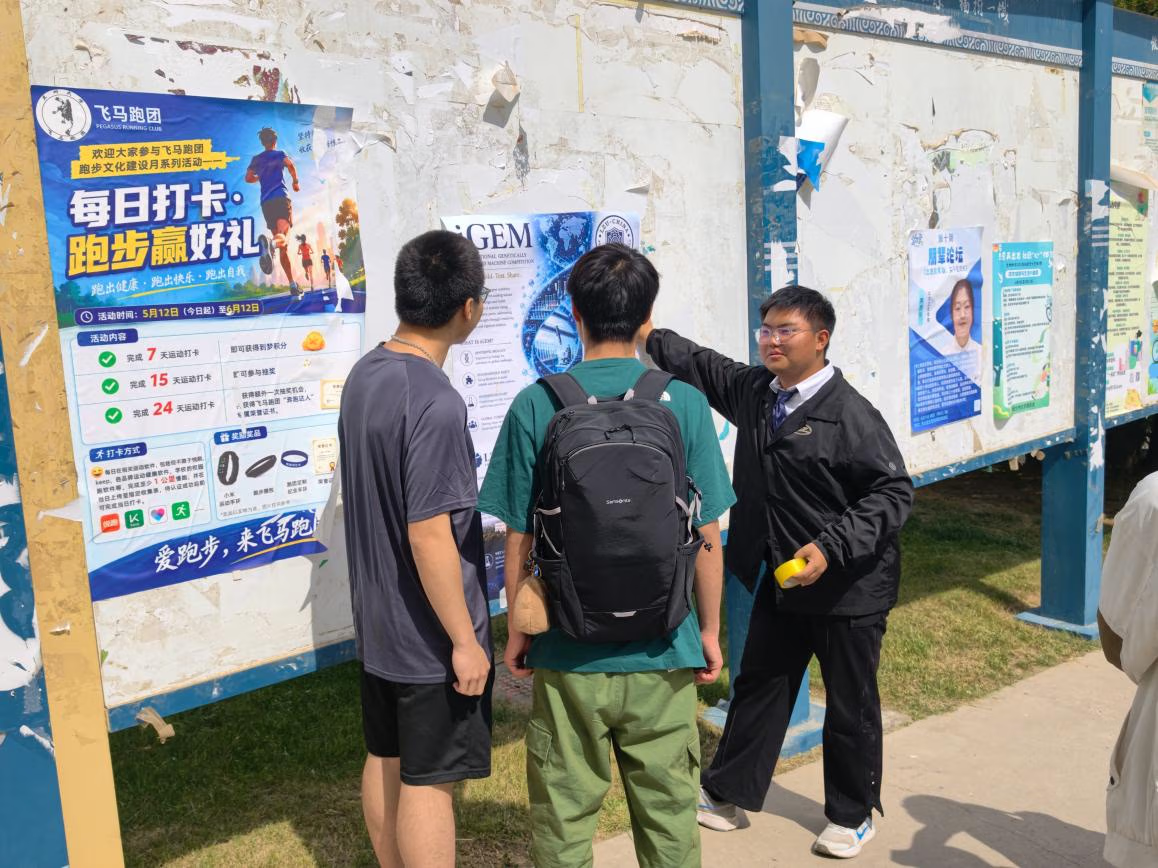
Baiyin Road Subdistrict
At Baiyin Road Subdistrict, smaller conversations created a different educational atmosphere. Participants frequently asked whether a technology related to intestinal health would be understandable, affordable and controllable in practice. Their emphasis was not on novelty but on whether a proposed application could be trusted and whether its use would remain clear to patients and families.
We therefore used larger visual material, fewer concepts on each page and a repeated distinction between general health education and individual medical advice. Examples were drawn from food, recovery and common experiences with infection. Technical terms were introduced only after the relevant everyday question had been established.
These conversations showed that accessibility depends on more than readable text. It also depends on whether participants feel that their questions are legitimate. By allowing time for repetition and inviting family members or caregivers to join the discussion, the activity became less like a lecture and more like a guided health-and-science conversation.
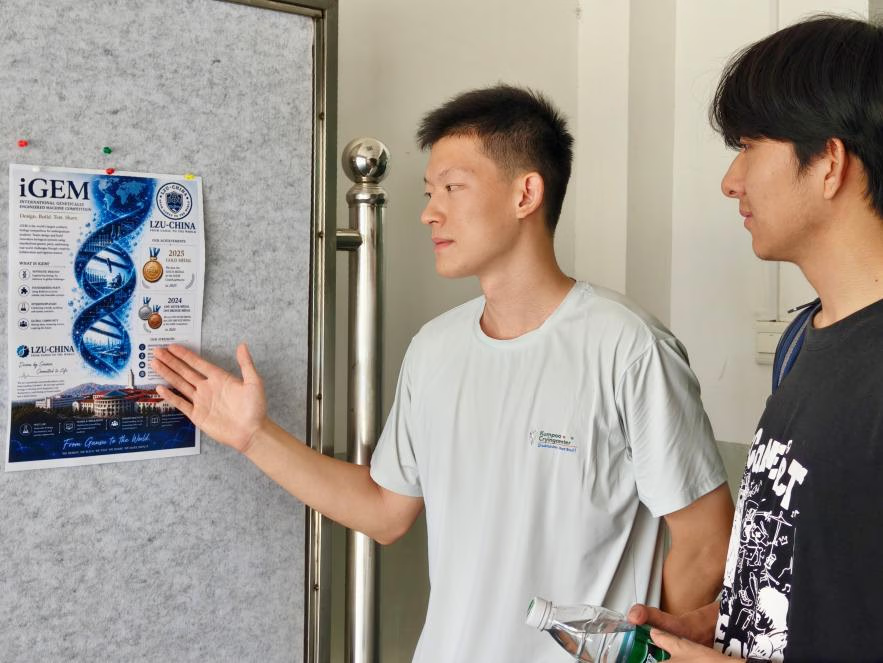
Science Through Hands-on Experience
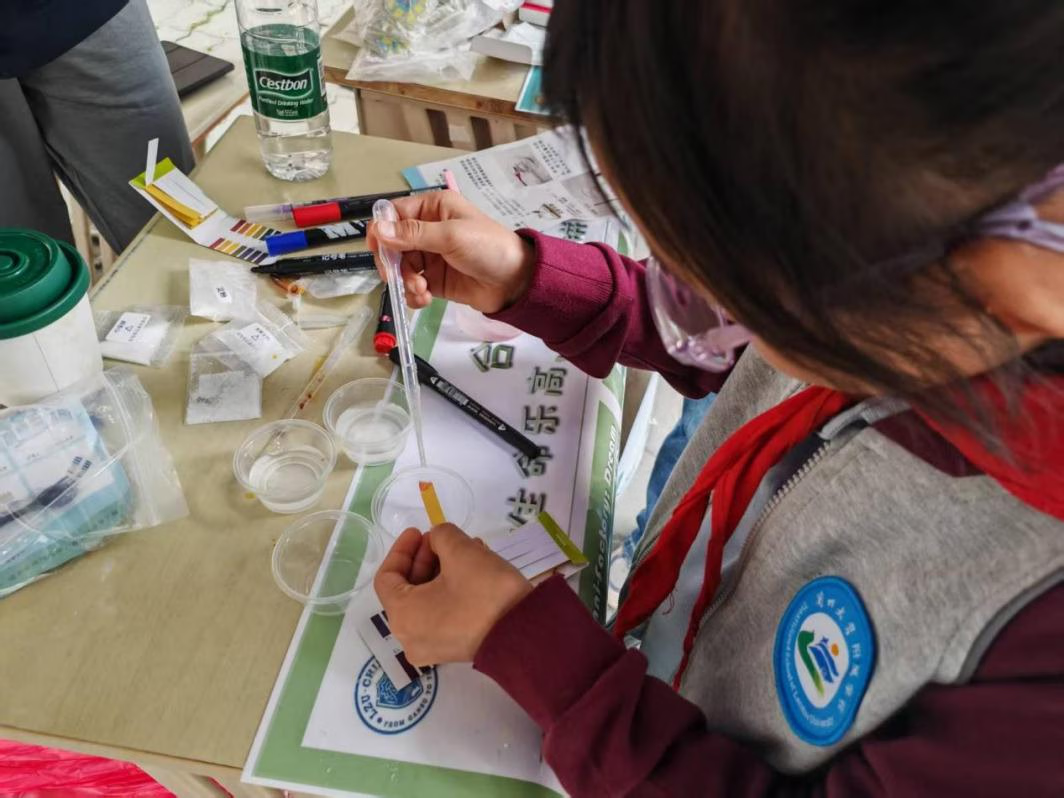
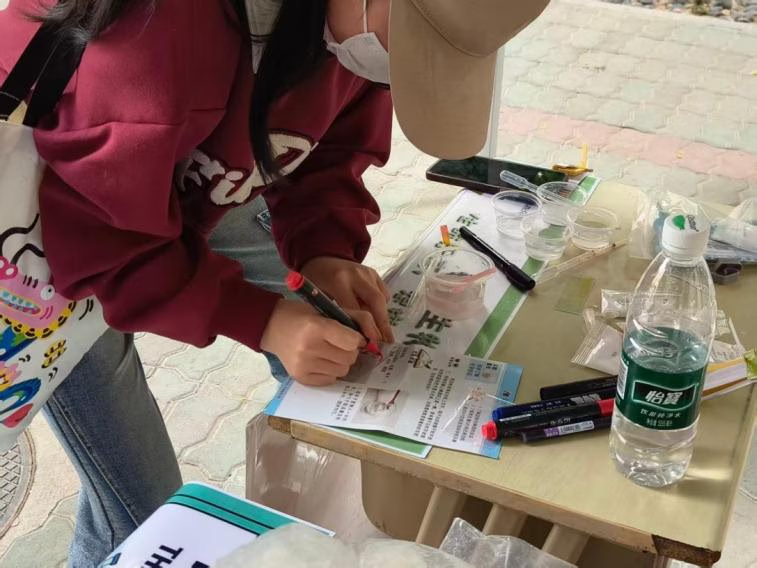
In Weiyuan Road Subdistrict, we used simple biological demonstrations to give community participants a direct point of contact with scientific ideas. Rather than introducing DNA, microorganisms, or probiotics only through verbal explanation, we invited participants to observe materials and phenomena, complete simple guided tasks, and describe what they noticed.
The demonstrations were paired with visual explanations that connected the observed phenomena with intestinal health and the role of microorganisms. This format helped participants move from seeing an effect to asking why it occurred, giving later scientific explanation a concrete starting point.
At Weiyuan Road Subdistrict, 42 residents and family caregivers took part, including people concerned about postoperative recovery, probiotic use, and chronic intestinal discomfort. Using droppers, transparent sample cups, coloured model solutions, observation cards, and a simplified signal-response worksheet, participants compared visible changes, recorded what they observed, and arranged the steps of a biological sensing process. A common question was whether a colour change represented the number of bacteria or the signal produced by them. In response, we added a control example and separated "signal recognition" from "biological response" into two clearly labelled stages.
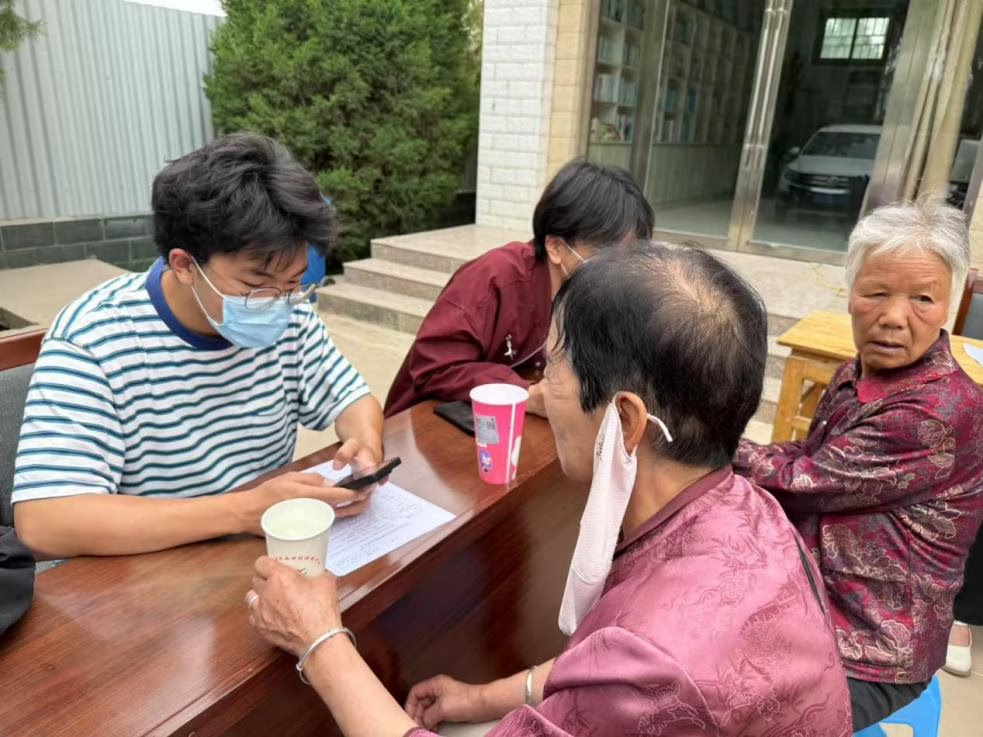
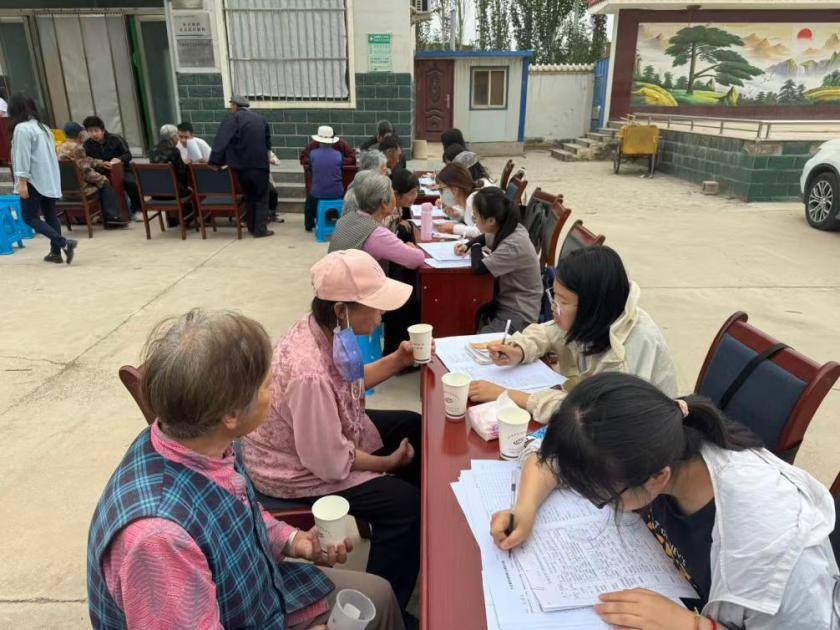
The Weiyuan Road activity was designed around seeing before explaining. Participants first handled safe materials, compared visible changes and wrote or stated what they observed. Only then did facilitators connect the demonstration with the idea that a biological system may receive a signal and produce a response. This ordering made an abstract design principle easier to follow.
Observation sheets gave participants a concrete role. They could record a colour, compare two conditions, draw the arrangement of materials or write a question for the group. These records also helped us identify where our instructions were unclear. When several participants interpreted a colour change as the direct number of bacteria, we separated “signal recognition” from “biological response” and introduced the two stages with different labels.
The completed observation sheets recorded how participants interpreted the demonstration and provided a practical reference for adapting the activity to other community settings.
Across these activities, we focused on three outcomes:
Curiosity — encouraging participants to become interested in scientific questions;
Confidence — reducing the feeling that science or synthetic biology is “too difficult” or “not for me”;
Initiative — giving participants opportunities to ask, observe, try, and explore for themselves.
The Explore pathway was therefore not an endpoint. It was the first step in helping participants move from unfamiliarity to curiosity, and from curiosity toward deeper understanding.
8 Understand
Making Synthetic Biology Understandable
Curiosity is an important beginning, but education should also help people move beyond interest toward genuine understanding.
Synthetic biology involves concepts that can quickly become abstract: genetic circuits, engineered microorganisms, biosensing, quorum sensing, and biological regulation are familiar terms to researchers, but they may be difficult to approach for people outside the field. Our goal in the Understand pathway was therefore to translate scientific complexity without losing scientific accuracy.
Rather than beginning with terminology, we often began with real problems.
Questions such as:
Why do intestinal infections occur? How do bacteria communicate with one another? How can microorganisms detect changes in their environment? Can beneficial bacteria be engineered to perform new functions?
provided a natural bridge from everyday health concerns to the principles of synthetic biology.
Through this approach, participants could gradually move through a chain of understanding:
Everyday problem → Biological mechanism → Engineering principle → Synthetic biology
For our project, gastrointestinal infection provided one such entry point. Instead of presenting our engineered probiotic simply as a finished solution, we used the project as a case through which participants could understand broader scientific ideas, including microbial communication, biological sensing, engineered gene expression, and the concept of using living systems to respond to specific signals.
Our aim was therefore not to persuade participants that our project was “good,” but to use a real synthetic biology project as a tool for scientific learning.
Science Outreach at the Medical Campus
On 28 May 2026, we held a student research outreach booth at Lanzhou University Medical Campus. The setting allowed us to communicate with university students from different academic backgrounds and levels of prior biological knowledge. We introduced student-led biological research, explained what distinguishes synthetic biology from general biotechnology, and used our engineered probiotic project to show how sensing, genetic control, and biological response can be linked within one designed system.
For participants with some prior exposure to biology, we were able to move beyond introductory explanations and discuss how synthetic biology differs from traditional genetic engineering, how biological systems can be designed, and how engineering principles can be applied to living organisms.
We also connected these concepts to real applications in medicine, environmental science, agriculture, and biotechnology.
Instead of presenting isolated definitions, we organized the content around questions and examples that allowed participants to connect new concepts with knowledge they already possessed.
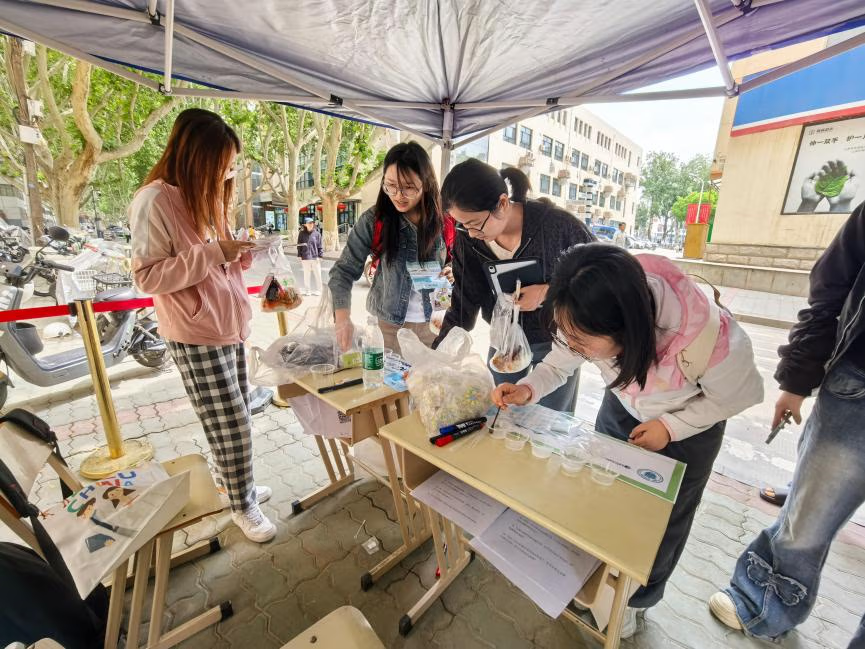
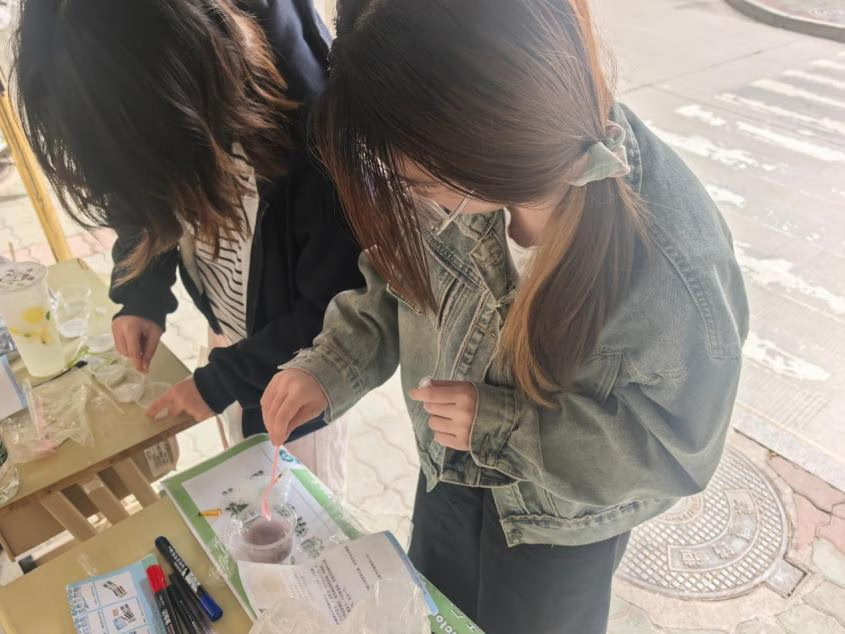
The Medical Campus booth was organised in layers. A brief explanation introduced our team and the clinical problem; a second layer used a visual pathway to connect pathogen signals with detection and response; and a longer conversation addressed specificity, antimicrobial action, biosafety and the distinction between a research prototype and a clinical product. Participants could therefore enter and leave the activity without being forced into one fixed duration.
Hands-on material helped us test whether the project mechanism was understandable. Rather than asking visitors to memorise the names of genetic components, facilitators asked them to arrange the stages of the system or identify where a false signal might create a problem. This shifted the conversation from recognition of terms to reasoning about design.
The medical setting also sharpened the questions we received. Students with clinical or pharmaceutical training often asked about delivery, adverse effects, target specificity and evidence required before patient use. These questions led us to place limitations and safety boundaries beside the project mechanism instead of leaving them until the end of the explanation.
What We Learned from the Medical Campus Booth
Participants came from clinical medicine, pharmacy, nursing, public health, life sciences, and other academic backgrounds. Some stopped for a brief introduction, while others completed a hands-on task or remained for an extended project discussion. Their questions focused on how engineered probiotics distinguish target signals, how false responses could be reduced, and how biosafety would be maintained. Short feedback conversations showed that the project case helped participants distinguish synthetic biology from general biotechnology more clearly.
Adapting the Outreach Booth for Yuzhong Campus
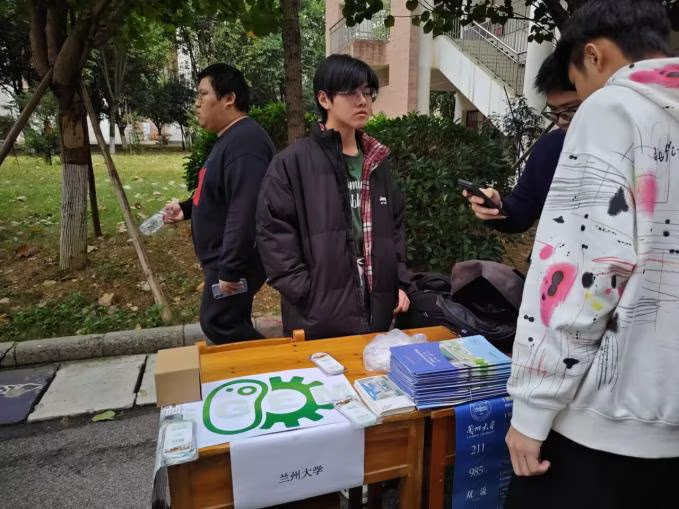
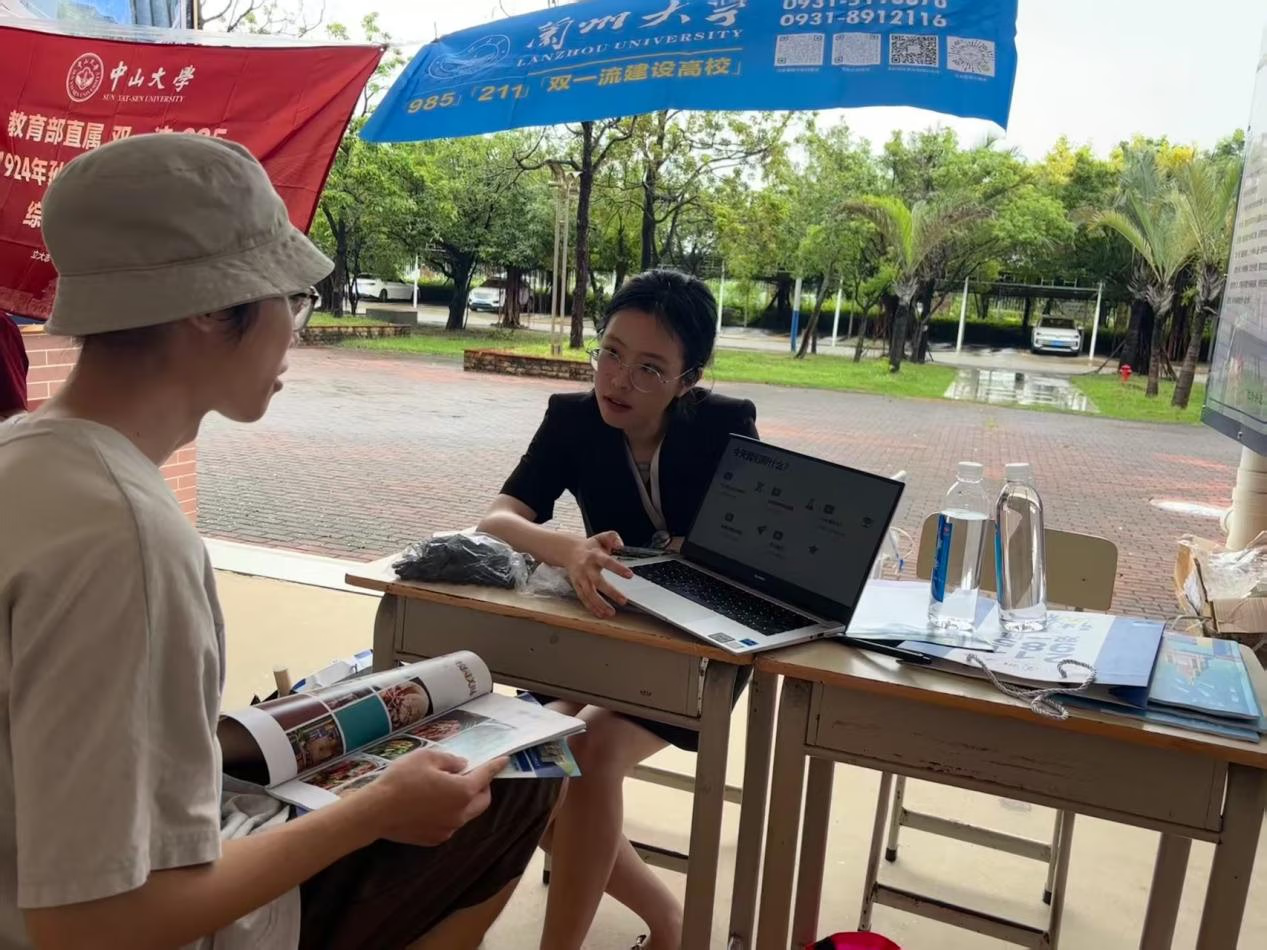
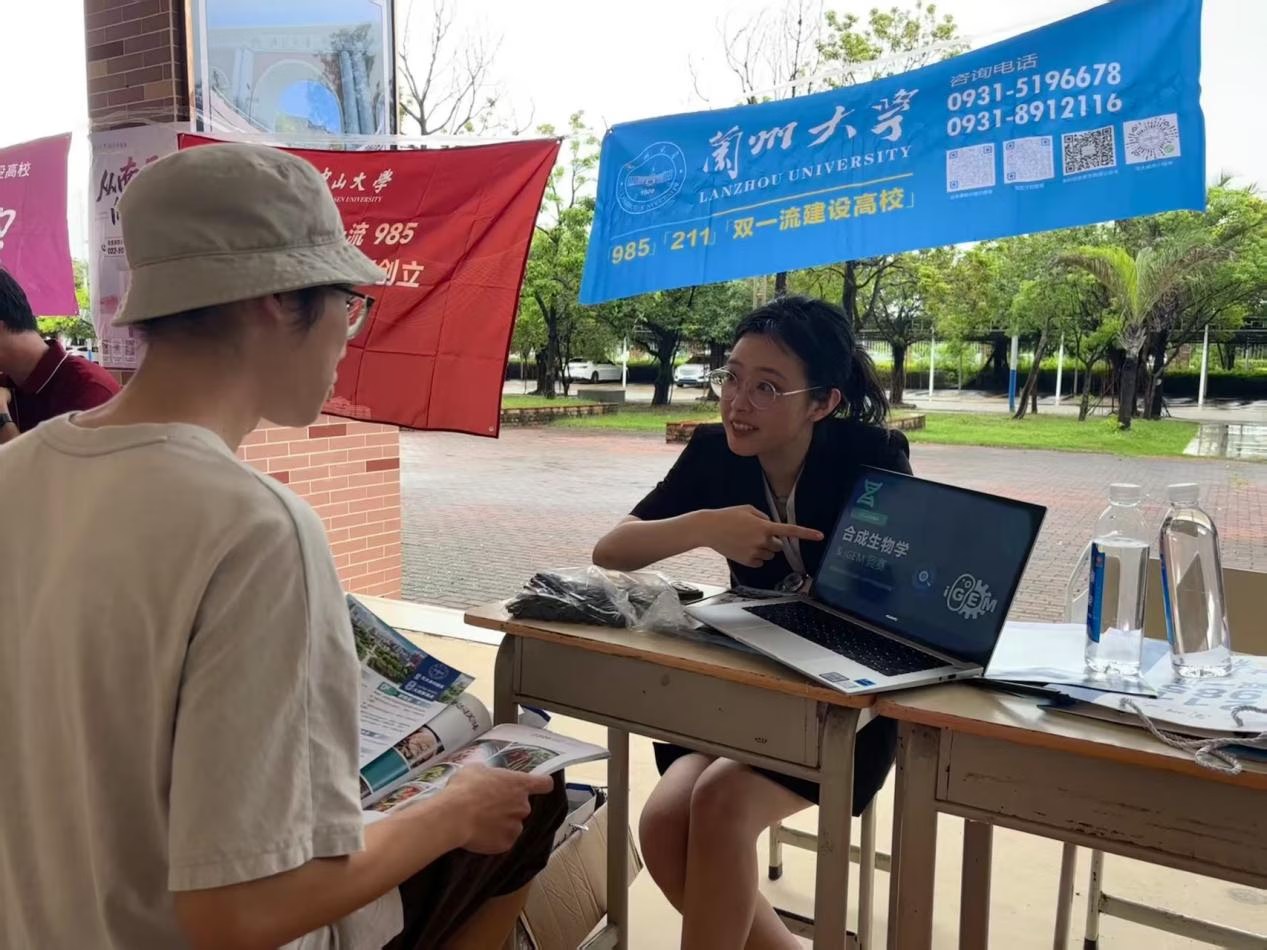
At this second campus event, we used an outdoor booth with poster displays, tabletop materials, and face-to-face explanation. Students could stop briefly for an introduction or remain for a longer discussion about collaborative research, synthetic biology, and our project.
The outdoor, drop-in format made brevity and visual clarity especially important. It also gave us a second setting in which to observe how location, audience flow, and presentation format shaped the depth and duration of participation.
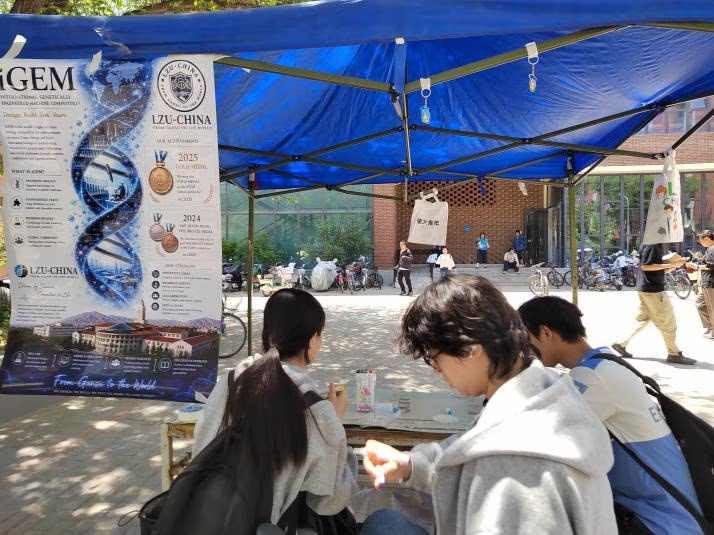
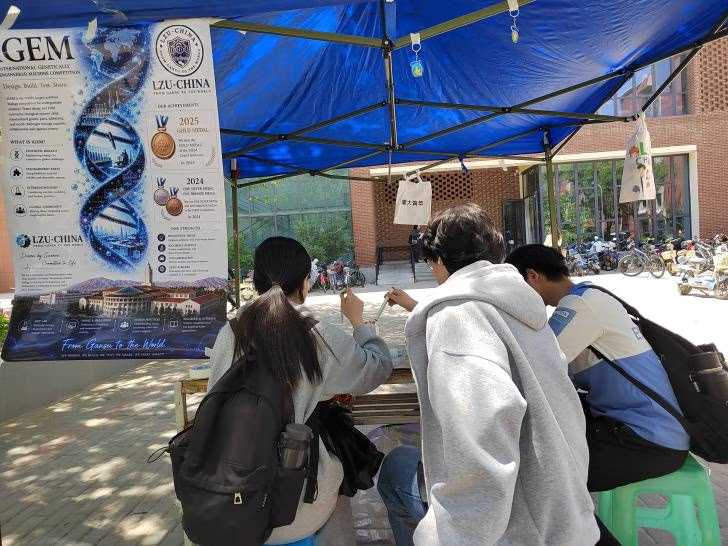
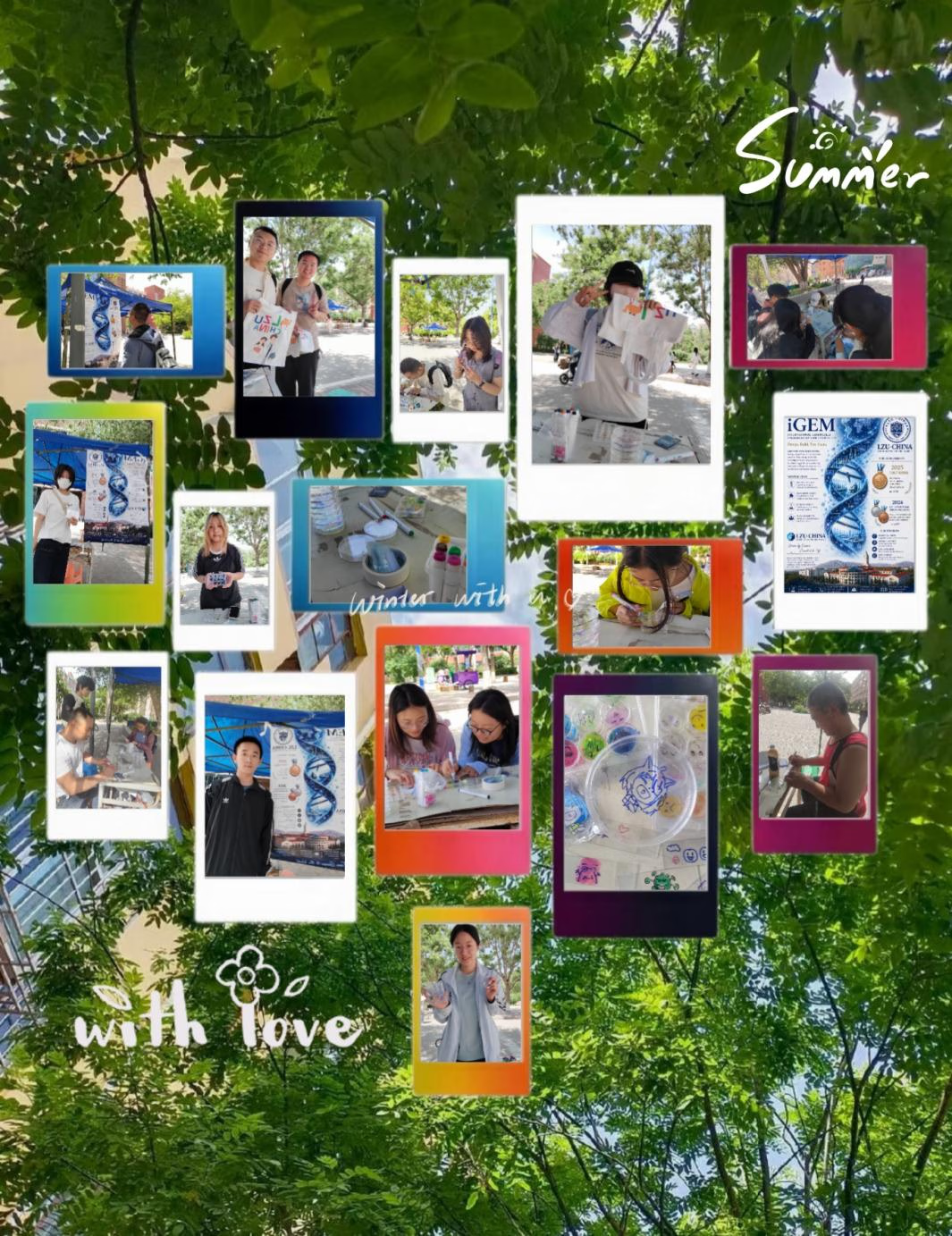
Compared with the Medical Campus booth, the outdoor setting produced a larger and faster-moving audience. We therefore used a three-level explanation structure: a thirty-second project summary, a three-minute visual introduction, and a longer mechanism discussion for participants who wished to continue.
The Yuzhong Campus event was not a repetition of the Medical Campus booth. Its outdoor location, faster audience flow and wider disciplinary mix required a different format. We reduced the opening explanation to a clear visual route and prepared three levels of follow-up: a short introduction, a guided poster discussion and a longer conversation using the project mechanism.
Students from non-biological disciplines often began with broad questions about what synthetic biology can be used for and whether engineered organisms can be controlled. Students with relevant coursework moved more quickly toward sensing, gene expression and experimental design. Facilitators therefore used the same poster as a shared map while changing the depth of explanation in response to the visitor.
This distinction matters because the two booths demonstrate different educational conditions: one connected the project with medical learning, while the other tested whether a concise outdoor format could remain accurate and invite deeper discussion.
From Northwest China to a Cross-Regional School Network
Secondary-school students required a different educational design from younger children. Many had already encountered cell biology, genetics, microorganisms, or biotechnology in formal classes. We therefore moved beyond a first introduction and used their existing knowledge to explain how an everyday biological problem can be translated into an engineering objective, a sensing module, a controlled response, and a testable biological system.
Our broader school outreach extended across Northwest, Central, South, and Southwest China, allowing us to adapt the same core educational ideas to different classroom contexts rather than limiting education to one city or one group of students.
Lanzhou No 1 High School
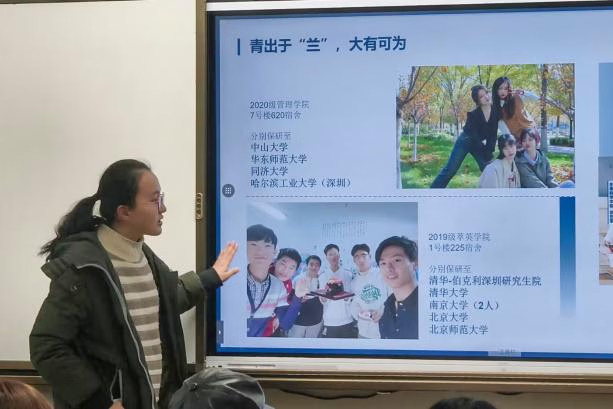
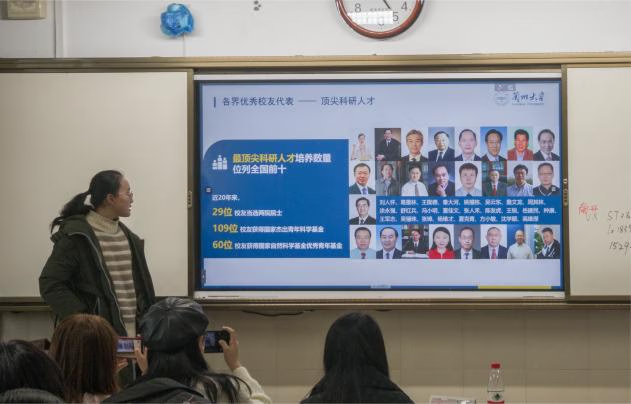
At Lanzhou No. 1 High School, we used knowledge already familiar from senior-secondary biology as the starting point. Students could recognise genes, microorganisms and regulation, but the engineering logic of combining sensing and response required a new conceptual step. We therefore presented the project as a sequence of design decisions rather than a list of components.
Questions concentrated on specificity and control: how the engineered bacterium would distinguish one signal from another, what would happen if the signal were weak and how growth could be limited. The session showed us that strong subject knowledge does not remove the need for careful explanation; it changes the level at which the explanation should begin.
Xianyang Experimental Middle School
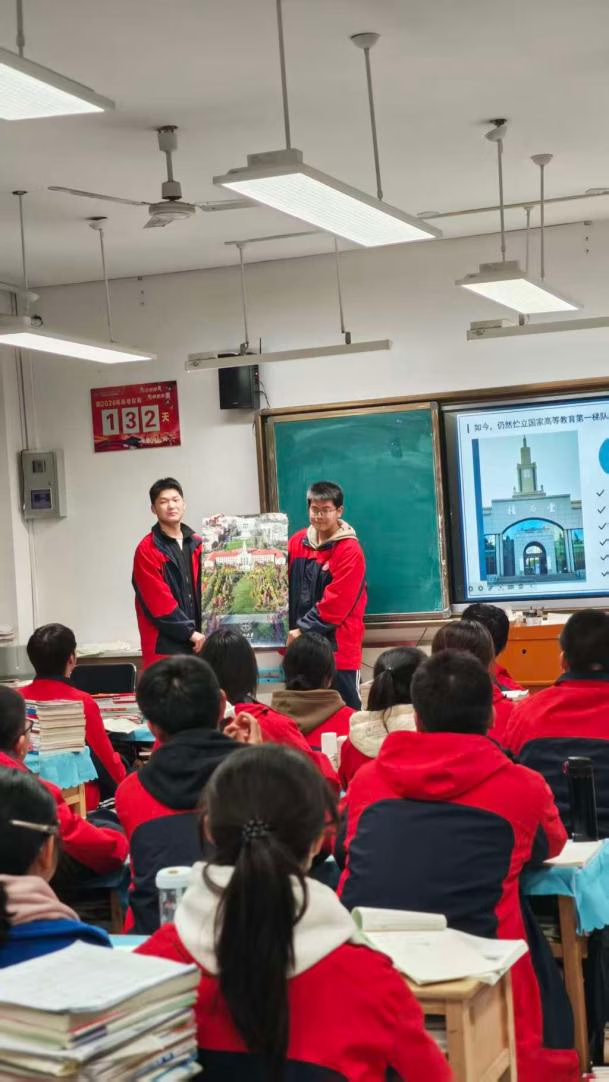
At Xianyang Experimental Middle School, we placed greater emphasis on the transition from a health problem to a testable biological design. Gastrointestinal infection provided the context, while coloured cards and a simplified signal-response diagram allowed students to assemble the logic of the system before encountering more formal terminology.
Students responded particularly well to questions that asked them to make a design choice. When asked where a visible indication should appear or what information a safe system would need, they moved from listening to proposing. This encouraged us to preserve a short design challenge in later school sessions.
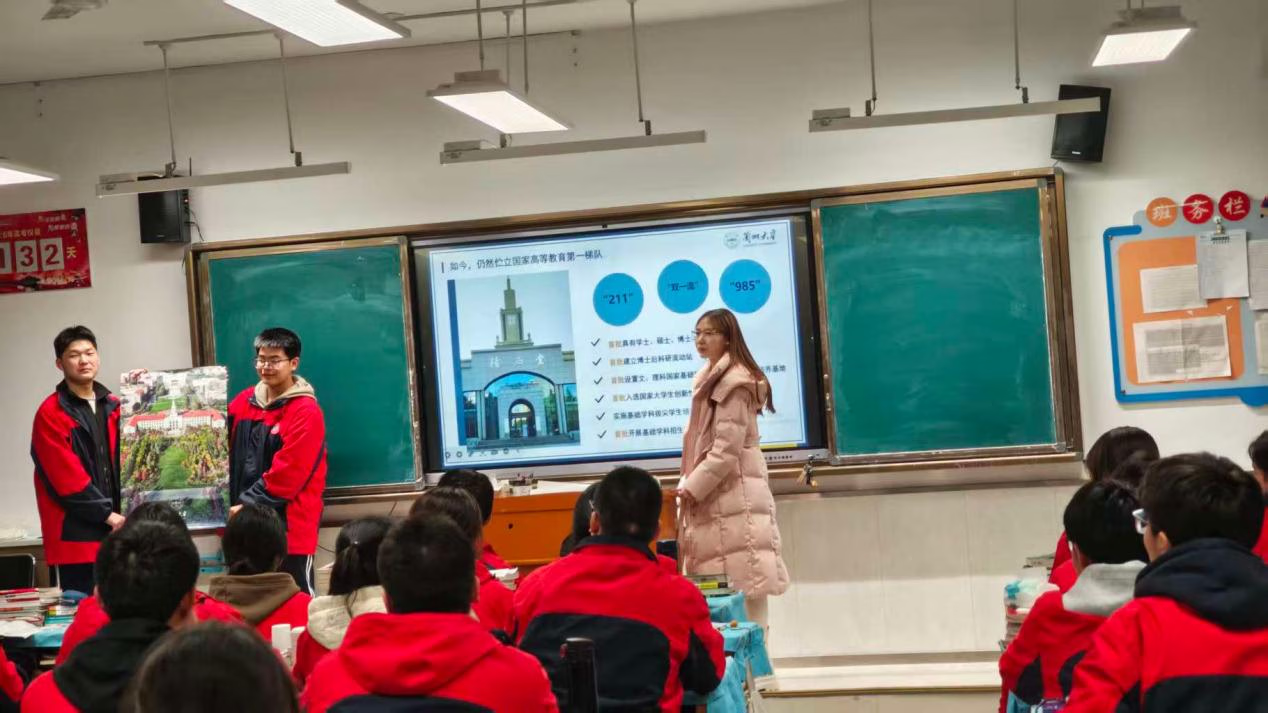
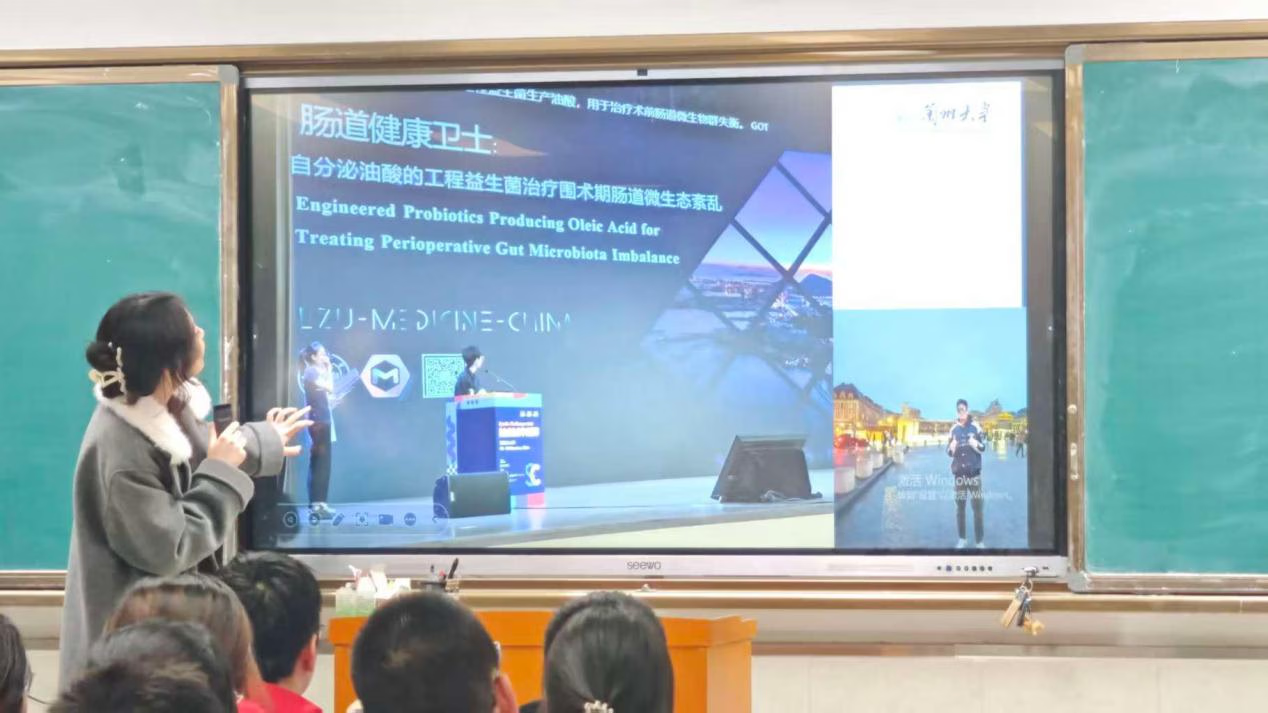
The High School Affiliated to Central China Normal University
At the High School Affiliated to Central China Normal University in Wuhan, the lecture presented synthetic biology as both a scientific field and a research process. We traced the movement from defining a problem to selecting a chassis, designing a sensing module, testing a response and revising the system after evidence is collected.
The students asked how researchers decide whether an unexpected result comes from the biological design or the experimental conditions. Their questions allowed us to discuss controls, reproducibility and the difference between a plausible mechanism and demonstrated performance. This session expanded the programme beyond project introduction into a more explicit account of how research reasoning works.
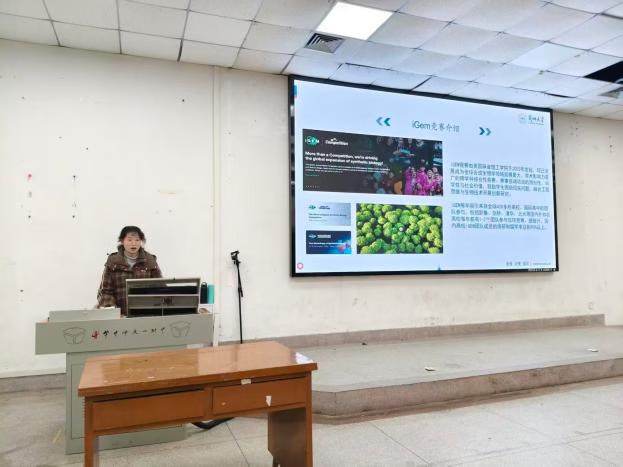
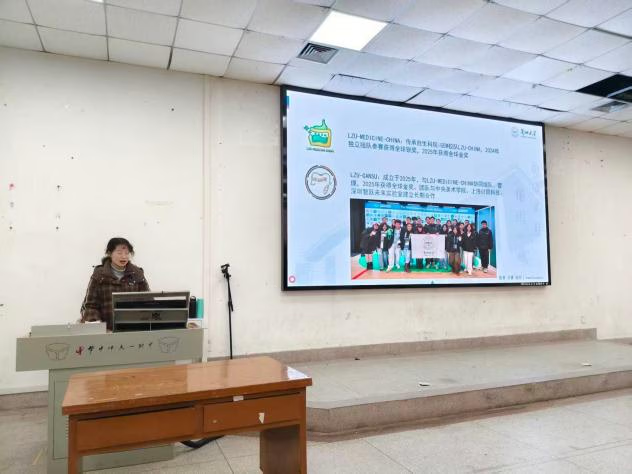
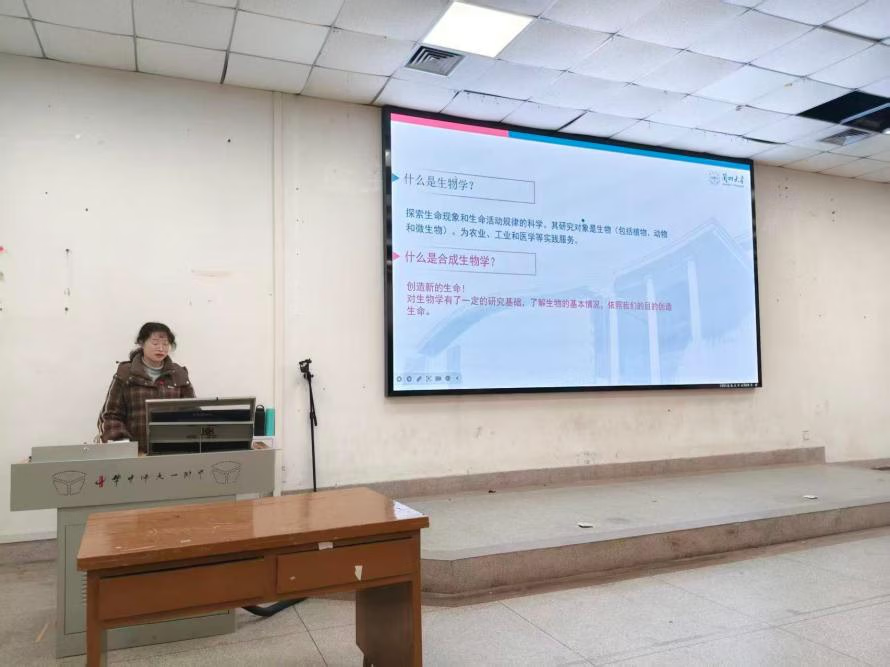
Beihai Middle School
At Beihai Middle School, we used intestinal health as a familiar entry point and kept the first part of the session highly visual. Students compared ordinary responses to infection with the possibility of a microorganism designed to detect a signal and produce a defined output. The comparison helped distinguish the purpose of the project without presenting it as a finished treatment.
Questions often returned to whether all bacteria are harmful and whether engineered bacteria could change after entering the body. We therefore strengthened the explanation of beneficial microorganisms, biological variation and containment. The session demonstrated why public understanding of the chassis organism must come before a detailed account of the genetic circuit.
Liuzhou High School
At Liuzhou High School, we were able to move more quickly from microbial communication to the project mechanism. A problem-based opening was followed by a colour-coded account of quorum sensing, recognition and antimicrobial response. Students then used the same diagram to identify where specificity, delay or unintended activation might become important.
The discussion was especially useful for refining our analogies. “Bacterial communication” was an effective starting phrase, but students wanted to know what was actually moving between cells. We therefore returned from the analogy to chemical signals, population density and gene regulation, preserving accessibility without sacrificing the underlying mechanism.
Kunming No 1 High School
At Kunming No. 1 High School, we tested a revised version of the school material that placed biosafety beside function. Instead of presenting the system and discussing limitations only afterwards, each design stage was paired with a question about control, uncertainty or evidence. This made responsibility part of the scientific explanation rather than a separate concluding topic.
Students asked whether a single engineered strain could respond to several pathogens and how false-positive signals might be reduced. Their questions gave us a reason to compare broad detection with target specificity and to explain why adding functions may also increase design and validation challenges.
Kunming No 8 High School
At Kunming No. 8 High School, we used the experience of the previous Kunming session to improve pacing and participation. Dense explanatory slides were shortened, the signal-response diagram was introduced earlier, and anonymous question cards were available before the open discussion. This allowed students who were reluctant to speak publicly to contribute specific questions.
Because the two Kunming schools encountered closely related material, they provided a useful example of iteration between sessions. The second activity was not merely another delivery of the same lecture: it incorporated the points of confusion, questions and participation barriers observed in the first.
Together, these activities formed more than a list of school lectures. They became a distributed education network through which synthetic biology travelled across regions, while each classroom provided a new test of whether our explanations were clear, relevant, and open to discussion.
The network was delivered primarily through in-person lectures, supplemented by digital slides, follow-up materials, and remote coordination with partner teachers.
As part of our inclusivity-oriented educational outreach, we also delivered standardized synthetic-biology lectures in seven rural and county-level public middle and high schools, reaching a total of 423 students. These activities focused on reducing information inequality in frontier biological education for resource-limited adolescent groups. Further details and quantitative outcomes are presented on our Inclusivity page.
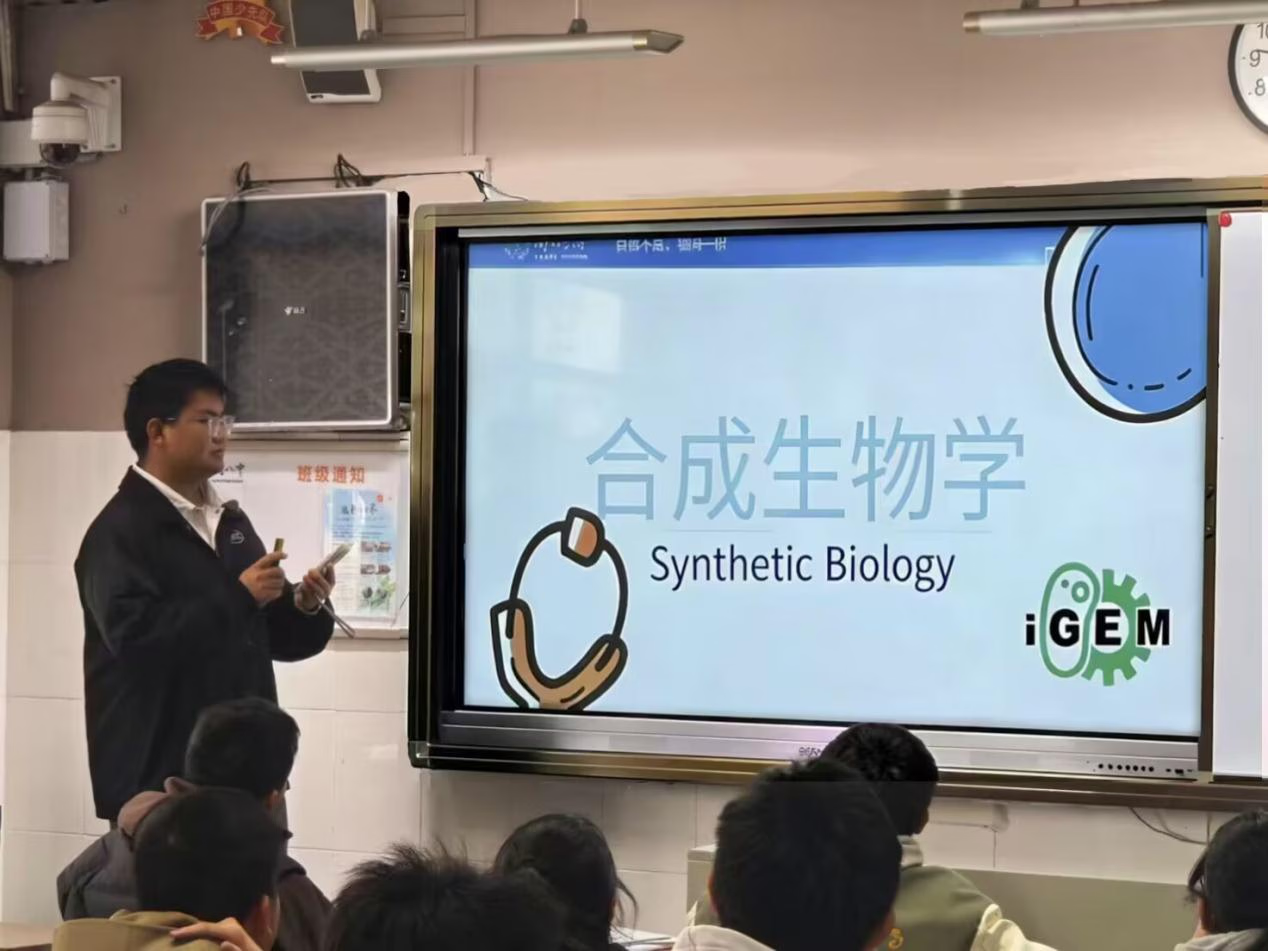
A typical session combined a short introduction to student research, a problem-based explanation of intestinal infection, a visual walk-through of signal recognition and response, a project case study, group questions, and a final reflection card. Materials included a graded slide deck, project video, colour-coded genetic-circuit diagram, signal-response cards, and a one-page worksheet that students could retain after the session.
Students asked whether engineered probiotics could affect beneficial gut bacteria, whether the system could respond to more than one pathogen, and how researchers would prevent uncontrolled growth. Feedback showed that the health problem made the topic relevant, while the distinction between ordinary genetic modification and an engineered biological system remained difficult in early sessions. We therefore added a side-by-side comparison diagram after the Northwest sessions, a dedicated biosafety panel before the South China sessions, and a short design challenge for the two Kunming schools.
Learning Through Academic Exchange
Education also continued when we moved from public outreach into academic exchange. Competitions and peer forums required us to explain the same project to audiences who could question the scientific design, educational logic, and social responsibility of our work in greater depth. These settings therefore became both communication platforms and external tests of our reasoning.
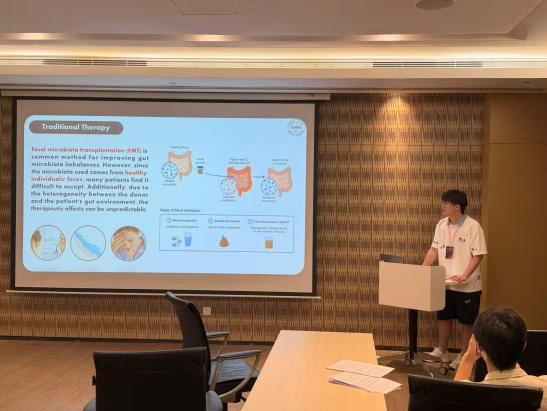
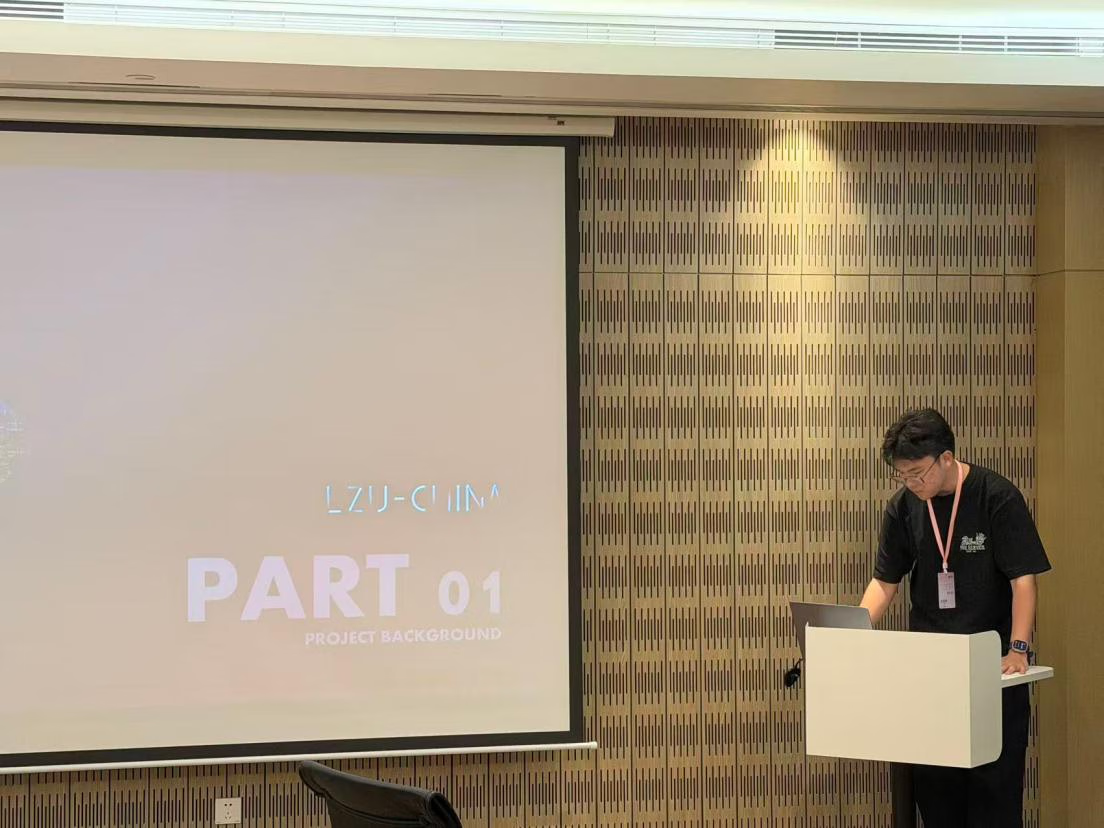
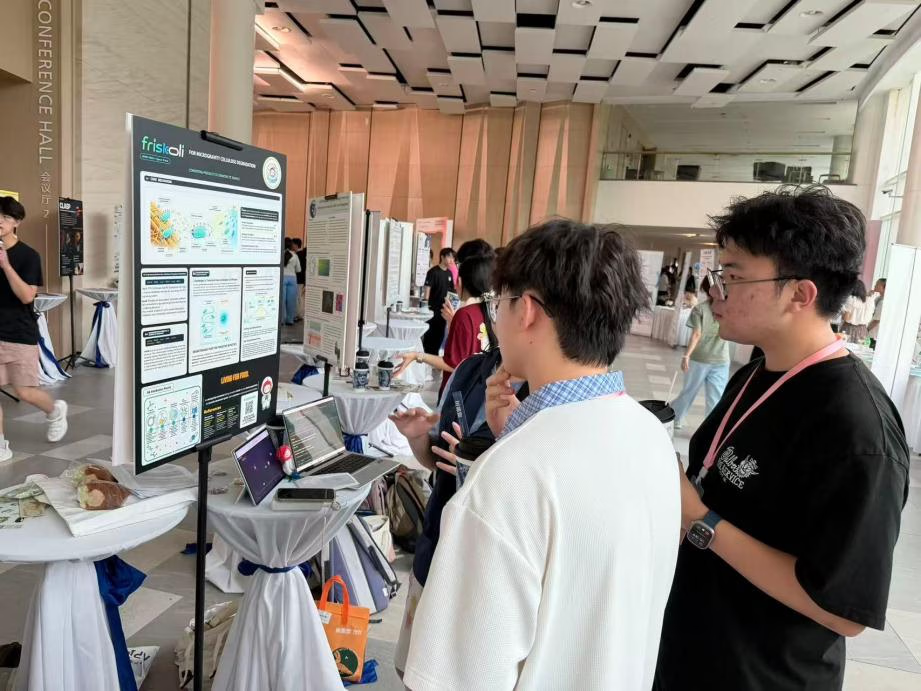
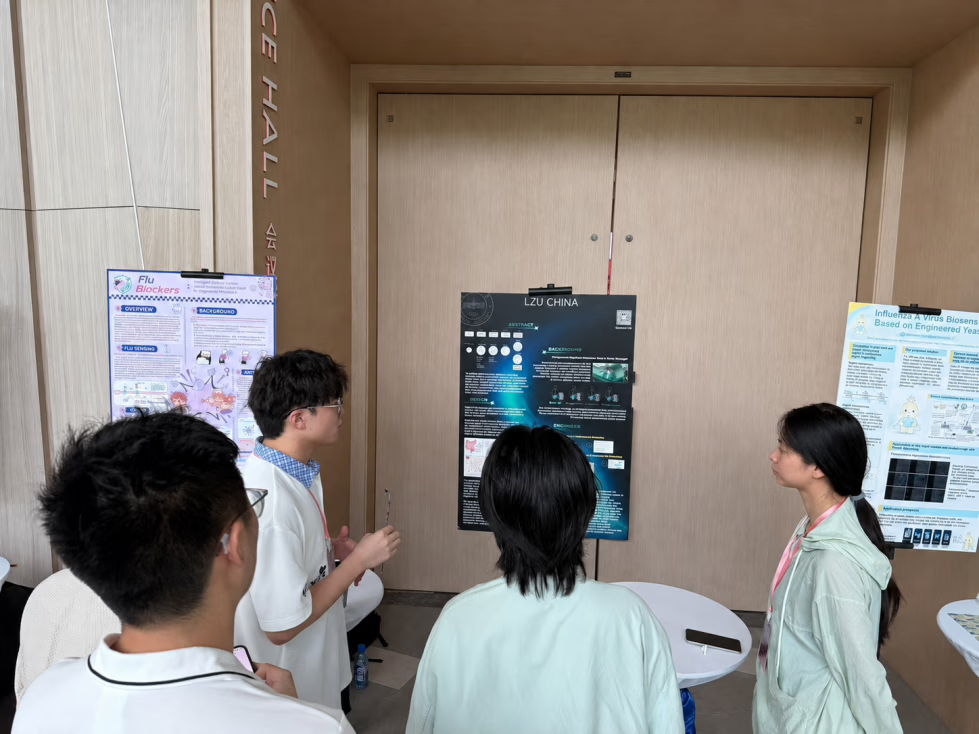
Synthetic Biology Competition. During the synthetic biology competition, we presented the clinical problem, the engineered probiotic design, and the relationship between sensing, visible indication, and antimicrobial response. Judges and participating teams asked about specificity, false-positive signals, delivery conditions, and the boundary between an educational prototype and a future clinical application. Their questions helped us make the limitations of the project more explicit.
Preparing for the competition required us to compress the project into a form that remained scientifically defensible under questioning. The educational value lay not only in presenting our work, but also in hearing how other teams interpreted our design. Questions about false-positive recognition, delivery conditions and the boundary between demonstration and application exposed assumptions that were less visible within our own team.
We recorded these questions and used them to revise both project communication and school-facing material. Explanations of sensing were separated from explanations of response; clinical claims were narrowed; and the difference between a conceptual prototype and a validated medical product was made explicit.
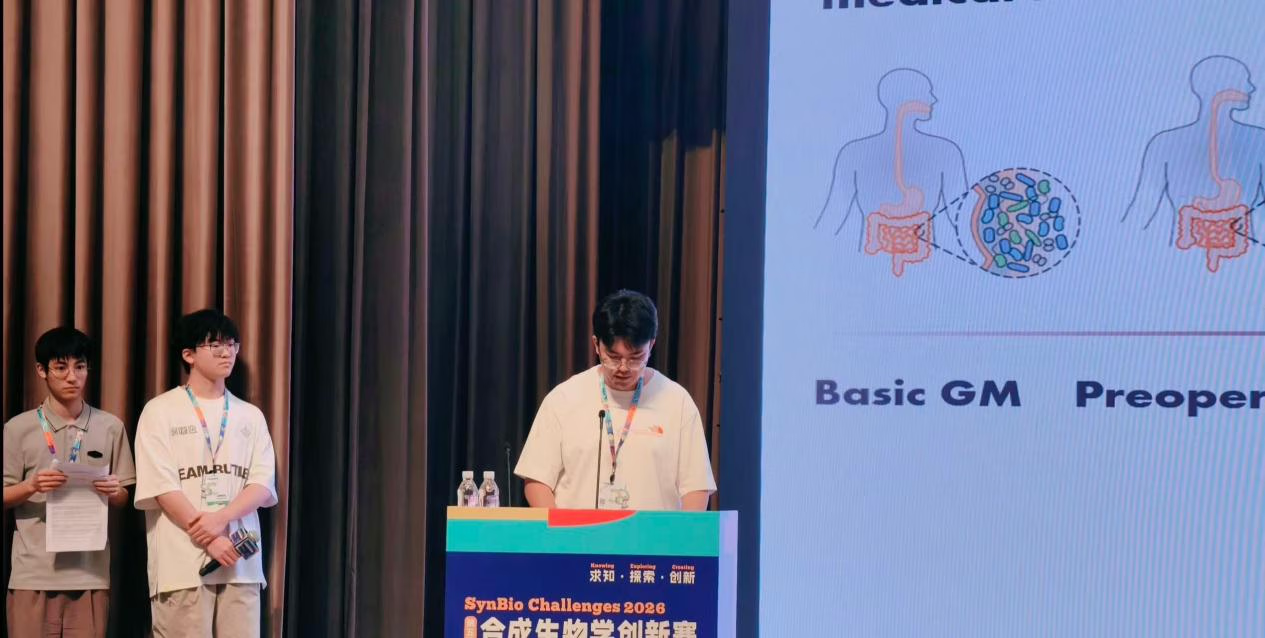
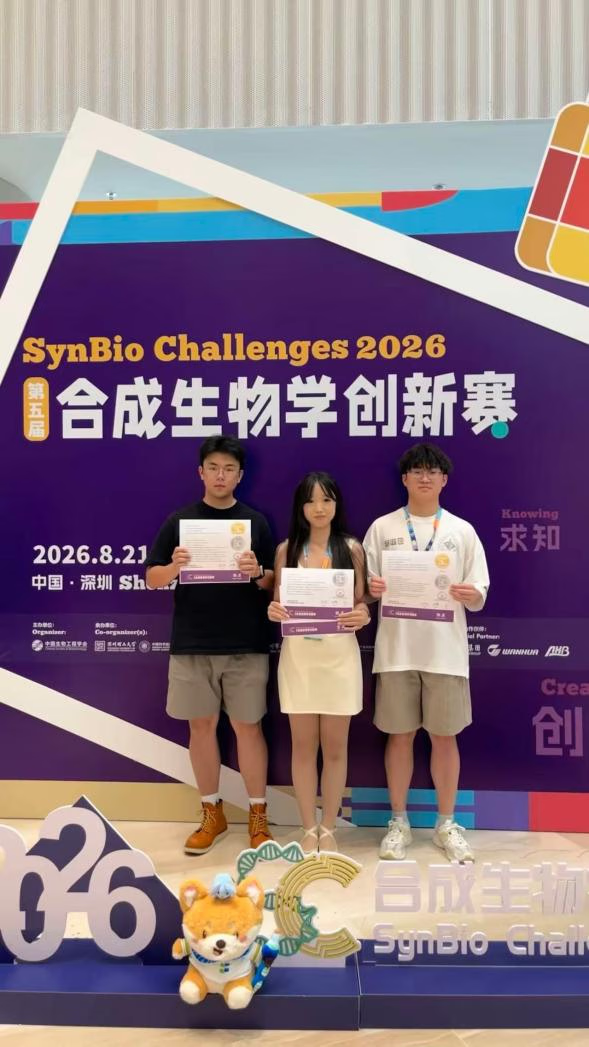
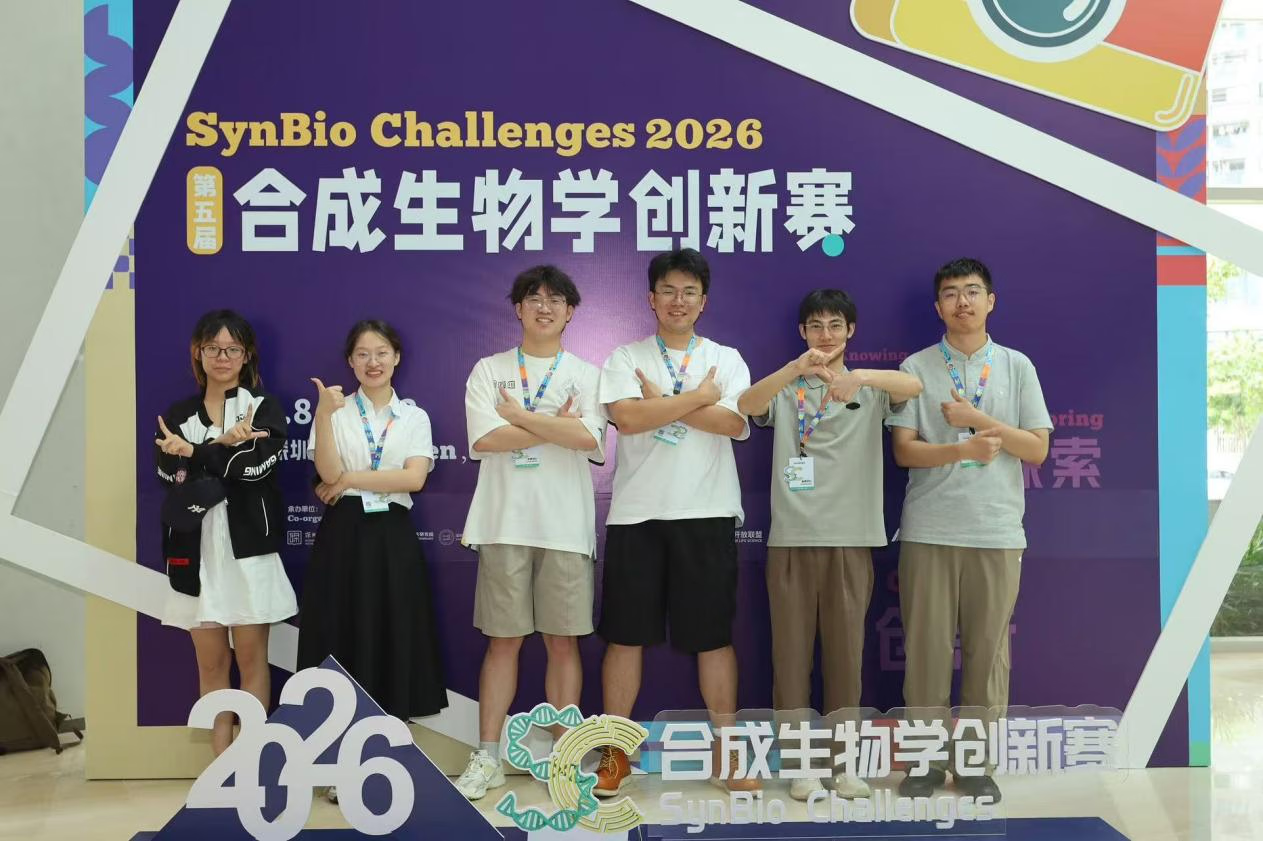
The First APIC Asia-Pacific Synthetic Biology Exchange Forum. At the first APIC Asia-Pacific Synthetic Biology Exchange Forum, we introduced our project to a wider regional audience and compared educational approaches with teams working in different biological and social contexts. The forum allowed us to discuss responsible engineering, public understanding, biosafety, and the challenge of translating technical work into material that can be used by schools and communities.
The APIC forum placed our work in a wider Asia-Pacific conversation. Teams approached synthetic biology through different health, environmental and social contexts, allowing us to compare not only technical designs but also how projects were explained to schools, communities and potential users.
This comparison reinforced the importance of making educational resources adaptable. A presentation that works in one institution may rely on examples, prior knowledge or terminology that do not travel easily. We therefore treated the forum as a test of whether the central logic of our project could remain clear outside its original local context.
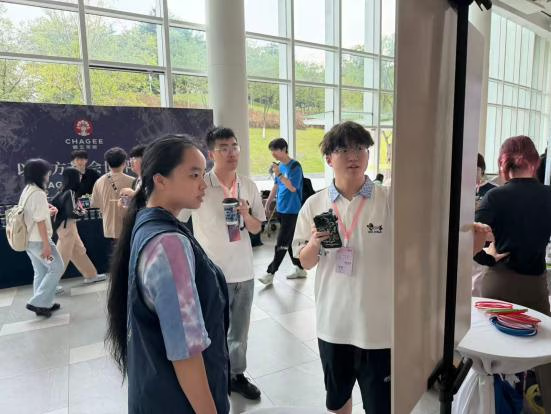
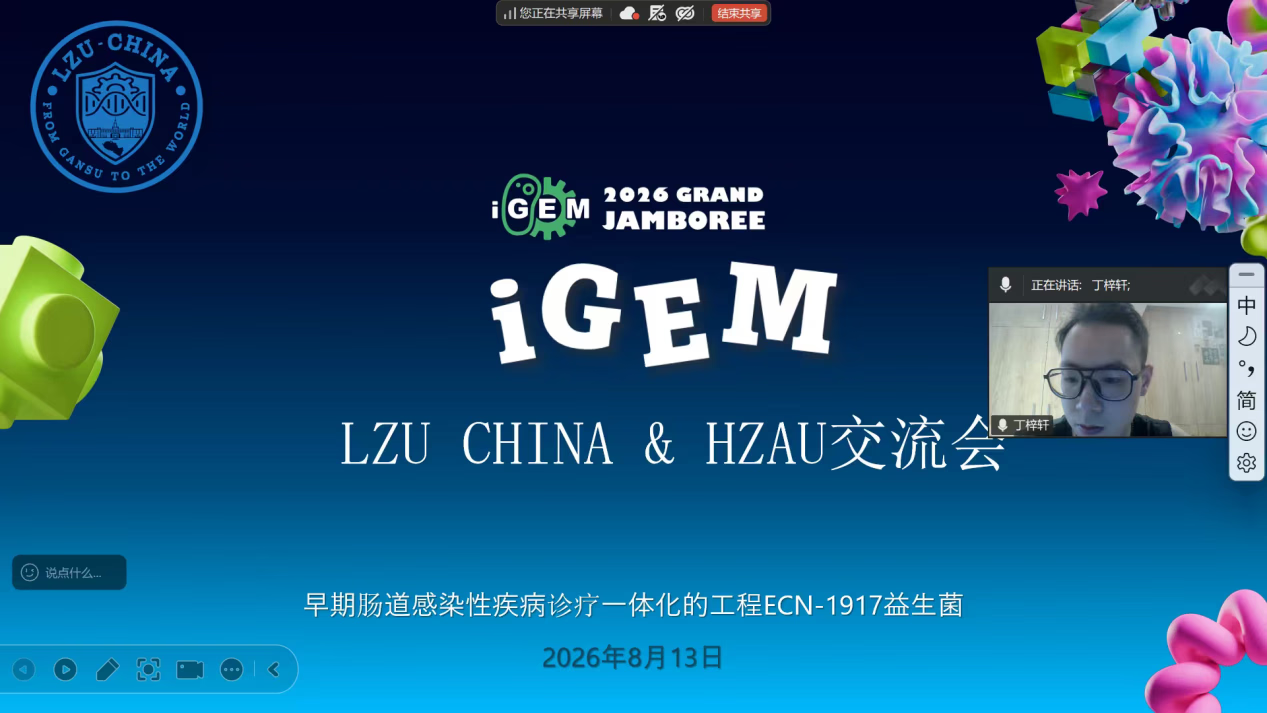
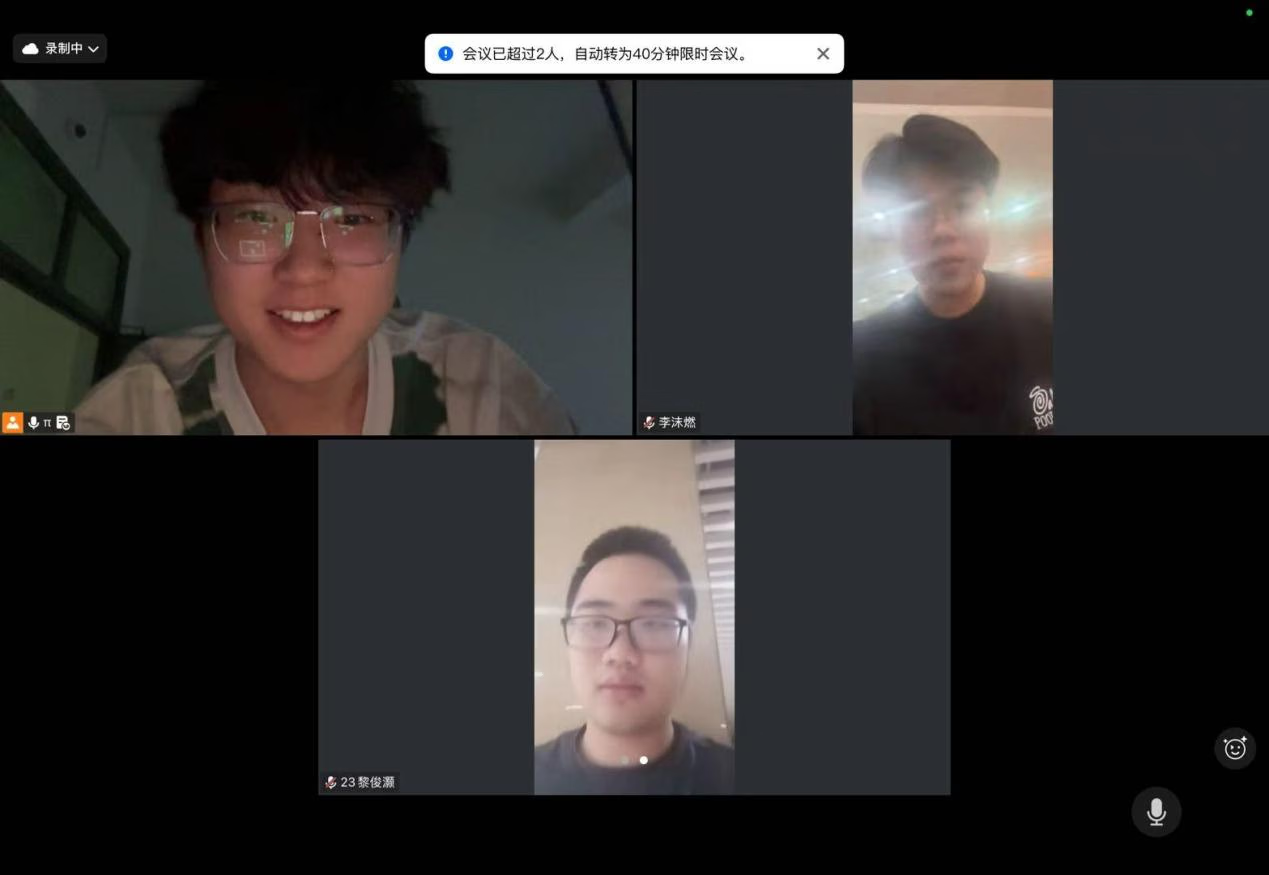
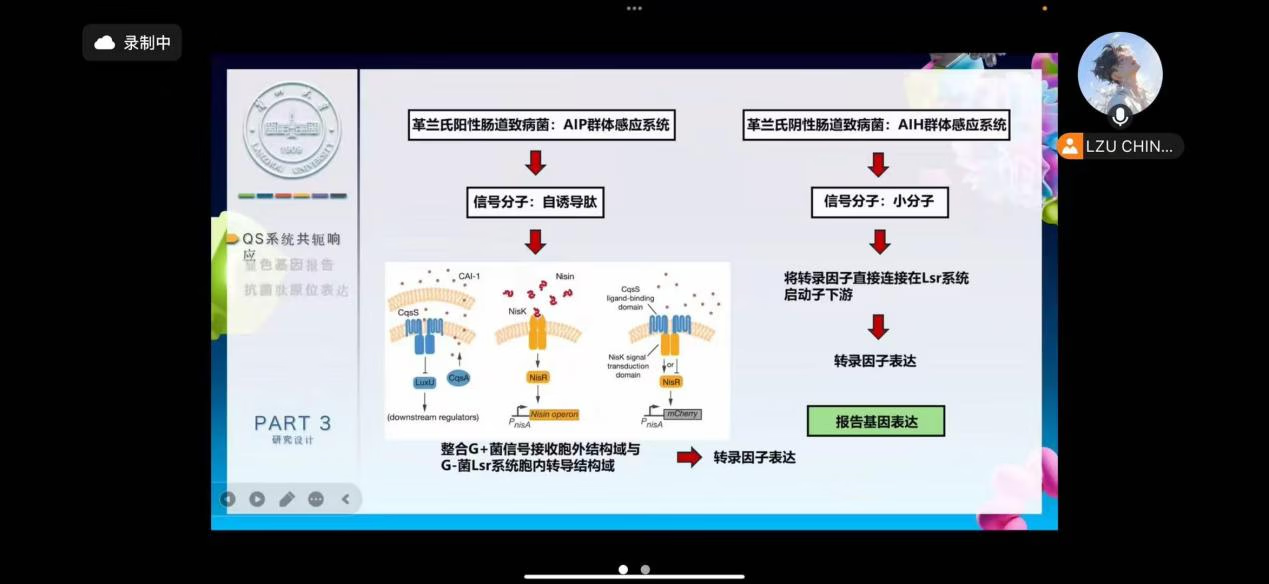
Inter-University Online Exchange Meetings. We also organized or joined a series of online exchange sessions with other university teams. Instead of delivering one-way project reports, the sessions included short presentations, reciprocal questioning, and focused discussion on experimental design, community engagement, education, and team management. Sharing draft materials before and after the meetings allowed participants to continue the exchange beyond the live call.
Online inter-university meetings created a slower and more reciprocal form of exchange. Short presentations were followed by targeted questions on experimental design, community engagement, educational structure and team organisation. Screenshots and shared slides documented the sessions, while written notes preserved questions that could be reconsidered after the meeting ended.
The online format also reduced geographical barriers. Teams did not need to travel in order to compare materials or continue a discussion. Draft slides, diagrams and activity ideas could be exchanged before or after the meeting, turning a single call into an ongoing process of review and adaptation.
Together, these exchanges showed us that scientific education does not only move from experts to the public. Peer teams also educate one another by exposing assumptions, offering alternative designs, and identifying questions that an individual team may overlook. We used this feedback to strengthen our explanations of biosafety, project limitations, and the connection between technical design and social need.
From Gut Health to Synthetic Biology
Across our school and community activities, gastrointestinal health served as a practical entry point into synthetic biology. In community settings, we began with concerns that participants already recognized: probiotics, antibiotic use, constipation, postoperative recovery, chronic disease, maternal and infant health, and everyday diet. In school settings, we used the same health questions to lead students toward microbial communication, biological sensing, engineered probiotics, and genetic circuits.
We began with familiar topics such as intestinal infection, pathogenic bacteria, probiotics, and microbial communities. From there, we gradually introduced the idea that bacteria can detect environmental signals, communicate with one another, and change their behavior in response.
This allowed us to explain more advanced concepts such as quorum sensing, biosensing, and engineered probiotics without introducing them as isolated technical terms.
The conceptual pathway was:
Gut infection → Pathogenic bacteria → Microbial communication → Signal detection → Engineered biological response → Synthetic biology
This progression helped us connect abstract mechanisms to a health problem that participants could understand more intuitively.
Where appropriate, we also discussed the limitations, uncertainties, and safety considerations associated with engineered microorganisms. Understanding synthetic biology, in our view, means understanding not only what the technology can do, but also the questions that should be asked before it is applied.
What Participants Found Difficult
Across school, campus, and community settings, the same conceptual bridge was presented at three levels of depth. The most persistent misunderstandings were that probiotics always act like medicines, that bacterial sensing involves conscious recognition, and that a genetic circuit is physically similar to an electronic circuit. We therefore used a colour-coded mechanism ladder, separated analogy from mechanism, and prepared short, intermediate, and advanced versions of the same explanation.
Translating Complexity Without Losing Accuracy
One challenge we repeatedly encountered was how to simplify scientific language without oversimplifying the science itself.
For example, quorum sensing can initially be introduced as a form of “communication” between bacteria, but this analogy is only useful if participants eventually understand that the process depends on chemical signals, population density, and coordinated changes in gene expression.
Similarly, engineered probiotics can be described as beneficial microorganisms given new functions, but effective education should also explain that these functions depend on designed genetic components and controlled biological responses.
We therefore treated analogy as a starting point rather than an endpoint.
Our general approach was:
Analogy → Explanation → Mechanism
This allowed participants to first develop an intuitive understanding and then gradually move toward greater scientific precision.
What We Wanted Participants to Understand
Across the Understand pathway, we focused on several learning goals.
Participants should be able to recognize that:
- synthetic biology combines biology with principles of engineering and design;
- microorganisms can sense and respond to biological signals;
- engineered biological systems can be designed for specific functions;
- real-world applications involve both potential benefits and important limitations;
- synthetic biology is connected to everyday problems rather than existing only inside laboratories.
The purpose of this pathway was therefore not simply to introduce more information.
It was to help participants build a coherent scientific understanding that could support deeper discussion and participation in the next stage of our education framework.
9 Engage
From Audience to Participant
Understanding science is important, but education becomes more meaningful when people are able to respond to it.
In the Engage pathway, we wanted participants to move beyond listening and begin expressing their own questions, concerns, ideas, and judgments. Instead of treating science education as a process of delivering correct answers, we created opportunities for participants to take part in discussion and contribute their own perspectives.
In practice, engagement followed this progression:
Audience → Participant → Contributor
This was especially important for synthetic biology, a field that involves not only scientific mechanisms, but also questions about safety, ethics, acceptance, and real-world application.
Creating Space for Dialogue
In Donggang West Road Subdistrict, community questionnaires allowed residents to identify what they already understood about intestinal health and where misconceptions remained. In Baiyin Road Subdistrict, household interviews created a slower and more personal form of dialogue in which residents could describe their health concerns, medication experiences, and expectations for health education in their own words. These activities made public perspectives part of our educational evidence rather than treating them as comments collected after teaching was over.
Would you be willing to use an engineered probiotic? What concerns would you have about genetically engineered microorganisms? What information would you want before accepting a synthetic biology product? What problems would you want synthetic biology to help solve?
These questions were not intended to lead participants toward a particular answer. Instead, they allowed us to understand how people evaluated scientific technologies from their own perspectives.
Participants were encouraged to explain why they held a particular view, respond to others, and raise issues that we had not necessarily considered ourselves.
Recurring Questions and Concerns
Across questionnaires, household interviews, quizzes, and discussion records, safety and controllability emerged as the most frequent concern, followed by effectiveness, cost and accessibility, and possible environmental effects. Older adults more often asked about medication and personal health, while students were more likely to ask about system design, unintended behaviour, and future applications.
Interactive Participation
Engagement was not limited to verbal discussion.
Participation also extended beyond questionnaires and interviews. In Baiyin Road Subdistrict, health quizzes and challenge-style questions allowed residents to test their understanding of antibiotic use and intestinal health. In Gaolan Road Subdistrict, livestream questions allowed families to participate beyond the limits of a single venue. In Guangwumen Subdistrict, hosted interaction and school-community cooperation gave students and residents structured opportunities to respond, ask questions, and contribute to the activity itself.
For example, participants could be presented with a hypothetical situation involving an engineered biological system and asked to consider its potential benefits, risks, and conditions for acceptable use.
This type of activity allowed participants to make choices and justify them, rather than simply receiving information from us.
It also helped us identify differences between what we considered important as project members and what participants considered important as potential users, learners, or members of the public.
From Feedback to Change
Dialogue only becomes meaningful if it can influence what happens next.
During our education activities, we therefore documented recurring questions, misunderstandings, concerns, and suggestions. These responses were then discussed within the team and used to improve later educational materials and activities.
For example:
A recurring question was how synthetic biology differs from ordinary genetic engineering. This showed that listing definitions was insufficient, so we added a comparison diagram showing the movement from modifying a component to designing a system with defined inputs and outputs.
Participants also found the relationship between signal recognition and biological response difficult to follow. We separated the original single diagram into two stages and used a traffic-light analogy before returning to the molecular mechanism.
Several students suggested that they would be more willing to speak if questions could first be submitted anonymously. Later sessions therefore added anonymous question cards, quick voting, and small-group scenario discussion before the open question-and-answer period.
These feedback loops allowed education to become a process of mutual learning rather than one-way communication.
Learning From Perspectives Different From Our Own
One of the most valuable outcomes of engagement was that participants often approached synthetic biology differently from us.
As project members, we naturally focused on mechanisms, design, and technical feasibility. Participants, however, might first ask about safety, cost, trust, accessibility, or whether a technology would actually improve their daily lives.
These perspectives reminded us that scientific understanding alone does not determine how a technology is received.
Engagement therefore helped us recognize that good science communication should not only answer the questions scientists expect people to ask. It should also make space for the questions people actually care about.
What We Wanted Engagement to Achieve
Across this pathway, we focused on three goals:
Expression — participants should feel able to ask questions and state their own views;
Dialogue — different perspectives should be discussed rather than merely collected;
Influence — feedback should have the possibility of changing later educational design.
The purpose of Engage was therefore not simply to make activities more interactive.
It was to ensure that participants had a genuine role in the educational process.
10 Connect
Breaking Barriers to Scientific Access
Scientific knowledge may be global, but access to it is not.
Even when educational resources are available, differences in language, geography, educational background, and access to scientific institutions can prevent people from engaging with them. In the Connect pathway, we focused on reducing these barriers and extending our education beyond the audiences we could reach directly.
Connection required more than wider distribution. People in different settings needed to be able to access, understand and use the resources we created.
Our education-equity investigation in Gansu reinforced this point. Participants placed strong emphasis not only on physical infrastructure, but also on access to high-quality digital content, practical STEM opportunities, and resources adapted to different linguistic and regional contexts. This reminded us that making information available is not the same as making education accessible. The Connect pathway therefore focused on whether resources could actually travel, be understood, and remain usable after our team left.
Reaching Beyond a Single Location
Many educational activities are limited by time and place. A lecture, workshop, or outreach event may reach only those who are physically present.
To extend the value of these activities, we developed materials that could continue to circulate beyond individual events and could be used in different settings.
To allow education to continue beyond individual events, we organized classroom slides, visual explanations, discussion questions, community materials, and digital files into forms that could be circulated and reused. A resource designed for one activity was therefore treated as a starting point for adaptation, not as a finished product tied permanently to one location.
Where possible, we also adapted resources so that they could be used independently rather than requiring a member of our team to explain them in person.
Distribution and Reuse of Educational Resources
We circulated three levels of school slides, campus and competition posters, child activity sheets, community health materials, interview and questionnaire templates, quiz cards, short videos, and the multilingual trifold series. Resources were distributed in person, shared through QR codes and class or community groups, transferred to partner teachers and community workers, and exchanged with other university teams. This combination of physical and digital circulation allowed the same material to remain useful after the original activity had ended.
Reuse was visible in several forms: teachers retained the slide deck and shortened it for class meetings; community workers reused the gut-health question cards during later conversations; and peer teams adapted the discussion prompts and multilingual files for their own outreach. Feedback was generally positive about clarity and usability. The most common request was for shorter text blocks and more visual explanation, which led us to simplify page density and provide editable source files rather than PDFs alone.
Across Languages
Language is one of the most obvious barriers to scientific access.
Scientific terminology can already be difficult within a familiar language. When educational materials are available only in one language, the barrier becomes even greater.
To address this, we developed a synthetic biology leaflet in 15 language versions: Simplified Chinese, Traditional Chinese, English, French, German, Japanese, Spanish, Portuguese, Arabic, Korean, Russian, Italian, Thai, Hindi, and Malay. The leaflet retained the same core questions—how students participate in biological research and what synthetic biology is—while allowing the wording and layout to be adjusted for different writing systems and reading habits.
However, we did not regard translation as simple word-for-word substitution.
Scientific communication requires balancing accuracy with readability. Some concepts require explanation, analogy, or reformulation to remain understandable in another linguistic context.
We therefore paid attention not only to whether a sentence was linguistically correct, but also to whether the scientific meaning remained clear and accessible.
A Fifteen-Language Trifold Series
We converted this work into a coherent trifold series covering all 15 languages. Each version focused on two questions - how students participate in biological research and what synthetic biology is - so that the first encounter remained manageable for readers without a biological background.
The Simplified Chinese version served as the content master. Key scientific terms were collected in a shared terminology table, translated, checked against the intended biological meaning, and then reviewed again after layout. We paid particular attention to text expansion, line breaking, right-to-left Arabic layout, and whether examples remained understandable outside the original language. The final package contains 15 PDF files and 15 editable presentation files.
Printed Chinese and English copies were used in school, campus, and community settings, while the complete digital package was shared through QR codes, online meetings, and peer-team exchanges. Reader feedback favoured the concise question-based structure; revisions mainly addressed dense paragraphs, unfamiliar abbreviations, and language-specific layout balance.
Why a Trifold
We chose the trifold format because it could serve both face-to-face and independent learning. During an outreach activity, a facilitator could open one panel at a time and use the questions as prompts. After the activity, the same leaflet could be taken away, scanned through a QR code or shared as a digital file. The format therefore connected immediate conversation with later review.
The content was intentionally limited to two foundational questions: how students participate in biological research and what synthetic biology is. This was not because the wider field could be reduced to two definitions, but because first contact requires a manageable entry point. The leaflet was designed to support curiosity and orientation, while lectures, discussions and project materials provided greater depth.
Translation as Educational Design
Each language version required more than lexical substitution. Sentence length, word order, abbreviation, script direction and the familiarity of scientific terms affected how the panels could be read. A phrase that appeared concise in Chinese could become dense in another language, while a direct translation of an English technical term might remain accurate but provide little help to a first-time reader.
We therefore worked from a shared content master and a terminology list. Key concepts were checked for biological meaning, then reviewed again inside the actual layout. This second review mattered because clarity can be lost through crowded lines, broken phrases or a reading order that does not match the writing system. The Arabic version required particular attention to right-to-left structure, while several European-language versions required adjustment for text expansion.
Use and Revision
Printed Chinese and English copies were most useful during in-person activities, where participants could follow a panel while speaking with a team member. The complete fifteen-language set was better suited to digital circulation through QR codes, online exchange meetings and peer-team sharing. Keeping editable presentation files alongside PDFs made later correction and adaptation possible.
Feedback focused less on visual preference than on usability. Readers wanted shorter blocks of text, fewer unexplained abbreviations and a clearer relationship between the two core questions. We responded by shortening sentences, increasing separation between ideas and checking whether every panel could still be understood when read without a presenter.
The trifold series became one of the clearest examples of the Connect pathway. It extended the project beyond a single language and location, but it also taught us that distribution alone does not create access. A resource becomes educational only when its language, structure and format allow a reader to enter the subject.
Across Educational Backgrounds
Access also depends on prior knowledge.
A resource written for biology students may be inaccessible to someone without formal scientific training, even when both readers speak the same language.
We therefore adapted content according to different levels of scientific literacy.
For some audiences, this meant reducing technical terminology and using familiar examples. For others, it meant providing more detailed explanations of mechanisms, experimental design, or synthetic biology principles.
The purpose was not to create “easy” and “difficult” versions of the same material, but to create different entry points into the same scientific ideas.
Across Generations and Communities
Scientific education often concentrates on students and young people. However, other groups may also have important questions about health, biotechnology, and emerging scientific technologies.
The six Lanzhou subdistricts together formed a community education network that reached older adults, children, young people, people with chronic conditions, postoperative participants, and maternal and infant families. The network mattered because it allowed one project to meet groups with very different experiences of science and health, while the materials and feedback generated in each setting could support later work elsewhere.
In these settings, effective communication often depended less on terminology and more on connecting scientific ideas with familiar experiences, health concerns, and practical questions.
These activities reminded us that accessibility is not achieved simply by distributing more information.
It depends on whether the information is presented in a way that people can meaningfully connect with.
Digital Access
Online communication provided another way to extend the reach of our education.
Through social-media posts, short videos, livestreams, digital leaflets, and downloadable multilingual materials, we extended selected content beyond the people who attended in person. These formats supported the school network, allowed community participants to revisit key ideas, and created resources that future educators can adapt.
Digital formats also allowed materials to be revisited, shared, and reused.
At the same time, we recognized that online availability does not automatically mean accessibility. Information still needs to be clear, well-structured, and appropriate for the intended audience.
For this reason, digital communication was treated as another educational format requiring thoughtful design rather than simply an additional distribution channel.
What We Mean by Connection
Across the Connect pathway, we focused on three dimensions:
Reach — allowing educational resources to travel beyond individual events;
Accessibility — reducing barriers created by language, background, geography, or format;
Adaptability — designing resources that could be used in different contexts.
Our goal was not simply to make our educational work larger in scale.
It was to make it easier for more people to find a meaningful entry point into synthetic biology.
11 Education as Mutual Learning
What They Taught Us
Education changed us as much as we hoped it would influence others.
Throughout our activities, we gradually realized that meaningful education does not happen when one side speaks and the other simply receives. It happens when both sides are willing to listen, question, reflect, and change.
Participants did not only learn from us. Their questions, misunderstandings, concerns, and expectations repeatedly challenged the way we thought about science communication.
For this reason, we began to treat every activity not only as an opportunity to teach, but also as an opportunity to learn.
How Educational Dialogue Informed Community Engagement
The dialogue created through education also contributed to our community engagement work, but the two served different purposes. Education focused on whether people could access the subject, understand the relevant science and participate in discussion. Community engagement followed the implications of what we heard: how concerns about safety, control, clinical boundaries, trust and access should influence the purpose, design and responsible development of the project.
We therefore documented not only whether an activity was well received, but also which questions altered our explanations or required wider consideration by the team. Hospital questionnaires moved safety and clinical boundaries earlier in our public material. Community discussions made medication, cost and access more visible. School and university questions exposed gaps in our explanation of specificity, containment and system design. This created a traceable route from engagement to reflection and, where appropriate, to changes in both communication and project thinking.
This distinction helped us avoid treating every public interaction as evidence for every purpose. A child drawing a microbial world primarily demonstrated educational participation; a hospital questionnaire could reveal concerns relevant to responsible project development; a school question could do both when it showed a misunderstanding and raised a substantive issue about control. We interpreted each form of evidence according to the setting in which it was produced.
These educational interactions also formed part of a wider two-way dialogue between our team and society. Our collaborations with communities, clinical institutions, public-health professionals and peer research teams are described in greater detail on our Collaboration page.Accessibility considerations related to disability, clinical constraints, vulnerable populations, and healthcare equity are discussed in greater detail on our Inclusivity page.
Children Taught Us to Begin With Curiosity
When working with children, we found that the questions they asked were often more revealing than the answers they gave.
Children did not usually begin with technical concerns. They were more likely to ask questions such as:
“Can bacteria be useful?” “Can we design living things?” “Can science make something completely new?”
These questions reminded us that young learners often approach science through imagination before mechanism.
We therefore learned not to begin by asking whether children could remember terminology. Instead, we paid more attention to whether an activity encouraged them to observe, imagine, and ask their own questions.
What they taught us: curiosity is not a preliminary stage to be rushed through. It is itself an important educational outcome.
University Students Taught Us That Familiarity Is Not the Same as Understanding
Students with scientific backgrounds were often familiar with words such as genetic engineering, microorganisms, or biotechnology.
However, familiarity with terminology did not always mean that the underlying concepts were clearly understood.
Across our activities, some participants could recognize terms such as genetic engineering or biotechnology but still found it difficult to explain how synthetic biology differs from conventional biological research, how engineered systems are designed, or why biological sensing requires both recognition and response. This gap between recognition and understanding changed the way we designed later explanations.
Instead of assuming prior knowledge, we began to ask participants to explain concepts in their own words, compare related ideas, and apply them to new situations.
What they taught us: recognition is not the same as understanding.
Older Adults and Community Participants Taught Us to Start From Lived Experience
When communicating with older adults and community participants, we found that abstract scientific terminology was rarely the best starting point.
Questions about infection, medication, probiotics, food, safety, and personal health were often much more meaningful than questions about genetic circuits or biological engineering.
Rather than interpreting this as a lack of scientific interest, we came to understand it as a different way of entering scientific discussion.
For many participants, science became relevant when it was connected to experiences they already understood.
This encouraged us to begin more often with familiar problems and only then introduce the scientific mechanisms behind them.
What they taught us: accessibility is not simply using easier words. It is choosing the right starting point.
Participants Taught Us That Safety and Trust Matter as Much as Function
As members of a synthetic biology team, we naturally tended to focus on what engineered biological systems could do.
Participants often asked a different set of questions:
Is it safe? What happens if it behaves unexpectedly? How would it be controlled? Would people actually trust it?
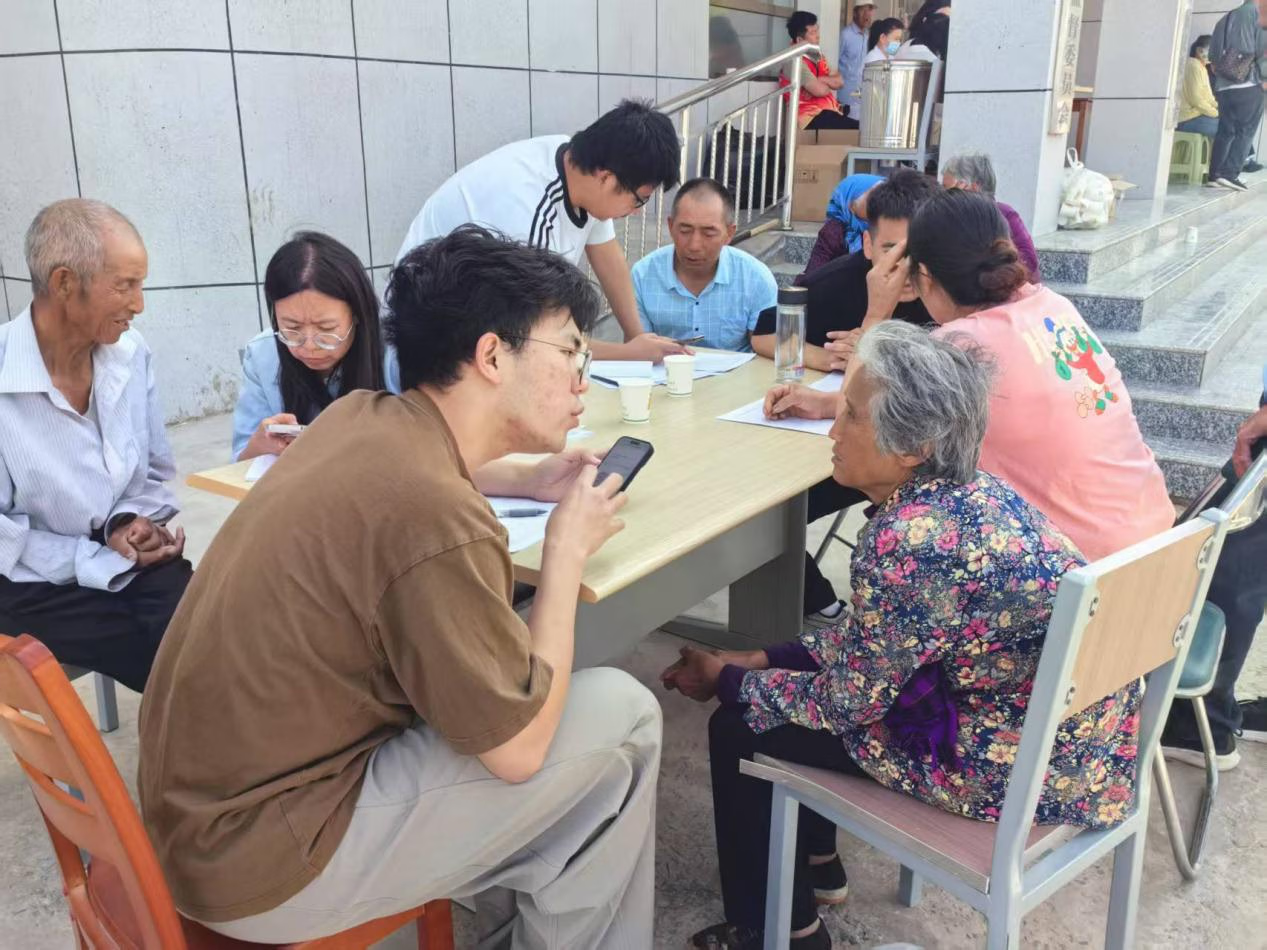
These questions were especially important when discussing engineered microorganisms and applications related to health.
They reminded us that public understanding of biotechnology cannot be built only around technical capability. People also want to understand uncertainty, risk, control, and responsibility.
As a result, later educational materials increasingly included not only potential applications, but also limitations, safety considerations, and questions that remain open.
What they taught us: explaining what a technology can do is only half of the conversation.
Different Languages Taught Us That Translation Is Not the Same as Communication
When adapting educational materials across languages, we encountered another important lesson.
A scientifically accurate translation could still be difficult to understand.
Some expressions that worked naturally in one language became overly technical, ambiguous, or culturally unfamiliar in another. This forced us to reconsider the difference between linguistic equivalence and educational accessibility.
We therefore began to pay greater attention to whether an explanation remained intuitive after translation, whether analogies still worked, and whether the structure of the material matched the expectations of different readers.
What they taught us: communication is successful only when meaning travels with the words.
Feedback Became Part of Our Design
These lessons were most valuable when they led to change.
We therefore began documenting recurring questions, confusing explanations, unexpected reactions, and suggestions from participants. Rather than treating this feedback as something collected only after an activity, we used it as input for the next stage of educational design.
Our process became:
Feedback → Insight → Change
For example:
Quorum sensing remained abstract when it was introduced only as "bacterial communication". We therefore began with the image of signals accumulating in a crowded room, then returned to signal molecules, population density, and coordinated gene expression.
Questions such as "What prevents engineered bacteria from continuing to grow?" and "What if the system responds to the wrong signal?" led us to add a visible function-limit-control panel to later slides, including containment, uncertainty, and the boundary between a prototype and a clinical product.
In an early lecture, most students listened but few spoke during the open question period. Later sessions added anonymous question cards, a one-minute vote, and three-person scenario discussion, which produced more questions and a wider range of viewpoints.
These changes turned feedback into evidence of learning on both sides.
What Changed in Us
Perhaps the most important outcome of this process was that our own understanding of education changed.
At the beginning, it was easy to think of education as a problem of explanation:
How can we make synthetic biology easier to understand?
Over time, the question became broader:
What do different people actually want to understand? What concerns do they bring with them? What can their perspectives reveal that we have overlooked? How should those perspectives change the way we teach?
This shift changed education from a one-directional activity into a continuing conversation.
We were no longer only asking:
“Did they learn from us?”
We also began asking:
“What did we learn from them?”
That question became one of the most important principles of our education work.
From Teaching to Mutual Learning
By the end of these activities, we came to see education not as a straight line from educator to learner, but as a cycle:
We listen → We design → We communicate → They respond → We reflect → We redesign
This cycle allowed every audience to contribute something different.
Children contributed curiosity. Students revealed gaps between familiarity and understanding. Community participants highlighted the importance of lived experience. Public discussions brought questions of trust and safety to the foreground. Multilingual communication exposed the limits of direct translation.
Together, these perspectives made our education more precise, more accessible, and more responsive.
Education became strongest when we stopped treating feedback as the end of an activity and started treating it as the beginning of the next one.
12 Evaluating Educational Impact
Measuring Educational Impact
Reaching people is important, but reach alone does not tell us whether education was effective.
A large audience, a successful event, or positive comments may indicate that an activity was well received, but they do not necessarily show whether participants understood the science, changed the way they thought about it, or became more willing to take part in future scientific discussions.
For this reason, we treated evaluation as an essential part of education rather than an optional final step.
Our impact assessment focused on three levels:
Reach → Learning → Participation
Reach
Who Did We Reach?
The first level was the most direct: understanding the scale and diversity of our educational work.
Across different activities, we documented indicators such as:
- number of participants;
- number of educational sessions;
- schools, communities, and other locations involved;
- age groups and educational backgrounds represented;
- educational materials distributed;
- languages covered;
- online and offline reach.
These indicators helped us understand whether our activities were reaching the audiences we intended to serve.
However, we did not regard larger numbers as evidence of stronger education by themselves.
A small workshop that generates meaningful dialogue may have greater educational value than a large event in which participants remain passive.
Reach therefore tells us how far education travelled, but not necessarily what happened after it arrived.
Learning
Did Participants Understand More?
The second level focused on changes in knowledge and understanding.
We matched evaluation to the setting. School and campus activities could use short pre- and post-activity questions, concept-recognition tasks, or one-sentence explanations. Community activities could use health-literacy questions, interview themes, quiz performance, feedback forms, or follow-up conversations. Digital activities could be assessed through views, completion, interaction, and qualitative feedback.
Depending on the activity, we assessed outcomes such as whether participants could:
- describe synthetic biology in their own words;
- distinguish synthetic biology from related concepts;
- explain basic principles of microbial communication;
- understand the idea of biological sensing and response;
- connect engineered biological systems with real-world applications;
- recognize both potential applications and limitations of biotechnology.
Rather than testing whether participants could memorize terminology, we were more interested in whether they could explain ideas, make connections, and apply what they had learned to unfamiliar examples.
Our evidence combined the scale of the network with what participants produced, asked, and changed during the activities. The child-facing activity involved 48 pupils and generated a complete set of Petri-dish artworks. Our inclusivity-oriented county-level school programme reached seven rural and county-level public middle and high schools and 423 students. Two campus booths and several academic exchanges brought the project into university and peer-team discussion. Six Lanzhou subdistricts connected the work with community audiences, while the trifold series extended access across 15 languages.
A recurring pattern was:
Recognising isolated terms -> Explaining a designed biological system
Short written responses moved from recognising isolated terms to explaining synthetic biology as the design of biological systems with defined functions.
Similarly, school and campus participants became more willing to ask questions, compare possible applications, and discuss safety or limitations in their own words.
These measurements allowed us to identify not only what worked, but also which concepts remained difficult and required better educational design.
Participation
Did Education Change the Relationship Between People and Science?
Knowledge gain was only one part of the impact we hoped to achieve.
We also wanted to know whether participants felt more able and willing to engage with synthetic biology.
Therefore, in selected activities, we examined changes in attitudes such as:
- willingness to ask scientific questions;
- confidence in discussing synthetic biology;
- interest in learning more;
- willingness to participate in future scientific activities;
- perception that synthetic biology was relevant to everyday life;
- willingness to express opinions on the development and use of biotechnology.
Questions such as:
“Do you think synthetic biology is something you can understand?”
or
“Would you feel comfortable participating in a discussion about the use of engineered microorganisms?”
helped us evaluate a different dimension of education.
Our aim was not to make participants support synthetic biology.
Instead, we wanted them to feel better equipped to understand it, question it, and form their own views.
This distinction was important to us.
Education should increase people's capacity to participate in scientific conversations, not tell them what conclusions they should reach.
Beyond Satisfaction
Participant satisfaction was useful, but we did not treat it as sufficient evidence of educational success.
Statements such as:
“The activity was interesting.”
or
“I enjoyed the lecture.”
can tell us something about engagement, but much less about learning.
Whenever possible, we therefore separated:
Did they enjoy it?
from:
Did they understand it?
and:
Did it change their willingness or ability to participate?
This allowed us to evaluate our work more critically.
A highly enjoyable activity could still require improvement if participants misunderstood an important concept. Conversely, a challenging activity might still be successful if it resulted in deeper understanding and meaningful discussion.
What the Data Changed
Evaluation was not only used to describe our impact after an activity.
It also influenced what we did next.
When the short assessments showed that signal recognition and biological response were still being merged into one step, we replaced the original circuit figure with a two-stage, colour-coded mechanism diagram.
When readers reported that text-heavy sections of the multilingual trifold were difficult to scan, we shortened sentences, reduced unexplained abbreviations, and adjusted line breaks and page balance for each writing system.
When the first school sessions showed that students were attentive but rarely expressed their own views, we added anonymous questions, quick voting, and scenario-based group discussion to later sessions.
In this way, measurement became part of the same educational cycle described throughout our work:
Measure → Identify → Improve
Looking at Impact Across Different Audiences
We also avoided assuming that the same indicator should be used for every audience.
For children, success might be reflected in curiosity, willingness to ask questions, or the ability to recognize a basic scientific idea.
For university students, deeper conceptual understanding and the ability to apply scientific reasoning might be more appropriate.
For community participants and older adults, accessibility, relevance to everyday experience, and confidence in asking questions could be more meaningful indicators.
For multilingual or remote audiences, usability, comprehension, and accessibility of resources might be more important than participation in a physical activity.
Impact therefore had to be evaluated in relation to the goals of each educational context.
Our Impact Framework
Across our education work, we therefore asked three increasingly demanding questions:
Reach Did people have access to our education?
↓
Learning Did they understand something they did not understand before?
↓
Participation Did they become more able or willing to engage with science?
This framework helped us move beyond counting activities and participants toward evaluating what those activities actually achieved.
Attendance alone did not define educational success.
It was defined by whether more people left feeling able to understand, question, discuss, and participate in science for themselves.
13 Building Reusable Educational Resources
Making Education Reusable
An educational activity can be meaningful in the moment, but its impact becomes greater when others can continue to use what it leaves behind.
For this reason, we did not regard slides, activity designs, questionnaires, visual materials, or multilingual resources as temporary accessories to individual events. Wherever possible, we documented and organized them so that they could be reused, adapted, and improved.
Our goal was to gradually transform individual activities into a reusable LZU-CHINA Education Toolkit.
Our developing toolkit includes:
- introductory student-research and synthetic-biology materials used in schools and on campus;
- audience-specific activity designs for children, adolescents, university students, older adults, and community groups;
- teaching slides, posters, project explanations, and visual models;
- questionnaires, interview prompts, quizzes, feedback forms, and follow-up records;
- discussion prompts, health scenarios, challenge-style questions, and simple demonstrations;
- a 15-language synthetic biology leaflet in PDF and editable presentation formats;
- community posters, age-adapted health reading materials, short videos, and livestream content;
- editable files, documentation, and image records that future educators can reuse and revise.
The education-equity investigation also gave this toolkit a clearer purpose. Respondents and grassroots interviewees repeatedly emphasized the value of practical, adaptable, digitally accessible, and sustainable educational resources. We therefore treated the toolkit not simply as an archive of what LZU-CHINA had produced, but as a collection of materials that could be reused by teachers, community workers, peer teams, and future educators in settings different from those in which they were originally created.
Preparation, Rehearsal, and Post-Activity Review
The public-facing activity was the final stage of a longer preparation process. In meeting-room sessions, team members reviewed scientific wording, divided material by audience, tested explanations, checked safety boundaries, rehearsed transitions and assigned responsibilities for teaching, observation, photography and record-keeping. Materials were checked against the setting in which they would be used: a school lecture required a different pace from a community conversation, and a drop-in campus booth required several levels of explanation.
After each activity, photographs, completed worksheets, recurring questions and team observations returned to the same preparation process. We compared what participants had been shown with what they had asked or misunderstood, then revised slides, activity instructions and discussion prompts. The meeting room therefore linked one activity with the next and gave our programme continuity across different audiences and locations.
Preparation began with audience mapping. For each activity, we considered what participants were likely to know, which questions could be answered responsibly, what materials were safe and realistic in the setting and how a facilitator would recognise confusion. This prevented a school lecture, an outdoor booth and a hospital conversation from becoming superficial variations of the same script.
Rehearsal focused on transitions as much as individual sentences. Team members practised moving from an everyday question to a biological mechanism, from mechanism to project design and from project design to limitations. The aim was to preserve scientific continuity even when a participant joined for only part of an activity.
Post-activity review completed the cycle. We matched photographs and observation records with the material used in the session, identified questions that recurred and decided whether the next change belonged in wording, visual design, activity structure or project reflection. These preparation and review sessions were a substantive part of the programme, turning separate events into a cumulative body of educational work.
The value of these resources lies not only in preserving what we created, but in allowing others to build upon it.
From Participation to Creation
Some of the most valuable educational materials produced during our programme were not created by the team, but by the participants themselves. During the “Micro-World on a Petri Dish: Laboratory Equipment Art Challenge,” pupils from the Primary School Affiliated to Lanzhou University transformed familiar pieces of laboratory equipment into spaces for scientific imagination. Petri dishes, glass slides and centrifuge tubes were no longer presented only as objects used by researchers; they became starting points from which children could represent microorganisms, cells, health and laboratory life in their own visual language.
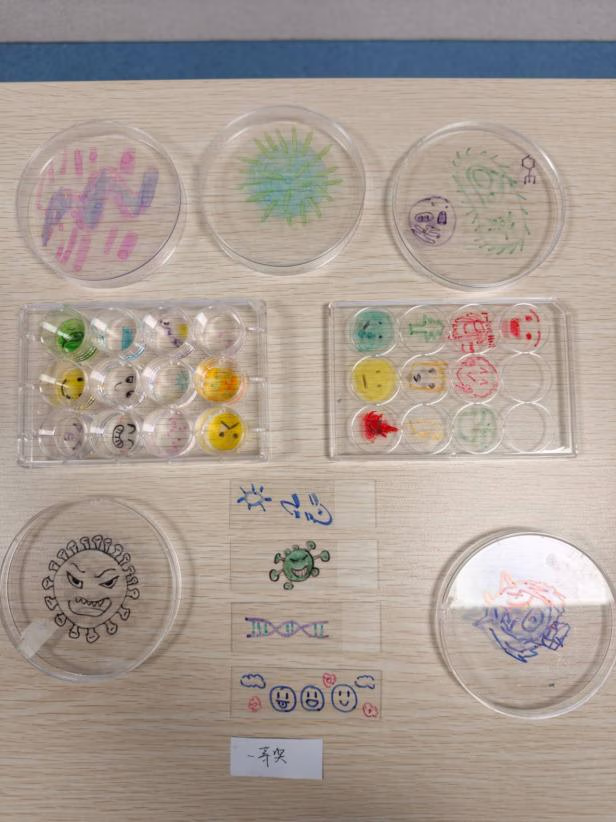
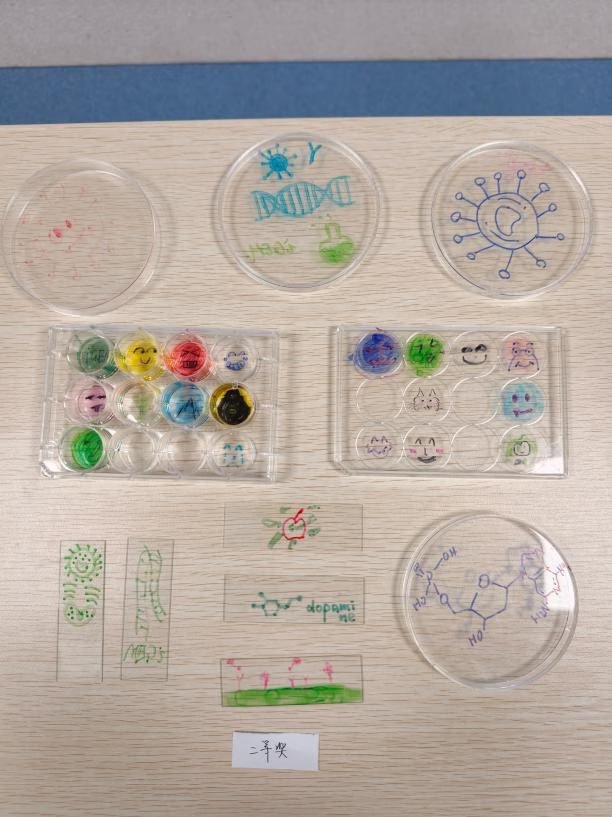
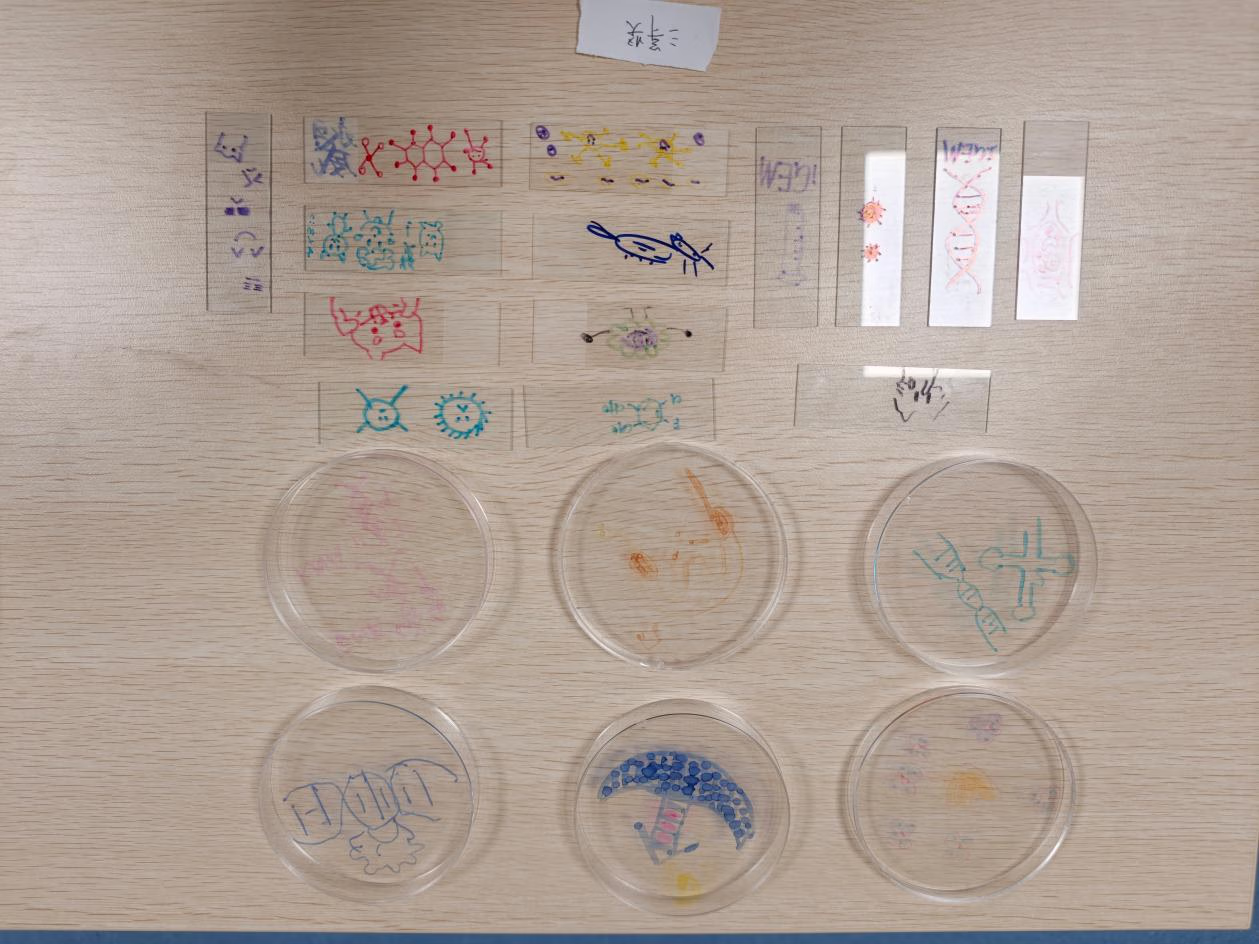
The activity was designed to move children from observation to interpretation. Before beginning their work, the pupils were introduced to basic laboratory equipment and encouraged to consider what might exist in a microscopic world that cannot be seen directly with the unaided eye. Team members answered questions about microorganisms, explained that bacteria are not uniformly harmful and discussed how laboratory tools help researchers observe, separate and study biological materials. The pupils were then invited to develop their own compositions rather than reproduce a standard scientific illustration.
Their works demonstrated that creative participation can reveal forms of understanding that may not emerge through conventional questioning alone. Choices of colour, shape, scale and arrangement reflected how individual pupils interpreted the relationship between microorganisms, the human body and the laboratory. Some works focused on the imagined appearance of microscopic life, while others treated the Petri dish as a self-contained biological environment. The variety of responses reminded us that children do not approach science as an empty body of facts. They connect new concepts with images, stories and prior experience, and these connections can become useful starting points for further explanation.
We therefore retained and organised the completed works as participant-generated educational outputs. They were not ranked solely according to artistic technique, nor were they treated simply as decorative products from an outreach event. Instead, the collection records how children responded after encountering unfamiliar scientific concepts through observation, conversation and creative practice. It also provides future educators with examples of how drawing can be used to identify curiosity, uncertainty and emerging scientific ideas.
Selected works are presented here with identifying information removed. Together, they form a visual account of the activity from the pupils’ perspective and complement the photographs of team members teaching or demonstrating. While the activity photographs show what we delivered, the artworks show what the participants chose to notice, reinterpret and create for themselves.
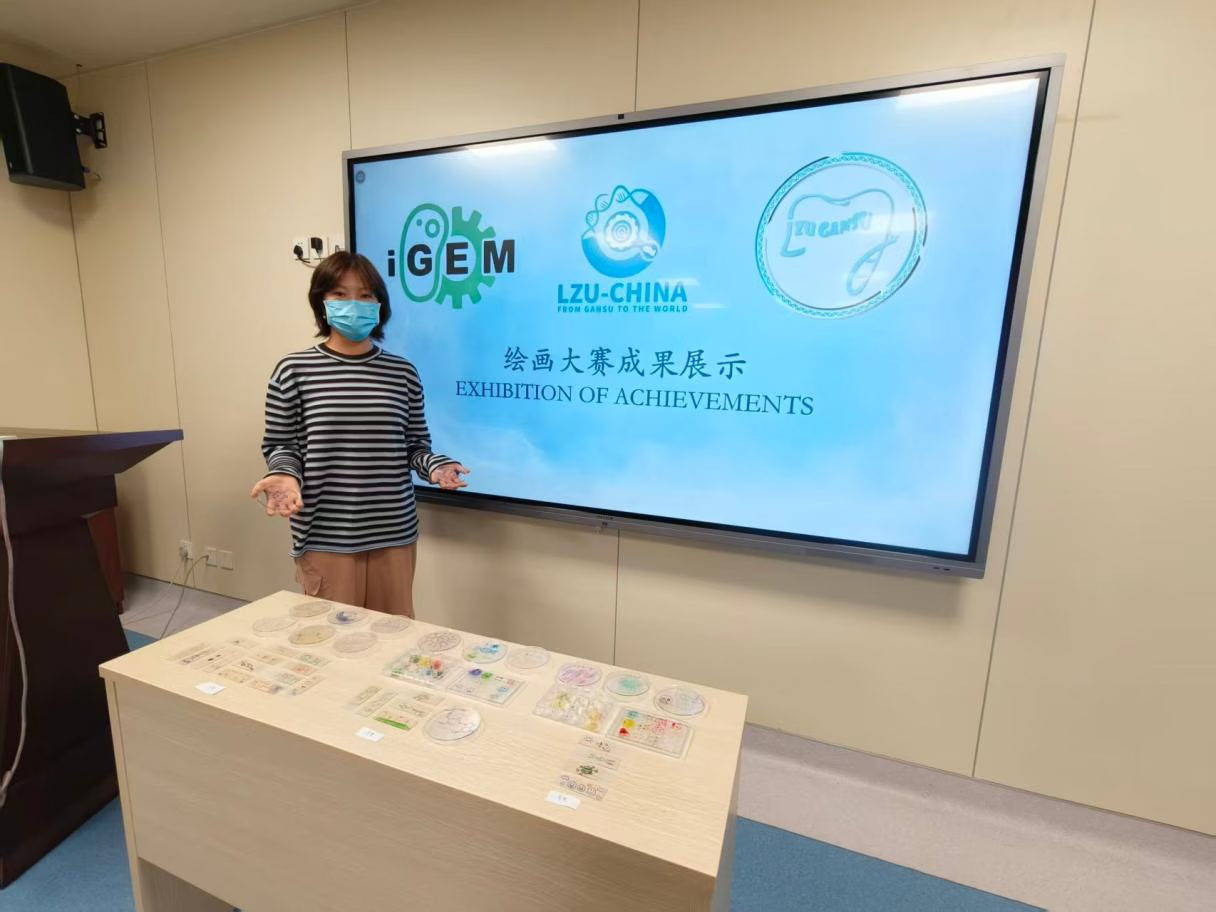
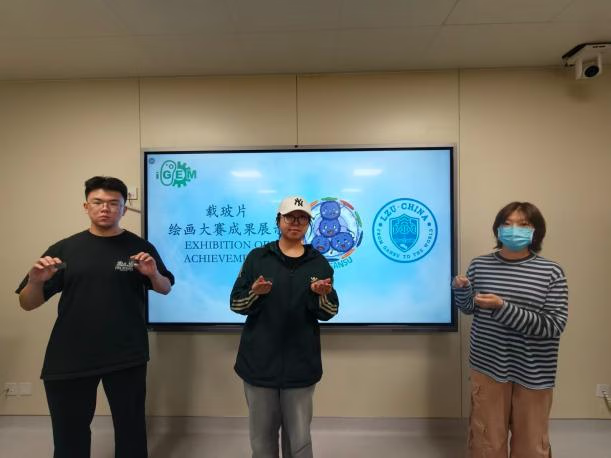
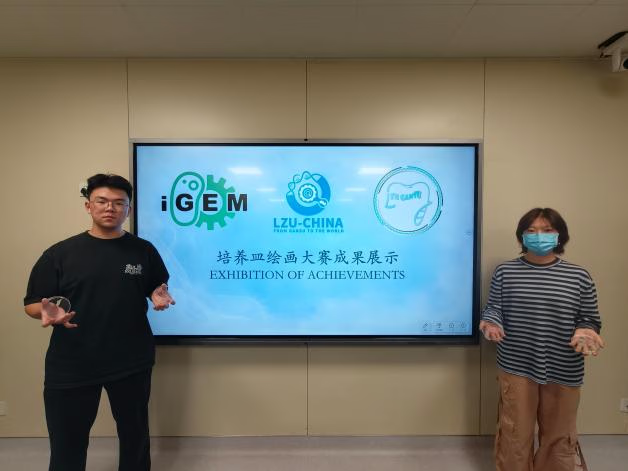
Creative Products for Continuing Engagement
Education does not always continue through formal teaching materials alone. A visual symbol, a portable object or a familiar image can also help participants remember where they first encountered a scientific idea and provide an opportunity for later conversation. We therefore extended the visual language of LZU-CHINA beyond posters and presentation slides by developing a series of creative products connected with the identity and themes of our project.
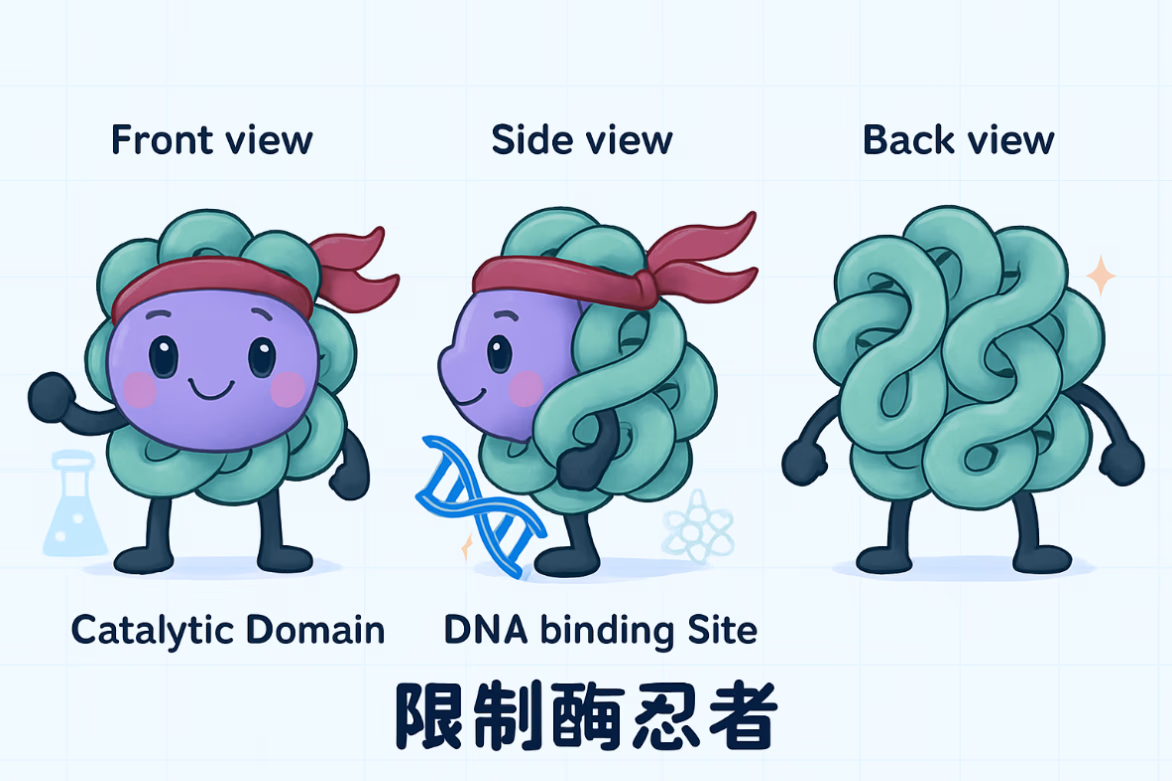


The products translated elements of our work into forms that could circulate in everyday settings. Their design drew on the team’s visual identity and on concepts associated with microorganisms, intestinal health, laboratory research and synthetic biology. Rather than reproducing dense scientific explanations on small objects, we used concise visual elements that could be recognised quickly and connected with the educational material presented during the activity. Where space and format allowed, additional information or digital access points could direct participants towards more detailed project and science communication resources.
These products served different purposes in different settings. At campus booths, school activities and community events, they were used as participation incentives, activity prizes and tangible reminders of the conversations that had taken place. They helped create a more approachable point of contact, particularly for younger participants and visitors who might initially have felt hesitant about asking questions. In academic exchanges, selected products also helped communicate the team’s identity and created opportunities for informal discussion with other students and peer research teams.
We were careful not to assume that every branded object constituted an educational resource in itself. Products carrying only the team’s visual identity primarily served as mementos of participation. Those incorporating project graphics, scientific concepts, explanatory text or links to further resources had a more direct communication function. Recognising this distinction allowed us to assess the products according to what they could realistically achieve rather than overstating their educational value.
Their contribution was therefore complementary. They did not replace lectures, demonstrations, discussion or written resources, but helped extend the life of those activities. An object taken away from a booth or classroom could prompt a later question, recall an earlier explanation or introduce the project to someone who had not attended the original event. In this way, creative design supported continuity between immediate participation and subsequent engagement.
The visual assets developed for these products were retained in editable form so that they could be revised, reproduced or adapted for future activities. This made the products part of a wider communication system rather than isolated souvenirs. Together with the multilingual trifolds, teaching slides, activity sheets and participant-created artworks, they demonstrate how educational communication can continue through a combination of formal resources, visual identity and objects designed for everyday use.
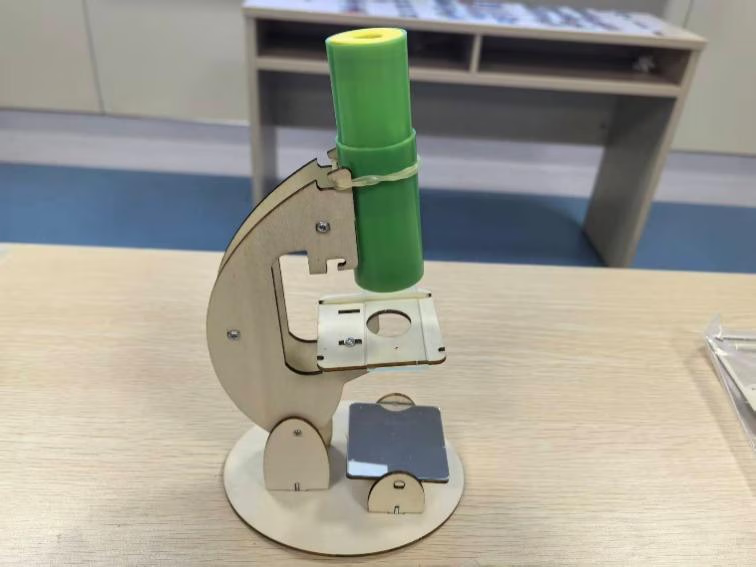
A teacher may adapt a classroom activity to a different age group. A future iDEC team may reuse a questionnaire or redesign a discussion module. A student organization may translate or modify a teaching resource for another community.
For us, reusability therefore means more than making files available.
It means making resources understandable enough to use, flexible enough to adapt, and well documented enough to improve.
Our intended cycle is:
Download → Adapt → Teach → Evaluate → Improve
In this way, education does not have to begin from zero each time.
It can accumulate.
It can be shared.
And it can continue to grow beyond the activities that first created it.
By organizing our educational outputs in this way, we hoped to turn temporary activities into lasting educational infrastructure. The value of a resource lies not only in being preserved, but in being used, adapted, questioned, and improved by someone else.
14 A Continuous Education Cycle
From the perspective of planning and revision, these activities followed a continuous working cycle:
Listen, Design, Engage, Measure, Improve, Share
Across our education work, one pattern gradually became clear: meaningful education is not a sequence of isolated activities, but a cycle of continuous learning and improvement.
We summarized this process as:
Listen → Design → Engage → Measure → Improve → Share
Listen
Before designing an activity, we first tried to understand the people we hoped to reach: their prior knowledge, concerns, interests, and barriers to understanding.
Design
Based on these needs, we adapted the content, format, depth, and level of interaction for different audiences rather than applying a single educational model to everyone.
Engage
Education became more meaningful when participants were able to ask questions, express opinions, and contribute their own perspectives.
Measure
We evaluated not only how many people we reached, but also what they understood and whether they became more confident in engaging with scientific topics.
Improve
Feedback and evaluation were used to revise explanations, materials, and activity formats. What did not work became as valuable as what did.
Share
Finally, we documented and organized our educational resources so that they could be reused, adapted, and improved by others.
This cycle also reflects how our own understanding of education changed throughout the year.
At first, education could easily be viewed as a process of communicating knowledge outward. Over time, we came to see it as a process in which audiences, educators, materials, and feedback continuously influence one another.
The end of one activity therefore became the starting point of the next.
Listen → Design → Engage → Measure → Improve → Share → Listen again
Through this cycle, we aimed to make our education increasingly responsive, evidence-based, and sustainable.
15 Continuing the Work
Education Beyond 2026
Education should not end with the conclusion of a project year.
Throughout 2026, we tried to move beyond isolated activities and build an educational approach that could continue through people, resources, and repeated improvement.
What remains after an activity is not only the memory of participation. It can also be a teaching material reused in another classroom, a discussion question adapted for another community, a multilingual resource shared with a new audience, or a method improved by a future team.
For this reason, we hope the educational resources developed by LZU-CHINA can continue to be used, modified, translated, and expanded after 2026.
More importantly, we hope the principles behind these resources can also continue:
listen before teaching, design for real audiences, create space for participation, evaluate what actually works, and share what others can build upon.
Our goal was never to make education end with an activity.
We wanted every conversation, every resource, and every learner to become a possible starting point for the next one.
In this sense, the end of LZU-CHINA 2026 is not the end of our education work.
It is simply another point in the cycle.
Listen. Design. Engage. Measure. Improve. Share. Continue.