Project
Background, design rationale, and results for MEYcell — an engineered yeast that delivers animal-identical fat to the next generation of alternative protein.
Overview
MEYcell is an engineered strain of Saccharomyces cerevisiae that accumulates intracellular triglycerides identical to animal fat, then releases them at cooking temperature to restore the marbling that alternative proteins lack.
Background
Chassis Selection
Chassis selection is one of the most important engineering decisions in any synthetic biology project. Because our goal is to engineer a microorganism that overproduces lipids for applications in cultivated meat, selecting a chassis that is well-characterized, food-safe, and capable of lipid biosynthesis was essential. We evaluated candidate organisms based on five criteria:
- Food safety
- Lipid production potential
- Availability of genetic engineering tools
- Genome characterization
- Ease of laboratory cultivation
With our criteria in mind, we presented our project to various synthetic biology professionals and experts in yeast biology. Here is what some of them had to say:
- Dr. Alejandro Marangoni
- Has not seen anyone encapsulate lipids within yeast.
- This is a novel area of research.
- Dr. Richard Rachubinski
- Suggested BY4741 as a potential chassis.
- BY4741 has an associated knockout library.
- Suggested BY4741 as a potential chassis.
- Dr. Cinzia Klemm
- S. cerevisiae is suitable for proof-of-concept studies.
- S. cerevisiae is the easiest for cell wall removal.
- Dr. Victoria Haritos
- Yeast transcription is fast, especially with strong promoters.
- BY4741 is a predictable and robust strain.
- Yeast and bacteria survive at differing pH levels.
Applying these criteria, we narrowed our candidates to two species of yeast suitable for our project, Yarrowia lipolytica and Saccharomyces cerevisiae. Both species have established applications in the food and biotechnology industries and are generally regarded as safe (GRAS), satisfying our criterion for food safety [36]. We therefore focused our comparison on their lipid production potential, availability of genetic engineering tools, genome characterization, and ease of laboratory cultivation.
Y. lipolytica is a naturally oil-producing yeast well known for its high capacity to store lipids [36]. It also possesses an extensively annotated genome, with numerous studies having successfully demonstrated strategies to enhance lipid production, including the overexpression of fatty acid synthesis genes and disruption of beta-oxidation pathways. Although these characteristics make Y. lipolytica a strong candidate for lipid overproduction, our project prioritized engineering flexibility and the availability of well-characterized genetic tools over maximizing lipid accumulation alone. Consequently, Saccharomyces cerevisiae was chosen as the chassis for the project, as it is a well-characterized model organism with a fully sequenced genome, extensive experimental and computational data, and an expansive synthetic biology toolkit [37]. Although modular toolkits such as YaliBricks have been developed for Y. lipolytica, they remain limited in scope compared to the extensive library of promoters, plasmids, and other genome engineering tools available for S. cerevisiae [38]. Additionally, S. cerevisiae is easy to cultivate and has a high growth rate under laboratory conditions, making it a highly optimal organism. Furthermore, S. cerevisiae has the ability to integrate foreign genes via homologous recombination with great stability [39], and its lipid metabolism has been extensively studied, providing a strong foundation for engineering fatty acid synthesis and triacylglycerol (TAG) accumulation [3].
Overall, while Y. lipolytica demonstrates greater native lipid accumulation, the extensive engineering toolkit, well-characterized genome, and robust engineering capabilities of S. cerevisiae make it the most optimal chassis for achieving the objectives of our project.
Following the selection of S. cerevisiae as our chassis, we then considered the most appropriate strain for our project. Based on consultations with experts, we selected BY4741 as our primary strain. Dr. Richard Rachubinsk recommended BY4741 due to the availability of an extensive knockout library, allowing us to access well-characterized strains with relevant gene deletions. Dr. Victoria Haritos also described BY4741 as a predictable and robust strain, making it suitable for genetic engineering. We specifically selected 𝛽-oxidation knockout strains, including POX1, PXA1, and the combined POX1/PXA1 knockout, to support our project, as deletion of these genes prevents breakdown of native fatty acid stores for energy.
Our choice of S. cerevisiae as our chassis was further supported by our comparison of its lipid profile to that of traditional red meat. In traditional red meat, the primary fatty acids include palmitic acid, stearic acid, and oleic acid, with 40-50% of lipids consisting of monounsaturated fatty acids (MUFAs), of which oleic acid is the most common [40]. Oleic acid is also associated with beneficial effects on cardiovascular health and improved lipid profile. In comparison, there are three primary lipid types naturally present in S. cerevisiae: glycerophospholipids, sphingolipids, and sterols [41]. However, via the lipid biosynthesis pathway involving conversion of acetyl-CoA into malonyl-CoA through acetyl-CoA carboxylase (ACC1), MUFAs are produced, including palmitoleic acid (C16:1) and oleic acid (C18:1). The major fatty acids synthesized by S. cerevisiae. While the ratio of unsaturated fatty acids to saturated fatty acids differs between traditional red meat and S. cerevisiae, both share a very similar fatty acid profile of palmitic acid, stearic acid, and oleic acid.
Key Pathways
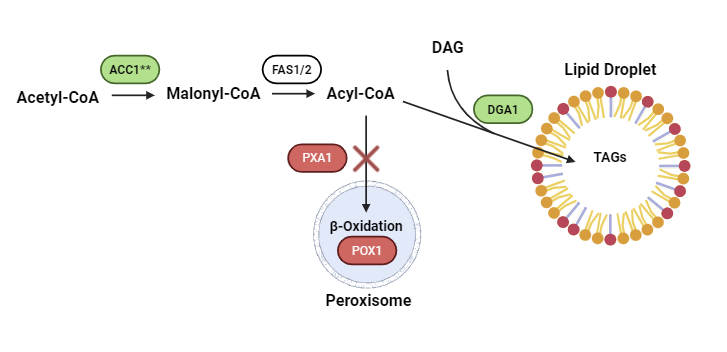
S. cerevisiae produces and stores triacylglycerols (TAGs) through the native de novo fatty acid biosynthesis pathway [2]. This pathway begins with the conversion of acetyl-CoA into malonyl-CoA by acetyl-CoA carboxylase [3]. This is the rate-limiting step for fatty acid synthesis, as ACC1 is tightly regulated by Snf1 phosphorylation, which maintains low intracellular concentrations of malonyl-CoA. Acetyl-CoA and malonyl-CoA then feed into the fatty acid synthase (FAS) complex, encoded by FAS1 and FAS2, where malonyl-CoA is used as a substrate for the elongation of acyl chains to produce fatty acyl-CoA [3].
Fatty acyl-CoAs are then directed toward TAG formation, which consists of a glycerol backbone esterified to three fatty acid chains [3]. This begins with the acylation of glycerol-3-phosphate (Gro-3-P) with two acyl chains by GPAT and LPAT, producing phosphatidic acid (PA). PA is then dephosphorylated by phosphatidic acid phosphohydrolase (Pah1) to diacylglycerol (DAG), and a final acylation by diacylglycerol acyltransferase (DGA1) converts this into TAG. TAGs are then stored as lipid droplets (LDs) alongside sterol esters.
Competing Pathways
There are several native pathways that compete with TAG accumulation, either diverting carbon away from TAG synthesis or promoting the breakdown of stored lipids. To maximize lipid accumulation, we needed to downregulate or delete each of these pathways.
Firstly, glycerol can be lost as Gro-3-P is oxidized back into dihydroxyacetone phosphate (DHAP) for glycolysis rather than being used for TAG synthesis [3]. This reaction is catalyzed by Gut2, encoded by GUT2, so we deleted GUT2 to prevent the diversion of this precursor.
The peroxisomal β-oxidation pathway degrades acyl-CoA back into acetyl-CoA, allowing fatty acid stores to be used for energy [3]. The first step of this pathway is encoded by POX1, while PXA1 encodes a subunit of the peroxisomal fatty acyl-CoA transporter. FAA2 also encodes a peroxisomal acyl-CoA synthetase required to activate free fatty acids for β-oxidation. Through the deletion of these genes, we aimed to increase the pool of acyl-CoA-derived compounds available for TAG synthesis, increasing overall TAG levels.
Finally, TGL3, TGL4, and TGL5 encode lipases that cleave acyl chains from TAGs to release stored fat as free fatty acids during growth phases [3]. To prevent this, we deleted these genes so that TAGs remained locked within lipid droplets rather than being mobilized and depleting over time.
Key Mechanisms
Fatty Acid De Novo Biosynthesis
Saccharomyces cerevisiae synthesizes fatty acids through the de novo fatty acid biosynthesis pathway, which converts acetyl-CoA into fatty acids that can then be incorporated into cellular and storage lipids [6]. The pathway starts with the conversion of acetyl-CoA to malonyl-CoA by acetyl-CoA carboxylase (ACC1) [2]. Malonyl-CoA is the primary building block for fatty acid synthesis, making ACC1 an important regulatory point for controlling metabolic flux through the pathway. In S. cerevisiae, ACC1 is normally regulated by the Snf1 protein kinase, which limits ACC1 activity and maintains relatively low malonyl-CoA levels under standard conditions.
Following fatty acid synthesis, fatty acids can be incorporated into membrane lipids or converted into neutral storage lipids. Triacylglycerols (TAGs) are composed of three fatty acid chains esterified to a glycerol backbone and are stored within lipid droplets. Diacylglycerol acyltransferase, encoded by DGA1, catalyzes the final step of acyl-CoA-dependent TAG synthesis by transferring a fatty acyl group to diacylglycerol (DAG) [9]. This allows newly synthesized fatty acids to be converted into TAGs and stored within lipid droplets.
The fatty acid composition of TAGs can also be modified through desaturation [5]. OLE1 encodes a Δ9 fatty acid desaturase located in the endoplasmic reticulum membrane. It introduces a double bond into saturated fatty acyl-CoA molecules, producing monounsaturated fatty acids such as oleate. S. cerevisiae naturally produces predominantly monounsaturated fatty acids, with oleic acid (C18:1) and palmitoleic acid (C16:1) being its major fatty acids.
Redirecting Lipid Flux
Lipid accumulation depends not only on increasing fatty acid and TAG synthesis, but also on limiting pathways that divert or degrade these molecules [13]. Glycerol metabolism can have competing routes for cellular carbon, while ARE1 contributes to the creation of sterol esters, another class of neutral lipid stored in lipid droplets. Reducing these competing pathways can increase the proportion of available lipid precursors directed toward TAG production.
Fatty acids stored within the cell can also be broken down through β-oxidation, a pathway that degrades fatty acids to generate acetyl-CoA and energy [14]. In S. cerevisiae, fatty acid transport and oxidation involve proteins including PXA1 and POX1, while additional enzymes participate in fatty acid mobilization. Preventing this pathway reduces the consumption of newly synthesized fatty acids and allows more of them to remain available for storage as TAGs [2].
TAGs stored in lipid droplets are also continuously regulated through lipolysis [8]. Lipases such as TGL3, TGL4, and TGL5 hydrolyze TAGs, releasing fatty acids that can be reused or metabolized by the cell. Therefore, lipid accumulation reflects a balance between fatty acid synthesis, TAG formation, and TAG degradation. Limiting TAG mobilization can promote the retention of lipids within lipid droplets during growth.
Cellular Stress Protection
Cellular stress tolerance is important for maintaining yeast viability during downstream processing [10]. Trehalose is a storage carbohydrate that accumulates under stressful conditions and helps protect cells from environmental stresses such as heat, freezing, dehydration, and oxidative stress. TPS1 encodes trehalose-6-phosphate synthase, an enzyme involved in trehalose synthesis. Increasing trehalose production can therefore improve cellular resilience during processing conditions.
Together, these pathways determine how carbon is distributed between fatty acid synthesis, lipid storage, competing metabolic processes, and cellular maintenance. Understanding this balance provides the basis for engineering S. cerevisiae toward increased TAG accumulation and controlled lipid storage.
RNA Thermometer
RNA thermometers (RNAt) are temperature-responsive RNA structures that regulate gene expression through changes in RNA secondary structure [11]. They are commonly located within the 5′ untranslated region (5′ UTR) of mRNA, where they can control access to sequences required for translation initiation.
At lower temperatures, RNAt can form a stable hairpin structure that prevents efficient translation [7]. As temperature increases, the RNA structure becomes less stable and begins to unfold, exposing the translation initiation region and allowing protein production to increase. The temperature at which this structural transition occurs depends on properties such as the stem, loop, and base-pairing interactions within the RNA structure.
The ability of synthetic RNAt to regulate translation has been experimentally demonstrated in Escherichia coli. Researchers designed small synthetic RNA thermometers within the 5′ UTR of a reporter gene and demonstrated temperature-dependent gene expression [12]. Their thermometers functioned through the melting of a stem-loop structure that initially masked the ribosome-binding site, with increased temperature allowing translation to occur. This demonstrated that a relatively small RNA structure can act as a temperature-responsive genetic switch without requiring an additional regulatory protein.
Since S. cerevisiae is a eukaryote, translation initiation differs from bacterial systems. Yeast ribosomes bind to the mRNA's 5′ cap and scan along the 5′ UTR until they reach the start codon, where the surrounding Kozak sequence influences translation efficiency [1]. Although the bacterial RNAt systems described above rely on masking the Shine-Dalgarno ribosome-binding site, the underlying principle of using temperature-dependent RNA folding to regulate accessibility of the translation initiation region can potentially be adapted to yeast.
To our knowledge, synthetic RNAt systems of this type have not previously been demonstrated for temperature-controlled translation in S. cerevisiae. However, the temperature-dependent folding mechanism does not inherently require a bacterial-specific regulatory protein; it relies on the physical properties of RNA structure. This provides a rationale for testing whether an appropriately designed 5′ UTR can similarly regulate translation in yeast. Our wet-lab experiments will therefore be important for validating whether the predicted temperature response translates into functional protein expression in the S. cerevisiae system.
In this project, the RNAt is placed in the 5′ UTR of BGL2, which encodes a cell-wall degrading enzyme. At standard growth temperatures, the RNAt is expected to remain relatively closed and limit BGL2 translation. By inserting an RNAT into the 5′ UTR of BGL2, its translation becomes heat-dependent, creating a straightforward switch for thermal cell lysis and lipid extraction
Kozak Sequences
To evaluate ribosome binding to mRNA and the formation of a translational initiation complex in S. cerevisiae, trends in Kozak sequences were analyzed for the level of expression of a gene. Protein synthesis in eukaryotes begin when the mRNA 5’ cap is recognized by the ribosome, scanning the strand along the 5’ untranslated region (UTR) in the 5’ to 3’ direction until it detects the AUG start codon. In bacteria, the RBS region is a Shine Dalgarno sequence upstream from the start codon, whereas eukaryotes have the 5’ cap and 5’UTR region for mature mRNA recognition [32]. Kozak sequences, sequences in eukaryotic mRNA, span from position -6 to +6 flanking the start codon. They vary with different organisms containing different nucleotides and lengths for the sequences. These sequences allow for better ribosomal recognition to allow for recognition of the start codon. The +1 position of the Kozak sequence begins at the start codon.
An optimal Kozak sequence was determined for S. cerevisiae and is further validated through similar position occupancies at highly expressed genes (Hamilton et al., 1987). The sequence is (A/T)A(A/C)A(A/C)A𝐀𝐓𝐆TC(T/C). Studies analyzing modifications of this sequence for optimization have been carried out, with relevant point mutations at position -5 for a guanine substituted from the adenine. Expression was increased up to 15% when guanine was substituted for adenine at positions -11, -12, and -13 [32]. Particular modified Kozak sequences with higher reported expressions were later used in the design of our gene cassettes. Using a template of AAAAAAAAAAAAAAA with higher expression than the initial optimal Kozak sequence for S. cerevisiae, a guanine substituted for an adenine at position -13 resulted in an expression increase of 15%.
Hairpin Stability
Hairpin stability and melting temperature (Tm) are dependent on entropic and enthalpic components of the loop and stem [33]. The loop is a flexible region that bends back to allow base pairing, its length strongly affects RNA binding behavior. Longer loops have more possible conformations, which increases entropy and reduces strain making the folded hairpin more energetically favorable. In contrast, very short loops (around 3-8 base pairs (bp)) are more constrained but introduce specific stabilizing interactions like π–π stacking, hydrogen bonding, or even Hoogsteen-type interactions [33]. For larger loops, these interactions become less significant and are often ignored because the loop behaves more like a general link between the base pairing [33].
The stem is the main contributor to binding strength and thermal stability because of base pairing and stacking. Each base pair adds an enthalpic cost to unfolding the RNAt (roughly −1 to −3 kcal/mol per bp), so longer stems increase Tm and introduce more intermediate unfolding states; increasing the stability of the RNAt structure (Zhang, 2001). Stem length ranges matter. A moderately weak range is 4-6 bps, a moderate is 6-10 bps, and >10 bps are considered stable. Base stacking (π–π interactions) and hydrogen bonding between nucleotides in the stem are important to take into consideration with orientation. As 5’-GC-3’ stacking is more stable than 5’-CG-3’ due to better overlap [33]. Disruptions like out-of-plane bonding can weaken stacking and destabilize the hairpin. During unfolding, the process follows an energy landscape with several pathways, beginning at weaker ends (A-T rich regions). Together, loop flexibility and stem stability determine how tightly the hairpin holds, depicting how it can stabilize RNA and influence it’s binding.
Gene Selection
To optimize the production and storage of TAGs in S. cerevisiae, we needed to increase flux through this pathway. After looking at potential targets, we chose several key genes to upregulate.
ACCase catalyzes the rate-limiting step of fatty acid synthesis, so this was chosen as a target to increase flux through the pathway. Rather than overexpressing ACC1, we used the double mutant ACC1**, which carries two site mutations (Ser659 and Ser1157 to Ala), as it’s been reported to relieve Snf1 repression [4]. This allows malonyl-CoA to accumulate to higher levels, feeding more substrate into the pathway. To ensure the final step of TAG formation wasn’t a bottleneck, we also upregulated DGA1 so there was greater TAG accumulation within lipid droplets [3].
Following the production and storage of lipids, we also needed a way to release TAGs from the cell. For this, we overexpressed BGL2, which encodes an endo-beta-1,3-glucanase [34]. This enzyme causes defects in the cell wall and renders it unable to withstand internal hydrostatic pressure, resulting in cell lysis and the release of accumulated lipids [15]. However, this required a way to control when lysis occurred so that release only happened during cooking. To achieve this, we engineered a synthetic RNA thermometer (RNAt) into the 5’UTR of BGL2. At low temperatures, this structure blocks translation, but it undergoes a conformational change at cooking temperatures (50°C), triggering the expression of BGL2 and subsequent cell lysis.
Saturated fats are linked to increased levels of low-density lipoprotein (LDL) cholesterol and are associated with an increased risk of cardiovascular disease [16]. To improve the nutritional profile of the resulting fat, we reduced saturated fatty acid content and increased the proportion of beneficial unsaturated fatty acids by overexpressing OLE1 [17]. OLE1 encodes Δ9 fatty acid desaturase, which introduces a carbon-carbon double bond at the Δ9 position, converting saturated fatty acyl-CoA into monounsaturated fatty acids[35].
Throughout food processing and storage, yeast cells will be subject to repeated freezing and dehydration cycles. To address this, we overexpressed trehalose-6-phosphate synthase (TPS1), which drives the synthesis of trehalose [18]. Trehalose accumulation improves stress resistance in adverse environments, giving our cells greater tolerance to heat shock, freezing, dehydration, and oxidative stress.
Mutagenesis Strategy
Host Organism Selection
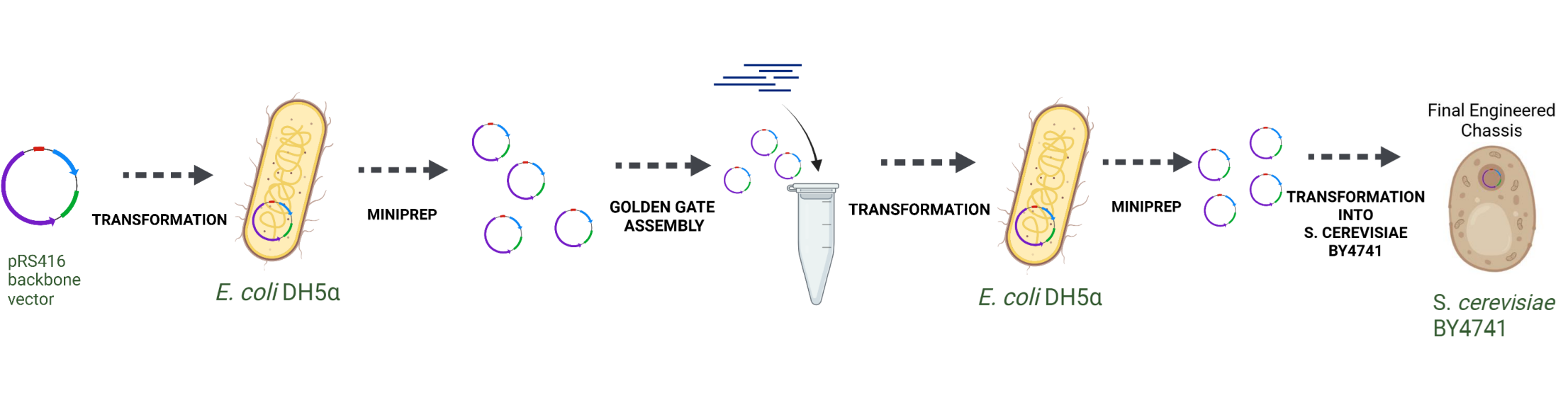
Escherichia coli is a widely used organism in the field of genetic engineering, and it is one of the most extensively characterized model organisms in molecular biology, with a fully sequenced genome and well-established protocols for genetic manipulation [52]. E. coli DH5α was primarily used for plasmid propagation and recovery. Due to the numerous transformations involved with bottom-up hierarchical assembly [45], DH5α was selected due to its high transformation efficiency among E. coli K-12 strains and its commercial availability [53]. Additionally, laboratory strains of E. coli, such as DH5α, are non-pathogenic, commercially available strains classified under Biosafety Level 1 (BSL-1), indicating that it is considered safe for use under standard laboratory conditions [54], and it is often used in research and development for novel foods and drugs [55].
S. cerevisiae BY4741 and the corresponding knockout strains, PXA1 and POX1, were used to evaluate RNAt-regulated transgene expression and the effects of metabolic engineering on lipid production.
Culture and Preparation of Host Organisms
Escherichia coli DH5α cells and Saccharomyces cerevisiae BY4741 cells will be used as the bacterial cloning host and yeast chassis, respectively. Both cultures will be kept under their appropriate growth conditions for use throughout the plasmid construction, transformation, and characterization workflow, which is illustrated in their respective culture protocols.
E. coli DH5α was primarily used for plasmid propagation and recovery. DH5α was selected due to its high transformation efficiency among E. coli K-12 strains and its commercial availability. S. cerevisiae BY4741 and the corresponding knockout strains were used to evaluate RNAt-regulated transgene expression and the effects of metabolic engineering on lipid production.
The required backbone plasmids will be transformed into competent E. coli DH5α cells using heat-shock transformation. Following transformation, plasmid-containing colonies will be selected and cultured. The resulting cultures will be used to generate glycerol stocks for preservation of the required backbone plasmids, while plasmid DNA was isolated by miniprep for use in subsequent cloning and assembly procedures.
Custom genes were ordered in cloning vectors, and primers containing the required overhangs would be designed and ordered for the PCR amplification of the backbone vector and the DNA parts required for Golden Gate assembly. The appropriate DNA parts will be PCR amplified and prepared with the necessary overhangs to enable assembly into level 1 transcription units.
Plasmid Constructs
Plasmid construction and selection are essential to consider in the design process of optimizing the lipid synthesis pathway of Saccharomyces cerevisiae. When selecting a suitable plasmid, several considerations were kept in mind, such as S. cerevisiae and E. coli compatibility, copy number, and plasmid types.
To ensure our optimized pathway is compatible in both S. cerevisiae and E.coli, we selected pRS shuttle vectors, which were well-validated. The purpose of utilizing a shuttle vector was to allow for replication between multiple host organisms. Additionally, the origin of replication needed to be compatible with E. coli . However, a more complex replication system within S. cerevisiae needed to be considered, such as Autonomously Replicating Systems (ARS) causing independent replication, and centromere (CEN) sequences allowing for low-copy chromosome division. These factors of yeast replication are species-dependent, and were taken into consideration when selecting the plasmid.
Moreover, selectable marker sequences are needed to be compatible in both host organisms, especially when working with both bacteria and eukaryotes. For E. Coli, the ampicillin resistance gene was incorporated into the plasmid. For auxotrophic selection within S. cerevisiae, a URA3 marker was integrated into the plasmid construct.
To integrate our plasmid construct into the host organisms, homologous recombination was initially considered. However, nuclear genome integration was opted for instead to avoid potential competition between multiple plasmids for the same gene inserts. Ultimately, the centromeric pAN316a was selected due to its stability in regards to transformation, as well as its relatively inexpensive price. Although the pRS shuttle vectors were initially what was in mind, the pAN316a was chosen as it was sourced locally from a professor, contained similar characteristics to the pRS series, and shared the same restriction enzyme orientation. Sharing the same orientation, in this regard, was especially important as it ensures the predicted direction of expression and further verification steps for cloning.
Parts from the open yeast collection (OYC) are constructed into a Level 1 transcription unit to be inserted into the plasmid vector. This transcription unit features the genes specific to optimizing the lipid synthesis pathway. However, all promoters sourced from the OYC contained 5’ untranslated regions (UTRs), posing an issue when later assembled alongside the RNAt, which contains an innate 5’ UTR of its own. Having two 5’ UTRs would cause interference between ribosomal binding sites, and risks improper translation efficiency. To combat this problem, promoters were ordered lacking their respective 5’ UTRs, such that the one of the RNAt remains the only functioning ribosomal binding site (RBS).
Furthermore, the removal of the native 5’ UTRs of the OYC promoters required the selection of a core promoter to maintain the necessary host transcriptional machinery. This core promoter sequence, condensed to 69 base pairs, optimized transcriptional activity while avoiding downstream translational interferences by lacking a native 5’ UTR.
Level 0 Parts
Level 0 plasmids were not constructed as separate plasmid constructs. Instead, the required Level 0 sequences were obtained as linear DNA sequences containing the appropriate Bsal flanking sites for Golden Gate Assembly. These linear sequences included the promoter, 5' UTR, CDS, and 3' UTR components required to assemble each transcription unit.
Additionally, only the RNAt 5' UTRs were ordered from GenScript.
Level 1 Parts
The linear Level 0 sequences were assembled using their Bsal flanking sites to generate the Level 1 transcription units. The assembled sequences were then digested and directly ligated into the pAN316a backbone using EcoRI and Spel. This produced the final RNAt-containing plasmid constructs for transformation and subsequent characterization.
Genes
The genes were domesticated using a codon usage table to optimize amino acid sequences that were the most used by S. cerevisiae and remove internal restriction enzyme sites. This way, the final protein coded by the yeast wasn’t changed but allowed to perform Golden Gate assemblies and other enzyme-dependent reactions. The CDS genes were ordered from Twist Biosciences as dsDNA with the enzyme recognition sites and overhangs already added, while the RNAt, core promoter sequence, and primers were all ordered through Genscript. The acceptor plasmid for Level 1 as well as the other promoters, terminators, and connectors were from the iGEM 2025 distribution kit.
Primer Design
Primers are short, single stranded DNA oligonucleotides annealing to complementary regions in a DNA template and provide a starting point for DNA polymerase to synthesize a new strand. During polymerase chain reaction (PCR), primers define the region of DNA that will be amplified by providing a free 3’ end on which DNA polymerase can extend. Primer characteristics such as sequence specificity, melting temperature, length, GC content, and secondary structure all have the capability in influencing the efficiency and specificity of DNA amplification [42]. Primer design can also be adapted depending on the application downstream. In addition to amplifying a particular DNA region, primers can be used to introduce additional sequences into PCR products, such as restriction enzyme recognition sites or overhangs required for subsequent cloning. For our project, primers were required at multiple stages of the RNA thermometer (RNAt) construction workflow, including the formation of double-stranded RNAt DNA, generation of RNAt variants through error-prone PCR (epPCR), and preparation of DNA parts for future Golden Gate assemblies.
Reverse Primers for dsDNA Synthesis
The initial RNAt sequences used in our project were synthesized as single-stranded DNA. To generate double-stranded DNA for downstream amplification and cloning, reverse primers were designed for the RNAt sequences. These primers anneal to the single-stranded DNA template and allow DNA polymerase to synthesize the complementary strand, producing a double-stranded RNAt product. This dsDNA formation step was necessary before the RNAt sequences could undergo further PCR amplification and subsequently be incorporated into the downstream assembly workflow. The resulting RNAt DNA also needed to retain the sequence features required for the final construct, including the RNAt itself and the accessory sequences used for its placement upstream of the coding sequence. In our overall design, we placed the RNAt within the 5’ UTR of the downstream gene. We ordered a TEF1 promoter sequence lacking its 5’ UTR. and the RNAt was manually assembled downstream of the promoter and immediately upstream of the coding sequence. The RNAt construct also contained the overhangs and other sequences required for subsequent assembly.
Error-Prone PCR Primers
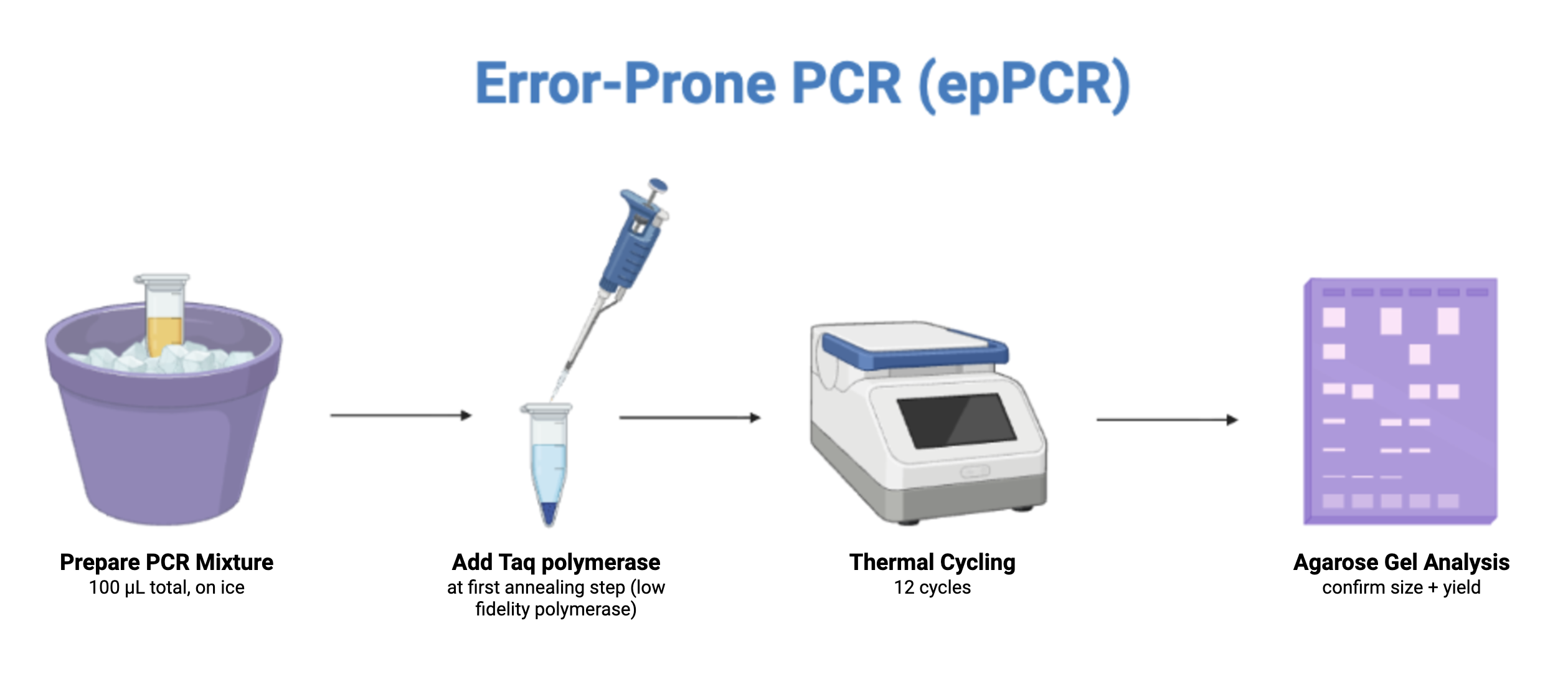
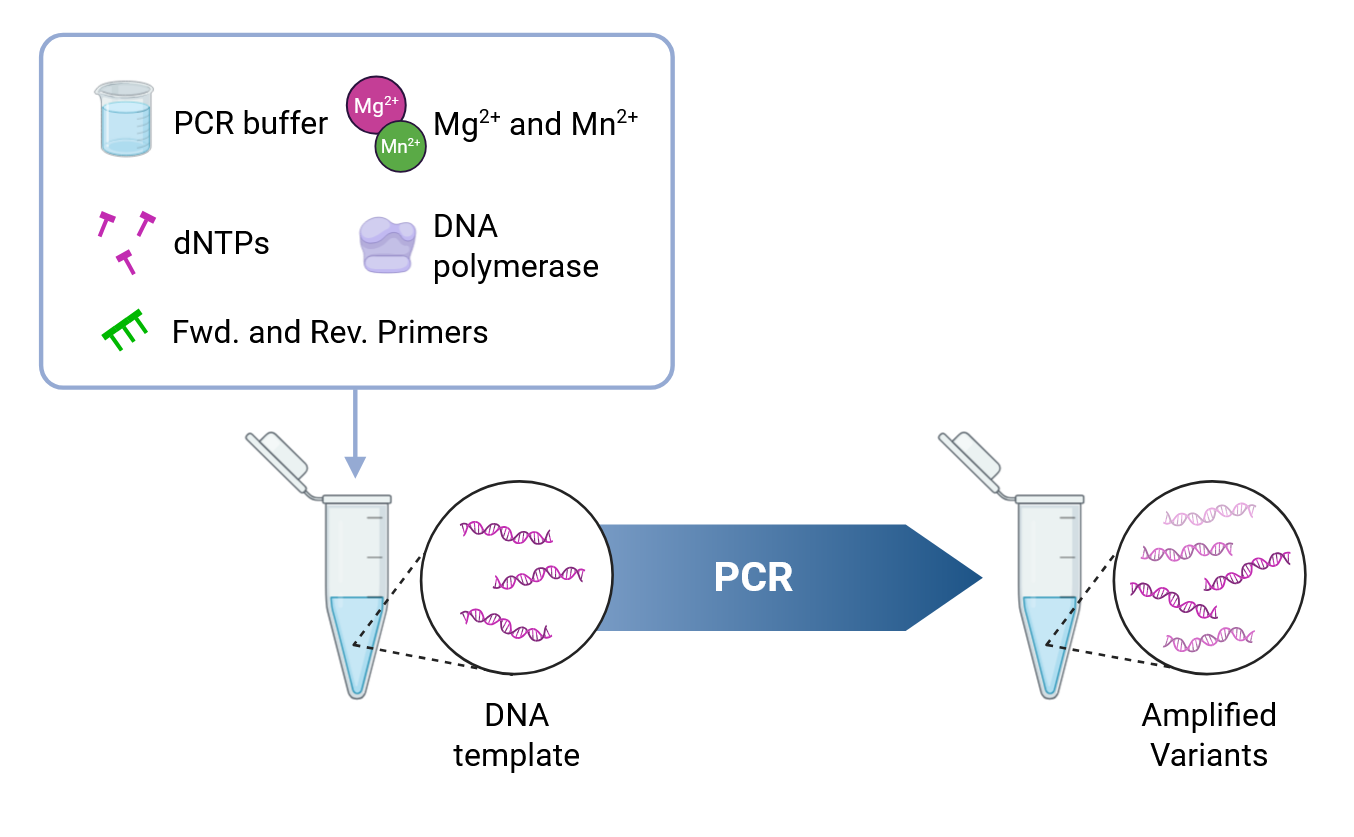
Following the creation of the RNAt sequences, error-prone PCR (epPCR) was used to create additional RNAt copies. epPCR is a form of PCR in which the fidelity of DNA replication is reduced thus increasing the occurrence of nucleotide substitutions during subsequent amplifications. As such, single starting sequences can then be converted into a heterogeneous library of variants that can be screened for differences in function [43]. The region subjected to mutagenesis in epPCR can be controlled through primer placement. By selecting primers that flank a given sequence, mutations can be introduced into either a small part/region, or the entire gene [44]. For our project, epPCR was incorporated into our experimental workflow to generate RNAt mutants from the originally designed sequences. Rather than designing every possible RNAt sequence individually, the aforementioned approach allowed us to create a library of RNAt variants that could eventually be tested for temperature-dependent behaviours. To increase the mutation during epPCR, imbalanced dNTP concentrations were used. Final concentrations of 1.0 mM dCTP and dTTP and 0.2 mM dATP and dGTP were used. Furthermore, the reaction contained elevated MgCl2 and MnCl2. These conditions aided in reducing the fidelity of Taq polymerase and also increased misincorporation of nucleotides.
The primers also had to account for the downstream cloning strategy. Our project used the Open Yeast Collection (OYC), which utilizes Type IIS restriction enzymes and defined overhangs thus allowing directional Golden Gate assembly of multiple genetic parts. The YTK provides a framework in which promoters, coding sequences, terminators, and other components can be assembled into larger transcriptional units [45]. Within the project workflow, the chosen RNAt and other required coding sequences were amplified by using PCR primers that contained the appropriate Bsal recognition sites and flanking overhang sequences. These such features allowed the PCR-derived sequences to then be incorporated into level 1 transcriptional units used in the YTK system. The resulting RNAt copies could then be incorporated into an RNAt-GFP reporter construct for screening in S. cerevisiae. Variants that displayed the desired temperature dependent expression could later be recovered, amplified in E. coli, and analyzed by restriction digest, gel purification, and sanger sequencing to fully determine the RNAt sequence.
mScarlet3
The mScarlet3 plasmid required modification before it could be fully implemented into our workflow as the original plasmid contained an EcoRI restriction site that must be removed. In order to accomplish this, PCR mutagenesis primers were designed to introduce a specific nucleotide substitution within the EcoRI recognition sequence. This was done while still maintaining the remainder of the mScarlet3 plasmid sequence. Unlike the epPCR primers described previously, which were intended to generate random sequence variations, the mScarlet3 primers on the contrary, were made for targeted site-directed mutagenesis.
mScarlet3 PCR mutagenesis primers were designed to introduce a specific nucleotide change into the parental plasmid. In PCR site-directed mutagenesis, the desired sequence change is incorporated within the mutagenic primer, while the surrounding complementary nucleotides allow the primer to anneal to the plasmid template. During amplification, the primer and its introduced mutation become incorporated into the newly synthesised DNA [46]. Because incomplete Dpnl digestion will result in colonies containing the original parental plasmid, the recovered plasmid required additional screening to confirm successful mutagenesis. Accordingly, plasmids were isolated and digested with EcoRI, followed by agarose gel electrophoresis and comparison with the original mScarlet3 plasmid. In the parental plasmid, the intact EcoRI recognition site produces 2 similar DNA fragments following digestion. Successful disruption of this restriction site prevents EcoRI cleavage at the position, causing these 2 fragments to appear as a larger fragment within the mutagenized plasmid.
Promoter Strengths
Our plasmid design includes 5 transcriptional units (TUs) for the expression of ACC1**, DGA1, BGL2, OLE1, and TPS1. When deciding on promoters and terminators for each coding sequence, we consulted Dr. Cinzia Klemm. She emphasized the importance of using different promoter-terminator pairs for coding sequences in multigene constructs. Since S. cerevisiae is very good at homologous recombination, reusing the same promoter or terminator sequence across multiple TUs risks one of these genes, typically the most burdensome, being recombined out over time [19]. To avoid this, we used distinct promoter-terminator pairs for each of our five TUs.
Dr. Klemm also recommended mixing promoters of different strengths. High expression of five genes simultaneously would place a significant metabolic burden on the cell, so by pairing strong and moderate promoters, we aimed to reduce overall stress on the cell.
We chose to use constitutive promoters from the Open Yeast Collection (OYC) for all coding sequences except BGL2, varying their strength based on the level of expression needed for each gene.
Promoter strengths were determined and chosen based on the expression data from YTK, which uses common parts in both kits [45].
DGA1 needed to be expressed at high levels, since any free fatty acids have to be channeled into TAGs quickly to avoid toxic accumulation. For this reason, we chose pTHD3 as a promoter for DGA1, as it is a strong constitutive promoter.
On the other hand, ACC1** only needed moderate expression. Strong expression would burden yeast metabolism by pushing the entire acetyl-CoA supply toward lipid synthesis at the expense of other cellular processes. We therefore selected pCCW12, a strong promoter, for ACC1**.
OLE1 and TPS1 were lower priority relative to the TAG production pathway and could be expressed at lower levels. We selected pRPL18B for OLE1 and pSAC6 for TPS1, both weaker to medium-strength promoters.
BGL2 also required high levels of expression once the RNAt denatured to ensure there was enough of the lytic enzyme to reliably lyse the cell and release the stored lipids. We initially considered using an OYC promoter, as with the other coding sequences. However, these promoters include a built-in 5’UTR, which would interfere with our design since the RNAt was intended to serve as the 5’UTR. Given this constraint, we went with cpTEF_6, a core promoter derived from the strong constitutive TEF1 promoter [20]. This sequence is 69bp long and omits the 5’UTR, allowing the RNAt to function in its place.
Targets Considered
In earlier stages, we considered using a heat shock protein (HSP) promoter instead of an RNAt, as HSP promoters activate gene expression in response to elevated temperatures [21]. However, studies have reported that HSP mRNAs are not detected until one hour after the initial heat shock. Given our requirement for rapid activation, we opted for translational control via RNAt, which can initiate translation immediately upon unfolding.
We also considered overexpressing FAS1 and FAS2 in addition to ACC1** as a means of increasing TAG levels. However, it was reported that FAS1/FAS2 overexpression did not significantly impact fatty acid levels, so we decided not to pursue it (Shin et al., 2012).
PAH1 encodes phosphatidic phosphatase (Pah1), which acts upstream of Dga1 to form TAGs from acyl chains [3]. However, Pah1 is sequestered and stabilized in the cytosol through phosphorylation by protein kinases, and activity is initiated upon dephosphorylation by the Nem1-Spo7 protein phosphatase complex [22]. Because PAH1 activity is gated by dephosphorylation rather than by expression level, DGA1 alone was a more feasible target.
Generation of RNA Thermometer (RNAt) Variants
An artificial thermal release mechanism will be incorporated into the yeast chassis through the introduction of BGL2, which encodes a cell-wall-degrading enzyme. A synthetic RNAt will be engineered into the 5′ UTR of the BGL2 coding sequence to regulate its temperature-dependent expression. At standard growth temperatures, the RNAt is designed to restrict translation, while a conformational change at the setpoint temperature (40°C) is expected to permit BGL2 expression, promoting cell-wall degradation and facilitating the release of accumulated lipids. The setpoint temperature was decided to be at the upper limit of S. cerevisiae cell survival to avoid accidental triggers of the RNAt system under normal growth conditions [56].
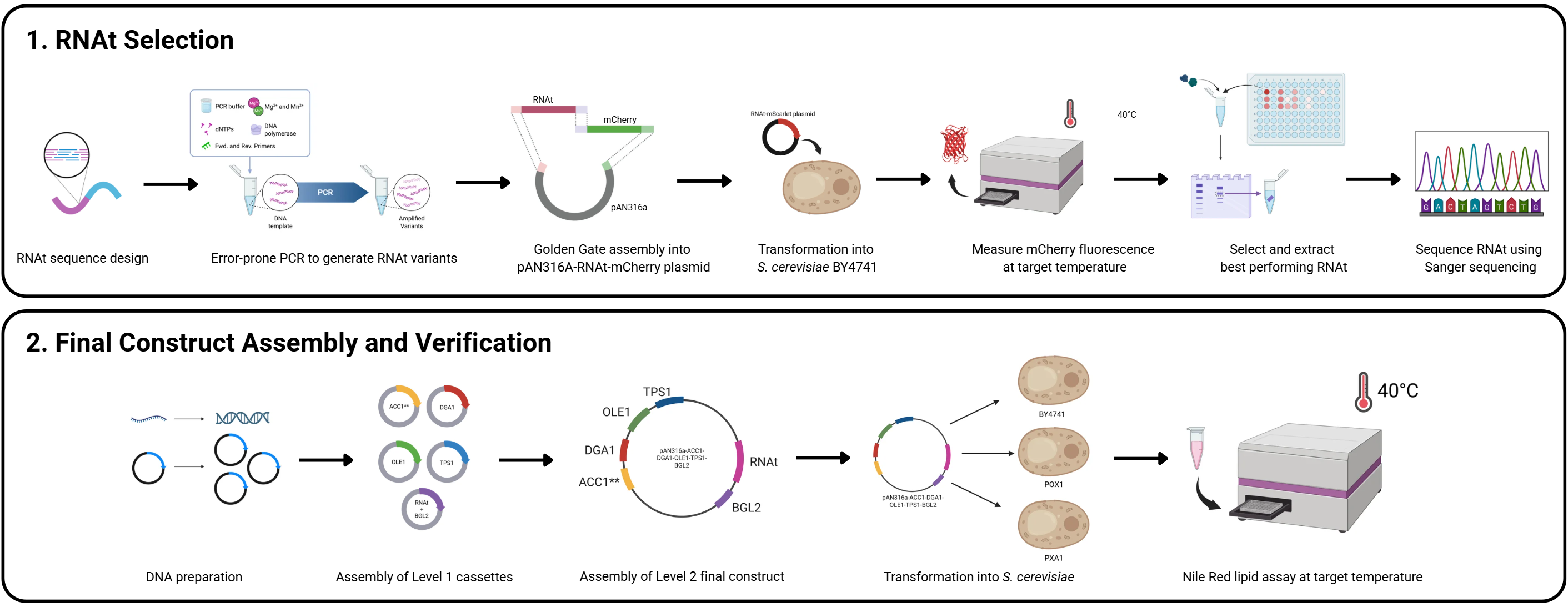
Custom DNA sequences required for construction of the RNAt system will be ordered in cloning vectors, and primers containing the appropriate overhangs for the selected backbone vectors will be designed for PCR amplification of the required genetic parts. Error-prone PCR will then be performed on the RNAt sequence to introduce random mutations and generate a diverse population of RNAt variants. These variants will be incorporated into a reporter system and screened for their ability to regulate downstream gene expression in response to temperature.
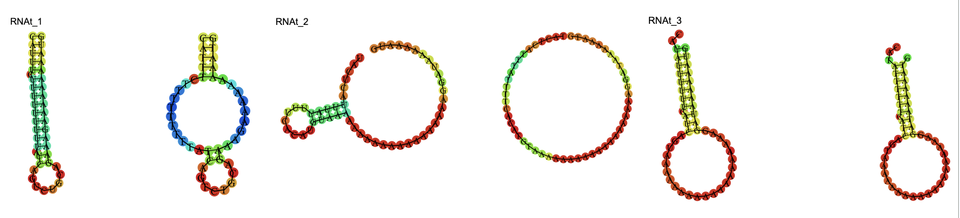
The minimum free energy (MFE) structure (left) represents the RNA conformation with the lowest ΔG, while the Centroid plain structures (right) represent the structure that is most representative of all possible RNA secondary structures based on their base pairing probabilities. The ΔG calculated for the MFE structures of RNAt_1, RNAt_2, and RNAt_3 are -4.90 kcal/mol, -0.20 kcal/mol, and -1.40 kcal/mol respectively.
Plasmid Assembly and Screening of RNAt-mScarlet Reporter System
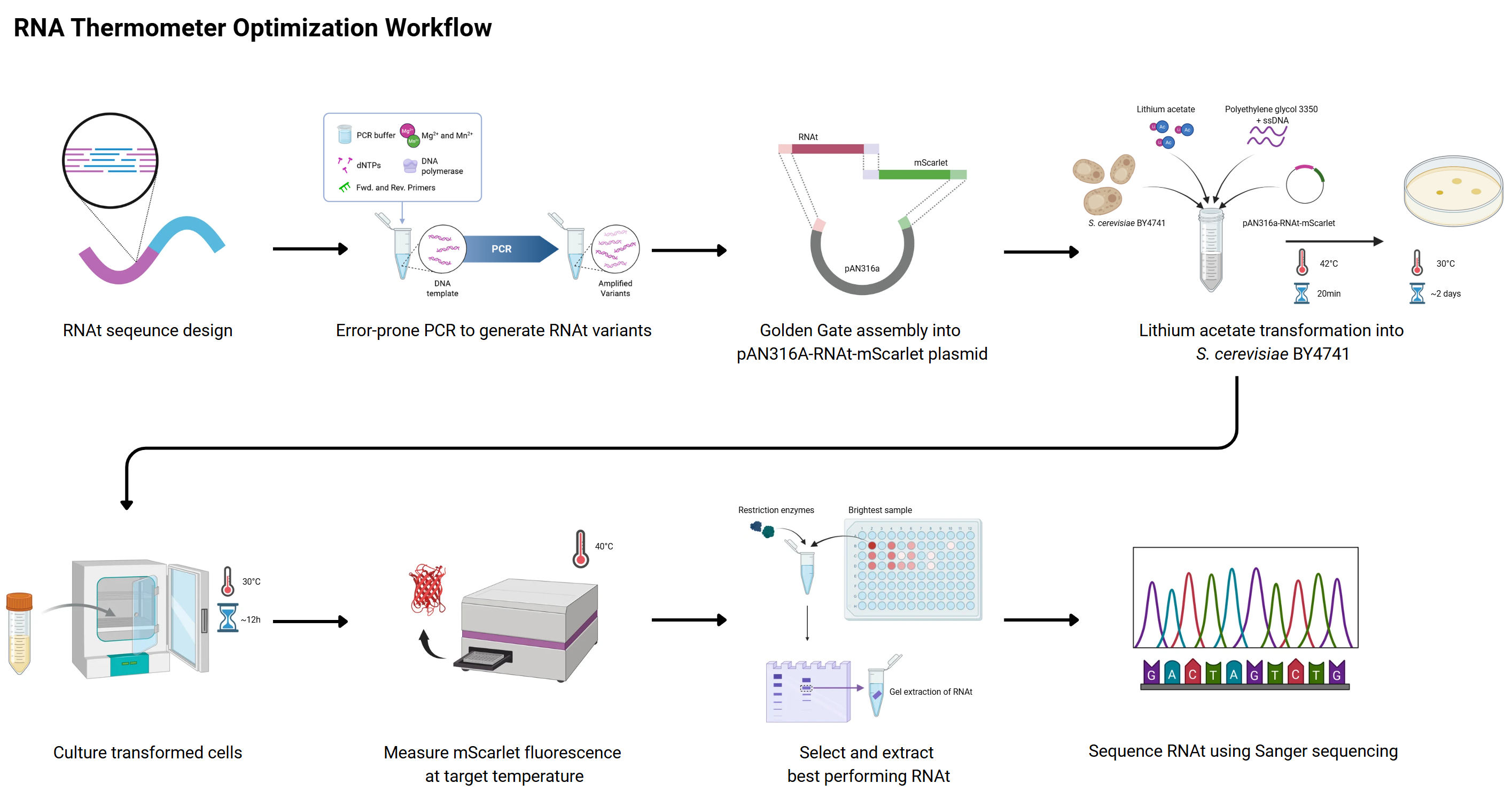
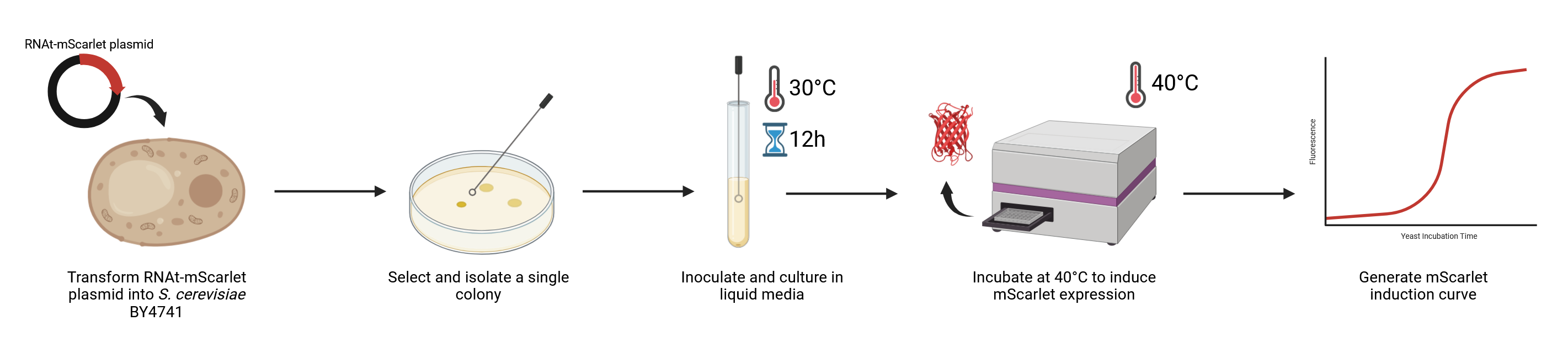
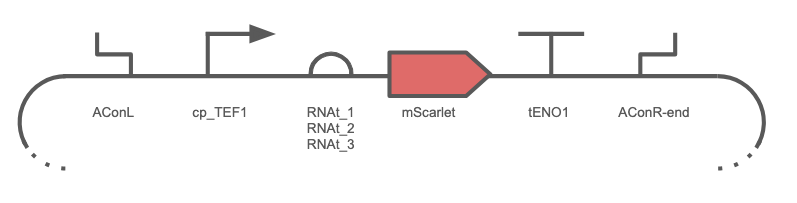
The pAN316a-RNAt-mScarlet plasmid is to be prepared using Golden Gate gate assembly and used to evaluate the efficacy of each synthesized RNAt sequence. Several RNAt sequences were generated and verified in-silico, and additional mutants would be generated through error-prone PCR. The pAN316a shuttle vector will be used for yeast transformation because it supports propagation in both E. coli and S. cerevisiae [57]. Initially, the pRS416 shuttle vector was planned to be used, since its use as a shuttle vector between E. coli and S. cerevisiae was more widely documented, however, we decided to use the pAN316a shuttle vector, since it was more readily available to our lab and had the same relevant features as the pRS416 shuttle vector. The URA3 marker enables auxotrophic selection on uracil dropout synthetic medium, avoiding antibiotic selection during the yeast expression stage [58], which is preferable for a food-related synthetic project because antibiotic-resistance marker genes raise regulatory concerns in food biotechnology (U.S. FDA, 1992). Although yeast homologous recombination may support future genomic integration, the current workflow uses plasmid-based expression as a proof-of-concept test.
After obtaining pAN316a from the Nguyen Lab at the University of Toronto, and mScarlet, the RNAt sequences, and all relevant primers, promoters, and terminators from Genscript, the parts would be digested and ligated accordingly to obtain the pAN316a-RNAt-mScarlet plasmids, which would first be transformed into E. coli DH5α to clone. The construct was designed to place the RNAt within the 5′ untranslated region upstream of the mScarlet coding sequence. This allowed the effect of temperature-dependent RNAt structural changes on downstream translation to be evaluated using fluorescence as a measurable reporter. After extracting the pAN316a-RNAt-mScarlet plasmids through miniprep, they would be transformed into S. cerevisiae BY4741 using the lithium acetate transformation method. The pAN316a shuttle vector has the URA rescue gene, and the S. cerevisiae BY4741 strain was chosen in part due to its auxotrophic markers, being deficient in uracil, leucine, histidine, and methionine. Plates lacking uracil were used to select for successful transformants.
After allowing the transformed S. cerevisiae BY4741 to recover, liquid inoculations would be made and allowed to grow to OD600 of 0.1 [59], where they would be transferred to a 96 well plate and monitored at the target temperature of 40°C, with fluorescence readings taken with 569 nm excitation and 594 nm emission [60] every 30 s for the first 5 min, every min for the next 10 min, and every 3 min thereafter for a total observation time of one to two hours. The RNAt switch is expected to be fast since it occurs on the transcriptional level, hence the relatively short observation time. The sample exhibiting the strongest and fastest expression would be selected for recovery, and if the sample had been mutagenized, sequence verification.
Recovery and Sequence Verification of Selected RNAt Variants
The successful pAN316a-RNAt-mScarlet transformants would be selected for plasmid recovery and sequence verification, and plasmids would be isolated from the selected transformants using a Zymolyase-based yeast miniprep procedure. The recovered plasmids would be subsequently transformed into E. coli using heat-shock transformation for cloning [31].
Plasmids would then be isolated from the resulting E. coli cultures using miniprep and subjected to restriction enzyme digestion to linearize the plasmids and facilitate isolation of the RNAt-containing region. The RNAt insert would then be amplified by PCR and analyzed using agarose gel electrophoresis. DNA fragments corresponding to the expected RNAt insert would be identified and excised from the gel, followed by gel purification.
A portion of the resulting inserts will be subjected to Sanger sequencing to verify the nucleotide sequence of the selected RNAt variants. Sequencing will be used to confirm the mutations introduced through error-prone PCR and to ensure that the RNAt sequences selected based on fluorescence corresponded to the intended constructs. RNAt variants with confirmed sequences and desirable temperature-responsive expression profiles will be selected for incorporation into the final lipid-production construct.
Construction of the RNAt-Regulated Lipid Production Plasmid
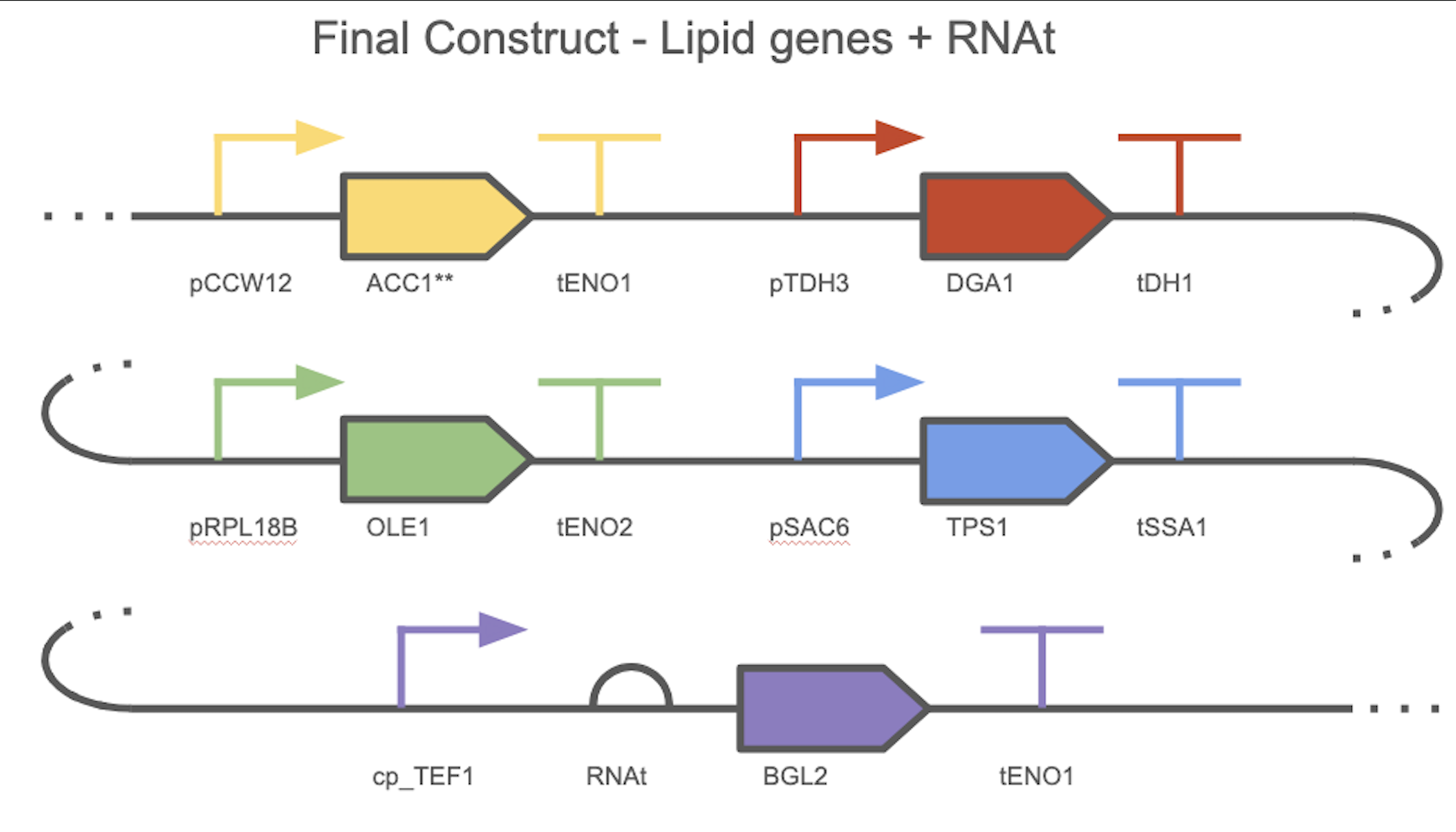
The assembly of the final pAN316a-ACC1**-DGA1-OLE1-TPS1-RNAt-BLG2 plasmid, hereafter referred to as the RNAt-Regulated Lipid Production Plasmid, would take place in a two-step hierarchical Golden Gate assembly using parts from the Open Yeast Collection (OYC). Promoters from the OYC were planned to be used, however, all promoters sourced from the OYC contained 5′ untranslated regions (UTRs), posing an issue when later assembled alongside the RNAt, which contains an innate 5′ UTR of its own. Having two 5′ UTRs would cause interference between ribosomal binding sites, and risks improper translation efficiency. To combat this problem, promoters were ordered lacking their respective 5′ UTRs, such that the one of the RNAt remains the only functioning ribosomal binding site (RBS).
The Level 1 transcriptional units (ACC1**, DGA1, OLE1, TPS1, and BGL2 under the control of the RNAt, with their respective promoters and terminators) would be obtained from Twist Bioscience and assembled using BsmBI digestion and ligation. The Level 2 transcriptional unit would be assembled by joining the Level 1 parts together by flanking each end with BsaI overhangs and digesting. The Level 2 transcriptional unit would be flanked by the BsmBI sites and integrated into the pAN316a vector using EcoRI and SpeI.
Assembly would be done in the OYC-dropout-suGFP plasmid, since successful transformants could be more easily identified through their lack of fluorescence in E. coli DH5α colonies. All assembled plasmids would be transformed into E. coli DH5α for cloning, and subsequently extracted using miniprep. Restriction enzyme digests and gel electrophoresis would be used as needed to verify the identity of assembled plasmids.
Preparation of Yeast Knockout Strains
To ensure these lipid accumulation rather than oxidation by the cell, several competing pathways must be downregulated or deleted. To investigate whether reducing the β-oxidation pathway could enhance lipid accumulation through preventing the yeast from breaking down its own fatty acid stores for energy, cultures of S. cerevisiae BY4741 POX1 knockout, BY4741 PXA1 knockout, and BY4741 POX1 and PXA1 double-knockout cells were established using strains obtained from the Corey Lab at the University of British Columbia.
The BY4741 strain was maintained as a reference background for comparison with the individual and double-knockout strains. Comparison of the BY4741 strain with the POX1, PXA1, and POX1/PXA1 knockout backgrounds allows the contribution of these pathways to the final lipid phenotype to be assessed.
The pAN316a shuttle vector will then be used for yeast transformation because it supports propagation in both E. coli and S. cerevisiae (Sikorski & Hieter, 1989). The vector’s CEN/ARS elements allow low-copy plasmid maintenance in yeast, while the URA3 marker enables auxotrophic selection on uracil-dropout synthetic medium (Sikorski & Hieter, 1989). This avoids antibiotic selection during the yeast expression stage, which is preferable for a food-related synthetic project because antibiotic-resistance marker genes raise regulatory concerns in food biotechnology (U.S. FDA, 1992). Although yeast homologous recombination may support future genomic integration, the current workflow uses plasmid-based expression as a proof-of-concept test.
Transformation of the RNAt-Regulated Lipid Production Plasmid into Yeast
The assembled RNAt-Regulated Lipid Production Plasmid would be transformed into S. cerevisiae BY4741, BY4741 POX1 knockout, BY4741 PXA1 knockout, and BY4741 POX1 and PXA1 knockout cells using lithium acetate transformation. Lithium acetate was chosen for its reliability and versatility [61], since the final RNAt-Regulated Lipid Production Plasmid would be rather large due to its numerous genes. Following transformation, cells would be recovered and cultured in uracil deficient media to identify transformants containing the assembled plasmid.
The BY4741 strain was used as a baseline, while the POX1, PXA1, and POX1/PXA1 knockout strains were used to assess the effects of reduced fatty acid degradation and transport on lipid accumulation. The resulting transformants were maintained for downstream analysis of lipid production, transgene expression, and growth.
Evaluation of Lipid Production using Nile Red Neutral Lipid Staining
The engineered yeast strains would be characterized to determine whether the combined metabolic modifications result in increased intracellular lipid and fatty acid accumulation. Lipid production would be assessed using Nile Red staining, with lipid accumulation quantified using a 96-well plate assay or visualized using fluorescence microscopy. Fluorescence measurements will be collected at an excitation wavelength of 485 nm and an emission wavelength of 535 nm, using a top 50% mirror, appropriate gain settings, and orbital shaking for 10 seconds prior to measurement. Nile Red is a lipophilic fluorescent dye that selectively stains neutral lipids, allowing lipid content to be assessed through fluorescence intensity [24].
Evaluation of Gene Expression and Growth
Gene expression would be evaluated using reverse transcription PCR (RT-PCR) to assess expression of the introduced transgenes and determine whether the engineered genetic circuits are expressed as intended. These measurements will be analyzed alongside the lipid phenotype to evaluate the relationship between transgene expression and lipid accumulation.
Growth curves would also be generated for the engineered strains under the different liquid SD media conditions. Growth measurements would be used to assess whether the genetic modifications or alternative media conditions affect cellular growth and overall strain performance. Together, these measurements will help determine whether increased lipid accumulation can be achieved without substantially compromising the growth characteristics of the engineered yeast.
Results
The final construct was not able to be successfully assembled due to logistical errors. While the pAN316a plasmid was successfully transformed into S. cerevisiae BY4741 and validated the URA3 selection system, there was no successful growth following assembly with the RNAt components, and the subsequent error-prone PCR was not attempted. There were also issues with the OYC-dropout-suGFP sequence that interfered with transformation, preventing the assembly of the final construct. Additional troubleshooting will be required to validate the proposed construct in the lab, though in-silico results are promising.
S. cerevisiae BY4741 and S. cerevisiae PXA1 cells were prepared according to the Nile Red staining protocol adapted from Rostron and Lawrence [24], with final OD 595nm readings of 1.030 and 0.988 respectively. The resulting absorbance values at 485 nm excitation and 535 nm emission are shown in Table 1.
| Trial | Blank | BY4741 | PXA1 |
|---|---|---|---|
| 1 | 15581 | 36246 | 42503 |
| 2 | 15200 | 35279 | 39660 |
| 3 | 15722 | 35325 | 38881 |
| 4 | 15702 | 35536 | 45478 |
| 5 | 14953 | 34660 | 45328 |
| 6 | 18247 | 38966 | 41755 |
Figure 11: Corrected RFU = Sample RFU - Avg. Blank RFU
| Trial | BY4741 | PXA1 |
|---|---|---|
| 1 | 20345 | 26602 |
| 2 | 19378 | 23759 |
| 3 | 19424 | 22980 |
| 4 | 19635 | 29577 |
| 5 | 18759 | 29427 |
| 6 | 23065 | 25854 |
| Average | 20101 | 26367 |
From Table 2, it can be concluded that the average RFU of S. cerevisiae PXA1 is 31.2% higher than the average RFU of S. cerevisiae BY4741.
Discussion
Assembly of the Final Construct
The assembly of the final construct required using the OYC-dropout-suGF plasmid to separately assemble the gene cassettes, so a large portion of the cycle was spent troubleshooting the transformation of OYC-dropout-suGF into E. coli DH5α. Considering that there were no issues with the transformation of other parts, such as pAN316a, and the overall acceptance of heat shock as a reliable transformation method for E. coli [30], it is unlikely that the transformation protocol was at fault. There has been some evidence suggesting that there are sequence discrepancies within this part [29], but it is difficult to say for sure what exactly prevented its successful transformation
Since the issue appears to just be with the OYC-dropout-suGF plasmid, an alternative yeast toolkit, such as MoClo-YTK could be considered [45]. In fact, the YTK was originally planned to be used in place of OYC, but was switched in favour of perceived availability of the OYC kit. Fundamentally, both yeast toolkits operate under the same mechanism for assembly, just differing in restriction enzyme sites and overall parts [51].
Given the successful in-silico validation of the RNAt structure, and the time and resource constraints, the assembly of the pAN316a-RNAt plasmid would be reattempted with larger DNA concentrations to try to obtain a successful construct.
Nile Red Quantification of Neutral Lipids
Due to the nature of relative fluorescence units and the large variations from different equipment and lab environments, it’s generally advised to construct a standard calibration curve by correlating RFU values to a known concentration of a purified neutral lipid standard, or to compare against a gravimetrically quantified total lipid extraction [25]. This was not possible due to time and equipment constraints so the lipid to dry cell weight of these strains could not be accurately determined, however, it can be clearly seen that S. cerevisiae PXA1 emitted greater fluorescence, thus contained more neutral lipid, than S. cerevisiae BY4741. Since S. cerevisiae BY4741 is a well documented model organism and the relationship between RFU and lipid content is linear [28], the lipid to dry cell weight of S. cerevisiae PXA1 can be estimated to be 31.2% higher than BY4741, which is usually around 70mg per gram cell of dry weight when grown in YPD conditions [27]. From this reasoning, it can be concluded that S. cerevisiae PXA1 would have around 91.84mg of neutral lipid per gram of cell dry weight.
This alone does not suggest S. cerevisiae PXA1 is a particularly oleaginous yeast strain, since oleaginous yeasts and fungi tend to have anywhere from 300 to 500mg of neutral lipid per gram cell of dry weight [27]. However, literature supports the efficacy of ACC1** [4] and upregulating DGA1 [27] for enhanced lipid production in S. cerevisiae, so future experiments might seek to compare further engineered S. cerevisiae PXA1 to the baseline discussed in this project.
The protocol used for the preparation and reading of the Nile Red stained cells advised to measure the fluorescence immediately after staining the cells [24], though other literature suggests waiting as long as half an hour to ensure fluorescence stabilization [26], or generating a fluorescence curve over a few minutes in order to accurately determine the emission peak of a sample, since the time it takes Nile Red to permeate the cell wall can vary from sample to sample [25]. This was not possible due to time and equipment constraints, but can be considered for future experiments.
Additional Future Work
To manufacture at a larger scale, the engineered yeast will need to be tested in bioreactors to determine its optimal growth conditions at larger volumes [50]. This will include monitoring the yeast’s environment by monitoring its pH, temperature, and agitation speed [49], It is important to ensure that conditions are optimized, so that the small-scale experimental results can be replicated at a larger scale.
Literature suggests that supplementing the growth media of S. cerevisiae with fatty acids can both improve the overall lipid content and lipid profile of the cells [62]. Considering that medium prices are a core expense to any yeast bioreactor [63], it could be worth exploring the potential for cheap supplementation of growth media. Future experiments could seek to culture the transformed oleaginous yeast in SD media with fatty acid supplementation to assess how different carbon sources and fatty acid compositions affected growth and lipid accumulation. The initially proposed experiment had three experimental conditions: SD media supplemented with long-chain fatty acids (0.1% oleic acid and 0.05% Tween 40), SD media supplemented with short-chain fatty acids (0.1% total SCFAs in a 3:1:1 ratio of acetic, propionic, and butyric acid, with 0.05% Tween 40), and SD media containing a combination of long-chain and short-chain fatty acids (0.05% oleic acid and 0.05% total SCFAs in a 3:1:1 ratio, with 0.05% Tween 40). 1% Tergitol may be added to each medium to improve emulsion of fatty acids [64].
Safety considerations were also taken into consideration when planning this project. This project did not rely on antibiotics for selection pressure and instead used nutrient depletion, which can be leveraged when applying for FDA approval. By removing the bacterial machinery and antibiotic resistance through homologous recombination [48], the final product bypasses the risks around antibiotic resistance in a commercialized production system [47]. Other safety considerations include ensuring the yeast and final products will be packaged and stored in a safe manner. Testing should be done to assess yeast viability and product performance over time as well. Overall, these considerations allow this product to go from the lab bench into the real market.
References
- 1.Gaikwad, S. et al. Reprogramming of translation in yeast cells impaired for ribosome recycling favors short, efficiently translated mRNAs. eLife, 2021.↗ link
- 2.Tang, X. et al. Engineering the fatty acid metabolic pathway in Saccharomyces cerevisiae for advanced biofuel production. Metabolic Engineering Communications, 2015.↗ link
- 3.Ferreira, R. et al. Metabolic engineering of Saccharomyces cerevisiae for overproduction of triacylglycerols. Metabolic Engineering Communications, 2018.↗ link
- 4.Shi, S. et al. Improving Production of Malonyl Coenzyme A-Derived Metabolites by Abolishing Snf1-Dependent Regulation of Acc1. mBio, 2014.↗ link
- 5.Campanella, J.E. et al. Fungal Δ9-fatty acid desaturase: A unique enzyme at the core of lipid metabolism in aspergillus fumigatus and a promising target for the search for antifungal strategies. mBio, 2025.↗ link
- 6.Jiang, W. et al. Metabolic engineering strategies for improved lipid production and cellular physiological responses in yeast cells impaired for ribosome recycling favors short, efficiently translated mRNAs. Journal of Fungi, 2021.↗ link
- 7.Jolley, E. et al. Upstream flanking sequence assists folding of an RNA thermometer. PubMed Central, 2022.↗ link
- 8.Lass, A. et al. Lipolysis – a highly regulated multi-enzyme complex mediates the catabolism of cellular fat stores. Progress in Lipid Research, 2011.↗ link
- 9.Oelkers, P. et al. The DGA1 gene determines a second triglyceride synthetic pathway in yeast. Journal of Biological Chemistry, 2002.↗ link
- 10.Petitjean, M. et al. Yeast tolerance to various stresses relies on the Trehalose-6P synthase (Tps1) protein, not on trehalose. Journal of Biological Chemistry, 2015.↗ link
- 11.Robmanith, J. et al. Exploring the modular nature of riboswitches and RNA thermometers.. Nucleic Acids Research, 2016.↗ link
- 12.Waldminghaus, T. et al. Generation of synthetic RNA-based thermosensors.. Bchm, 2008.↗ link
- 13.Wang, H. et al. How lipid droplets “TAG” along: Glycerolipid synthetic enzymes and lipid storage. Biochimica et Biophysica Acta. Molecular and Cell Biology of Lipids, 2017.↗ link
- 14.Wang, Z. et al. Key enzymes involved in the utilization of fatty acids by saccharomyces cerevisiae: A review.. Frontiers in Microbiology, 2024.↗ link
- 15.Shimizu, J. et al. The hypo-osmolarity-sensitive phenotype of the Saccharomyces cerevisiae hpo2 mutant is due to a mutation in PKC1, which regulates expression of β-glucanase.. Molecular and General Genetics, 1994.↗ link
- 16.Siri-Tarino, P.W. et al. Saturated Fatty Acids and Risk of Coronary Heart Disease: Modulation by Replacement Nutrients.. Current Atherosclerosis Reports, 2010.↗ link
- 17.Zhao, P. et al. Optimizing fatty acids composition in meat-like tissue derived from myogenic conversion of pig fibroblasts. . Communications Biology, 2025.↗ link
- 18.Soto, T. et al. Accumulation of Trehalose by Overexpression of tps1, Coding for Trehalose-6-Phosphate Synthase, Causes Increased Resistance to Multiple Stresses in the Fission Yeast Schizosaccharomyces pombe.. Applied and Environmental Microbiology, 1999.↗ link
- 19.Tian, C. et al. Benchmarking Intrinsic Promoters and Terminators for Plant Synthetic Biology Research.. Biodesign Research.↗ link
- 20.Decoene, T. et al. Modulating transcription through development of semi-synthetic yeast core promoters.. PLOS ONE, 2019.↗ link
- 21.Murshid, A. et al. Role of Heat Shock Factors in Stress-Induced Transcription.. Methods in Molecular Biology, 2018.↗ link
- 22.Stukey, G. et al. Active site determinants of yeast Pah1 phosphatidate phosphatase activity and cellular functions. . Journal of Biological Chemistry, 2025.↗ link
- 23.Shin, G.H. et al. Overexpression of genes of the fatty acid biosynthetic pathway leads to accumulation of sterols in Saccharomyces cerevisiae.. Yeast, 2012.↗ link
- 24.Rostron, K. and Lawrence, C. Nile Red Staining of Neutral Lipids in Yeast. Methods in Molecular Biology, 2017.↗ link
- 25.Sitepu, I.R. et al. An improved high-throughput Nile red fluorescence assay for estimating intracellular lipids in a variety of yeast species. Journal of Microbiological Methods, 2012.↗ link
- 26.Ramirez-Castrillon et al. Nile Red Incubation Time Before Reading Fluorescence Greatly Influences the Yeast Neutral Lipids Quantification. Frontiers Microbiotechnology, 2021.↗ link
- 27.Kamisaka et al. DGA1 (diacylglycerol acyltransferase gene) overexpression and leucine biosynthesis significantly increase lipid accumulation in the Δsnf2 disruptant of Saccharomyces cerevisiae. Biochemical Journal, 2007.↗ link
- 28.Genicot et al. The use of a fluorescent dye, Nile red, to evaluate the lipid content of single mammalian oocytes. Theriogenology, 2005.↗ link
- 29.iGEM Registry of Standard Biological Parts. iGEM, 2026.↗ link
- 30.Froger and Hall Transformation of Plasmid DNA into E. coli Using the Heat Shock Method. Journal of Visualized Experiments, 2007.↗ link
- 31.Rahimzadeh et al. Impact of heat shock step on bacterial transformation efficiency. Molecular Biology Research Communications, 2016.↗ link
- 32.Li et al. Nucleotides upstream of the Kozak sequence strong influence gene expression in the yeast S. cerevisiae. Journal of Biological Engineering, 2017.↗ link
- 33.Zhang, W and Chen, S RNA hairpin-folding kinetics. PNAS, 2001.↗ link
- 34.NA BGL2 | SGD. Saccharomyces Genome Database, n.d..↗ link
- 35.NA BGL2 | SGD. Saccharomyces cerevisiae Pathway: oleate biosynthesis, n.d..↗ link
- 36.Wang et al. Metabolic engineering for increased lipid accumulation in Yarrowia lipolytica – A Review. Bioresource Technology, 2020.↗ link
- 37.Fakas et al. Lipid biosynthesis in yeasts: A comparison of the lipid biosynthetic pathway between the model nonoleaginous yeast Saccharomyces cerevisiae and the model oleaginous yeast Yarrowia lipolytica. Engineering in Life Sciences, 2016.↗ link
- 38.Wong et al. YaliBricks, a versatile genetic toolkit for streamlined and rapid pathway engineering in Yarrowia lipolytica. Metabolic Engineering Communications, 2017.↗ link
- 39.Parapouli et al. Saccharomyces cerevisiae and its industrial applications. AIMS Microbiology, 2020.↗ link
- 40.Prates, J. The Role of Meat Lipids in Nutrition and Health: Balancing Benefits and Risks. Nutrients, 2025.↗ link
- 41.Lindberg et al. Lipidomic Profiling of Saccharomyces cerevisiae and Zygosaccharomyces bailii Reveals Critical Changes in Lipid Composition in Response to Acetic Acid Stress. PLOS ONE, 2013.↗ link
- 42.Yang et al. Conserved PCR primer set designing for closely-related bacterial species. PLOS ONE, 2011.↗ link
- 43.Cadwell, R. C. & Joyce, G. F. Randomization of genes by PCR mutagenesis. PCR Methods and Applications, 1992.↗ link
- 44.Wilson, D. S. & Keefe, A. D. Random mutagenesis by PCR. Current Protocols in Molecular Biology.↗ link
- 45.Lee at al. A Highly Characterized Yeast Toolkit for Modular, Multipart Assembly. ACS Synthetic Biology, 2015.↗ link
- 46.Hemsley et al. A simple method for site-directed mutagenesis using the polymerase chain reaction.. Nucleic Acids Research, 1989.↗ link
- 47.Mignon et al. Antibiotic-Free Selection in Biotherapeutics: Now and Forever. pathogens, 2015.↗ link
- 48.Shanks et al. New yeast rocombineering tools for bacteria. Plasmid, 2010.↗ link
- 49.Tech Team . Kintek Solution What are some important factors to monitor in a bioreactor? Essential Parameters for Optimal Bioprocess Control. Kintek, 2026.↗ link
- 50.Salari, R. & Salari, R. Investigation of the Best Saccharomyces cerevisiae Growth Condition. Electronic Physician, 2017.↗ link
- 51.Open Yeast Collection Open Yeast Collection.↗ link
- 52.Ruiz, N. et al. How Escherichia coli Became the Flagship Bacterium of Molecular Biology. Journal of Bacteriology, 2022.↗ link
- 53.Tuttle, A. R. et al. Growth and Maintenance of Escherichia coli Laboratory Strains. Current Protocols, 2021.↗ link
- 54.E. coli Strains and the NIH Guidelines. University of South Carolina, Environmental Health and Safety.↗ link
- 55.Valle, A. et al. Escherichia coli, the workhorse cell factory for the production of chemicals. Microbial Cell Factories Engineering for Production of Biomolecules, 2021.↗ link
- 56.Zhang, M. L. et al. Improving thermo-tolerance of Saccharomyces cerevisiae by precise regulation of the expression of small HSP. RSC Advances, 2023.↗ link
- 57.Chen, Y. et al. Self-replicating shuttle vectors based on pANS, a small endogenous plasmid of the unicellular cyanobacterium Synechococcus elongatus PCC 7942. Microbiology, 2016.↗ link
- 58.Sikorski, R. S. et al. A system of shuttle vectors and yeast host strains designed for efficient manipulation of DNA in Saccharomyces cerevisiae. Genetics, 1989.↗ link
- 59.Albakri, M. B. et al. Polyglutamine toxicity assays highlight the advantages of mScarlet for imaging in Saccharomyces cerevisiae. F1000Research, 2018.↗ link
- 60.Biorbyt mScarlet Fluorescent Protein: Bright Red Reporter for Live-Cell Imaging, Fusion Protein Studies and Advanced Biomedical Research.↗ link
- 61.Gietz, R. D. et al. Transformation of yeast by lithium acetate/single-stranded carrier DNA/polyethylene glycol method. Methods in Enzymology, 2002.↗ link
- 62.Dyer, J. M. et al. Metabolic engineering of Saccharomyces cerevisiae for production of novel lipid compounds. Applied Microbiology and Biotechnology, 2002.↗ link
- 63.Cardoso, V. M. et al. Cost analysis based on bioreactor cultivation conditions: Production of a soluble recombinant protein using Escherichia coli BL21(DE3). Biotechnology Reports, 2020.↗ link
- 64.Vanhercke, T. et al. Mechanistic and structural insights into the regioselectivity of an acyl-CoA fatty acid desaturase via directed molecular evolution. Journal of Biological Chemistry, 2011.↗ link