
iDEC Laboratory Notebook
Date: June 22–July 3
Participants: Zimeng Jessie Yu, Zedong Jin, Celine Zhang, Chenfan Wu, Yuxi Bai, Haotian Lu, Xiaohan Sophie Wang, Kele Zhang, Zhiheng Xu, Zhecheng Yue
Experiment: Transformation (k+ s+)
1. Retrieve DH5α competent cells from storage at −80 °C and thaw on ice for 5 min. Add 2 μL of plasmid DNA and incubate on ice for 30 min.
2. Heat-shock the cells in a water bath at 42 °C for 90 s, then place on ice for 2 min.
3. In a laminar-flow clean bench, add 700 μL of antibiotic-free LB broth. Incubate at 37 °C with shaking at 200 rpm for 1 h.
4. In the clean bench, mix the cell suspension by pipetting. Spread 20 μL onto LB agar containing the appropriate antibiotic. Incubate the plate inverted at 37 °C overnight for 14–16 h.
Date: July 3–9
Participants: Kele Zhang, Zhiheng Xu, Zhecheng Yue, Lingwei Li, Fengwu Wang, Muyan Wang, Ruixi Huang, Shiya Da, Haotian Lu, Yichen Sun, Ruohan Shen
Experimental procedures:
1. Culture the bacteria carrying individually transformed plasmids in liquid medium at 37 °C for 16 h.
2. Preserve the bacterial strains.
3. Inoculate 50 mL of LB broth with 500 μL of bacterial culture and grow to an OD600 of 0.3–0.5.
4. Centrifuge at 2,000 × g for 5 min at 4 °C.
5. Resuspend the bacteria in pre-chilled LB broth. Add 5 mL of competent-cell preparation reagent, mix, and incubate on ice for 5 min.
6. Mix gently, dispense 100 μL aliquots into pre-chilled centrifuge tubes, and store at −80 °C.
Date: August 3–7
Participants: Lifei Shu, Zedong Jin, Yichen Sun, Yiding Yuan, Ruohan Shen, Celine Zhang, Chenfan Wu, Shiya Da, Yuxi Bai, Haotian Lu, Xiaohan Sophie Wang, Zhecheng Yue
Experimental procedures:
Table 1. PCR amplification of the pID01 vector fragment (3,332 bp)
Component | Volume (μL) |
|---|---|
pID01 plasmid | 2 |
pID03-BB-F | 2 |
pID03-BB-R | 2 |
Enzyme reagent | 25 |
ddH2O | 19 |
Table 2. PCR amplification of fragment 1 (1,243 bp)
Component | Volume (μL) |
|---|---|
pID01 plasmid | 2 |
pID03-CmR-F | 2 |
pID03-CmR-R1 | 0.3 |
pID03-CmR-R1 | 1.5 |
Enzyme reagent | 25 |
ddH2O | 19.2 |
Date: August 3–7
Participants: Lifei Shu, Zedong Jin, Yichen Sun, Yiding Yuan, Ruohan Shen, Celine Zhang, Chenfan Wu, Shiya Da, Yuxi Bai, Haotian Lu, Xiaohan Sophie Wang, Zhecheng Yue
Table 3. PCR amplification of fragment 2 (1,067 bp)
Component | Volume (μL) |
|---|---|
pID02 plasmid | 2 |
pID03-ISCro4-F | 2 |
pID03-ISCro4-R | 2 |
Enzyme reagent | 25 |
ddH2O | 19 |
Agarose gel electrophoresis results:
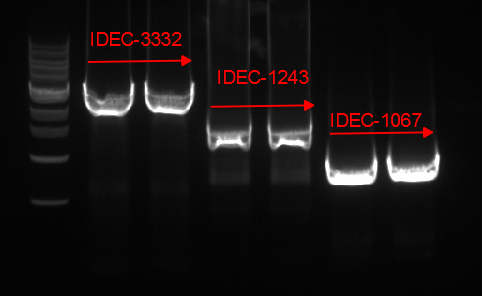
Figure 1. Agarose gel electrophoresis of the three PCR-amplified fragments.
Gel extraction results:
Table 4. DNA concentrations after gel extraction
Sample | Concentration (ng/μL) |
|---|---|
pID01 vector fragment | 113.039 |
Fragment 1 | 51.948 |
Fragment 2 | 168.623 |
Date: August 3–7
Participants: Lifei Shu, Zedong Jin, Yichen Sun, Yiding Yuan, Ruohan Shen, Celine Zhang, Chenfan Wu, Shiya Da, Yuxi Bai, Haotian Lu, Xiaohan Sophie Wang, Zhecheng Yue
DNA assembly and transformation results:
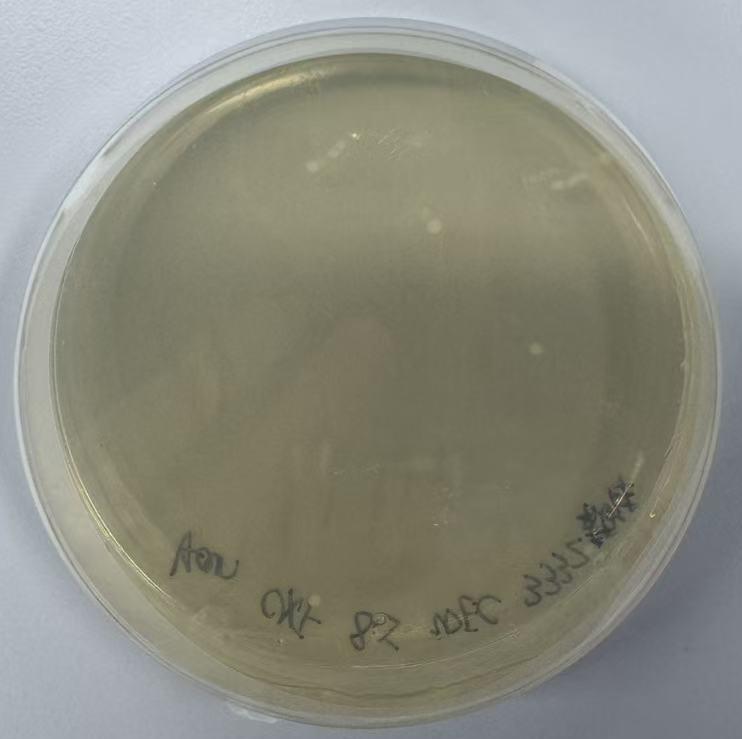
Figure 2. Transformation results after assembly of pID01 with the two fragments.
Ten single colonies were picked and cultured with shaking. All 10 cultures grew. Plasmid isolation results are shown below:
Table 5. DNA concentrations after plasmid isolation
Sample | Concentration (ng/μL) |
|---|---|
pID01-CmR-ISCro4-1 | 174.381 |
pID01-CmR-ISCro4-2 | 118.21 |
pID01-CmR-ISCro4-3 | 78.403 |
pID01-CmR-ISCro4-4 | 97.175 |
pID01-CmR-ISCro4-5 | 100.07 |
pID01-CmR-ISCro4-6 | 118.763 |
pID01-CmR-ISCro4-7 | 93.589 |
pID01-CmR-ISCro4-8 | 101.925 |
pID01-CmR-ISCro4-9 | 184.148 |
pID01-CmR-ISCro4-10 | 114.951 |
Date: August 3–7
Participants: Lifei Shu, Zedong Jin, Yichen Sun, Yiding Yuan, Ruohan Shen, Celine Zhang, Chenfan Wu, Shiya Da, Yuxi Bai, Haotian Lu, Xiaohan Sophie Wang, Zhecheng Yue
The 10 plasmid preparations were amplified by PCR using primers pID03-CmR-F and pID03-Cro4-R. The agarose gel electrophoresis results are shown below:
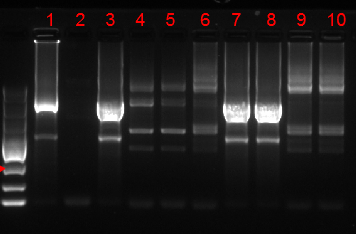
Figure 3. Colony PCR results.
Bacterial culture samples corresponding to lanes 1, 3, 7, and 8 were submitted for whole-plasmid sequencing. (Sequencing confirmed the expected sequence for idec-8.7-7, which was suitable for subsequent use.)
Date: August 10–14
Participants: Shiya Da, Zhiheng Xu, Yuxi Bai, Haotian Lu, Xiaohan Sophie Wang, Zhecheng Yue, Lingwei Li, Zimeng Jessie Yu, Lifei Shu, Fengwu Wang, Muyan Wang, Ruixi Huang, Yiding Yuan
1. PCR amplification of the target fragments:
Table 6. PCR amplification of the pID05/03-ISCro4 fragment
Component | Volume (μL) |
|---|---|
idec-8.7-7 plasmid | 2 |
pID05-F | 2 |
8.3 pID03-ISCro4-R | 2 |
Enzyme reagent | 25 |
ddH2O | 19 |
Table 7. PCR amplification of the pID05/03-BB fragment
Component | Volume (μL) |
|---|---|
idec-8.7-7 plasmid | 2 |
pID05-R | 2 |
8.3 pID03-BB-F | 2 |
Enzyme reagent | 25 |
ddH2O | 19 |
Table 8. PCR amplification of the pID05/03-BB fragment
Component | Volume (μL) |
|---|---|
PUC19 plasmid | 2 |
8.9 pID06-BB-F | 2 |
8.9 pID06-BB-R | 2 |
Enzyme reagent | 25 |
ddH2O | 19 |
Date: August 10–14
Participants: Shiya Da, Zhiheng Xu, Yuxi Bai, Haotian Lu, Xiaohan Sophie Wang, Zhecheng Yue, Lingwei Li, Zimeng Jessie Yu, Lifei Shu, Fengwu Wang, Muyan Wang, Ruixi Huang, Yiding Yuan
Table 9. PCR amplification of the pID06 fragment
Component | Volume (μL) |
|---|---|
PUC19 plasmid | 2 |
8.9 pID06-F | 2 |
8.9 pID06-R | 2 |
Enzyme reagent | 25 |
ddH2O | 19 |
Table 10. PCR amplification of the pID06/07 fragment
Component | Volume (μL) |
|---|---|
PUC19 plasmid | 2 |
8.9 pID06-F | 2 |
pID07-R | 2 |
Enzyme reagent | 25 |
ddH2O | 19 |
Analyze the PCR products by agarose gel electrophoresis.
2. Perform gel extraction.
3. Prepare the DNA assembly reactions as follows:
Table 11. DNA assembly reaction for pID05
Component | Volume (μL) |
|---|---|
pID05/03-ISCro4 | 5 |
pID05/03-BB | 5 |
2×CE Mix | 10 |
Date: August 10–14
Participants: Shiya Da, Zhiheng Xu, Yuxi Bai, Haotian Lu, Xiaohan Sophie Wang, Zhecheng Yue, Lingwei Li, Zimeng Jessie Yu, Lifei Shu, Fengwu Wang, Muyan Wang, Ruixi Huang, Yiding Yuan
Table 12. DNA assembly reaction for pID06
Component | Volume (μL) |
|---|---|
pID06-BB | 5 |
pID06 | 5 |
2×CE Mix | 10 |
Table 13. DNA assembly reaction for pID07
Component | Volume (μL) |
|---|---|
pID06-BB | 5 |
pID06/07 | 5 |
2×CE Mix | 10 |
Incubate at 50 °C for 1 h.
Transform the assembly products into DH5α competent cells.
pID05: kanamycin resistance (Kan)
pID06: ampicillin resistance (Amp)
pID07: ampicillin resistance (Amp)
Incubate the plates inverted at 37 °C overnight and examine the results the next day.
4. Culture six pID05 colonies and three pID06 colonies with shaking.
5. Preserve the bacterial strains and submit the cultures for sequencing: six pID05 samples and three pID06 samples.
6. Submit the pID07 culture plate for sequencing.
Date: August 10–14
Participants: Shiya Da, Zhiheng Xu, Yuxi Bai, Haotian Lu, Xiaohan Sophie Wang, Zhecheng Yue, Lingwei Li, Zimeng Jessie Yu, Lifei Shu, Fengwu Wang, Muyan Wang, Ruixi Huang, Yiding Yuan
Results:
1. Agarose gel electrophoresis of the PCR-amplified target fragments
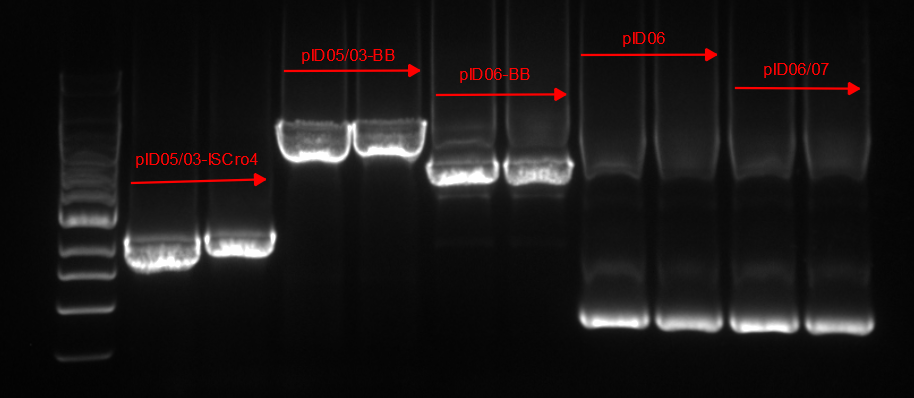
Figure 4. PCR amplification results for the target fragments.
2. DNA concentrations after gel extraction are shown below:
Table 14. DNA concentrations after gel extraction
Sample | Concentration (ng/μL) |
|---|---|
pID05/03-ISCro4 | 58.419 |
pID05/03-BB | 50.326 |
pID06-BB | 34.182 |
pID06 | 37.488 |
pID06/07 | 39.111 |
3. DNA assembly and transformation results:
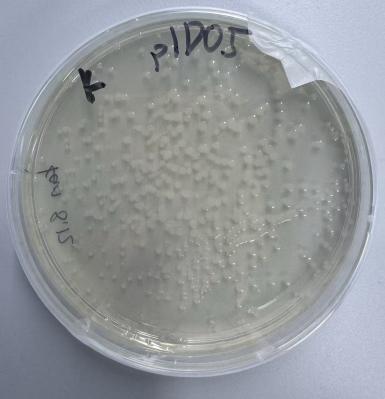
Figure 5. DNA assembly and transformation results for pID05.
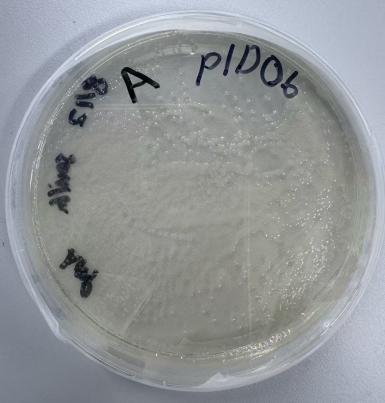
Figure 6. DNA assembly and transformation results for pIDO6.
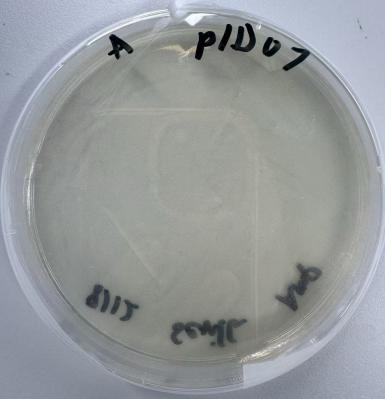
Figure 7. DNA assembly and transformation results for pID07.
Date: August 10–14
Participants: Shiya Da, Zhiheng Xu, Yuxi Bai, Haotian Lu, Xiaohan Sophie Wang, Zhecheng Yue, Lingwei Li, Zimeng Jessie Yu, Lifei Shu, Fengwu Wang, Muyan Wang, Ruixi Huang, Yiding Yuan
4. DNA assembly and transformation results for pID07:
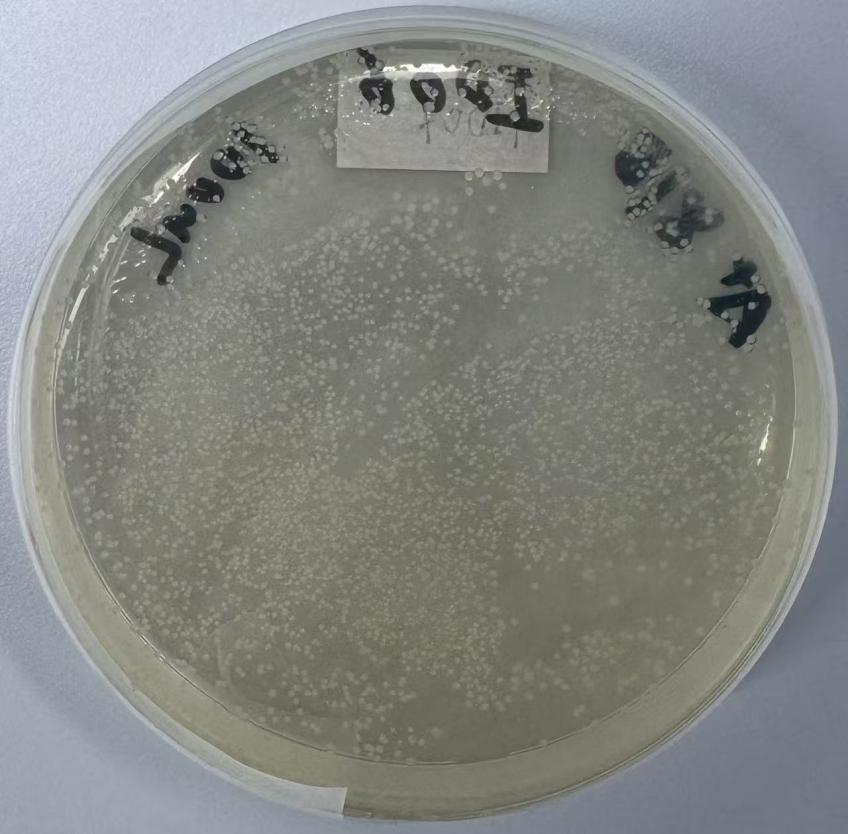
Figure 8. DNA assembly and transformation results for pID07.
Date: August 17–21
Participants: Zimeng Jessie Yu, Zedong Jin, Fengwu Wang, Muyan Wang, Ruixi Huang, Yichen Sun, Yiding Yuan, Kele Zhang, Lifei Shu, Chenfan Wu
1. Sequencing confirmed the expected sequences for pID05-1, pID05-2, pID05-3, pID06-1, pID06-2, and pID06-3. Isolate plasmid DNA from these sequence-verified clones.
2. Co-transformation: Co-transform pID05 and pID06 into DH5α competent cells and select with both ampicillin and kanamycin. Add 50 μL each of Amp and Kan to 100 mL of agar medium. Examine the results the next day.
3. Pick three single colonies from the co-transformation plate and culture with shaking.
4. PCR amplification of the target fragments:
Table 15. PCR reaction composition
Component | Volume (μL) |
|---|---|
pID05 plasmid | 2 |
Forward primer | 2 |
mutate-BB-R | 2 |
Enzyme reagent | 25 |
ddH2O | 19 |
The amplified fragments were designated as follows:
1: R238M-F; 2: A248I-F; 3: S244A-F; 4: R237H-F; 5: S249D-F; 6: A254H-F; 7: R250C-F; 8: A225S-F; 9: Y239T-F; 10: H224A-F.
Table 16. PCR reaction composition
Component | Volume (μL) |
|---|---|
pID05 plasmid | 2 |
mutate-BB-F | 2 |
Reverse primer | 2 |
Enzyme reagent | 25 |
ddH2O | 19 |
Date: August 17–21
Participants: Zimeng Jessie Yu, Zedong Jin, Fengwu Wang, Muyan Wang, Ruixi Huang, Yichen Sun, Yiding Yuan, Kele Zhang, Lifei Shu, Chenfan Wu
The amplified fragments were designated as follows:
11: R238M-R; 12: A248I-R; 13: S244A-R; 14: R237H-R; 15: S249D-R; 16: A254H-R; 17: R250C-R; 18: A225S-R; 19: Y239T-R; 20: H224A-R.
5. DNA assembly and transformation.
6. Perform PCR using bacterial cultures co-transformed with pID05 and pID06, followed by agarose gel electrophoresis, gel extraction, and sequencing.
7. Pick three single colonies from each of the 10 transformation plates, culture with shaking, and submit samples for sequencing. (For each set of samples, sample 1 had the expected sequence and could be retained.)
Results:
1. Plasmid isolation results:
Table 16. DNA concentrations after plasmid isolation
Sample | Concentration (ng/μL) |
|---|---|
pID05-1 | 114.387 |
pID05-2 | 148.055 |
pID05-3 | 144.391 |
pID06-1 | 155.204 |
pID06-2 | 131.09 |
pID06-3 | 116.856 |
2. Co-transformation results for pID05 and pID06:
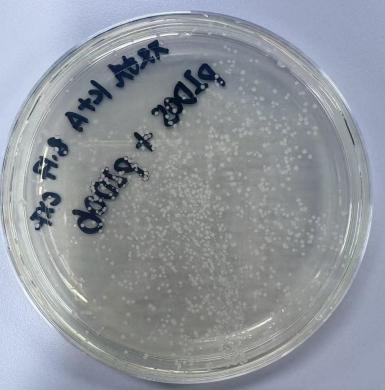
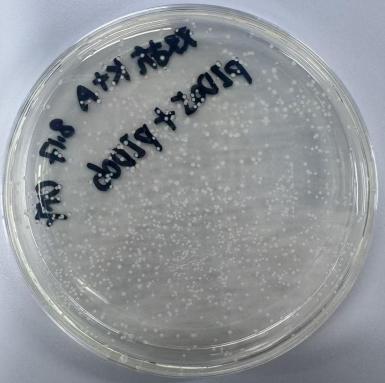
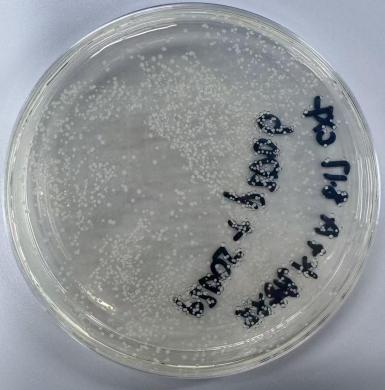
Figure 9. Plate results for co-transformation with pID05 and pID06.
Date: August 17–21
Participants: Zimeng Jessie Yu, Zedong Jin, Fengwu Wang, Muyan Wang, Ruixi Huang, Yichen Sun, Yiding Yuan, Kele Zhang, Lifei Shu, Chenfan Wu
3. Agarose gel electrophoresis results for PCR amplification of the target gene are shown below:
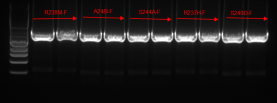
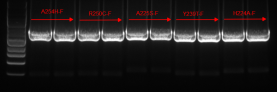
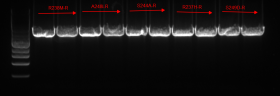
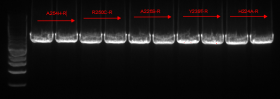
Figure 10. Agarose gel electrophoresis of the PCR-amplified target gene.
4. Gel extraction results:
Table 17. DNA concentrations after gel extraction
Sample | Concentration (ng/μL) |
|---|---|
1: R238M-F | 71.625 |
2: A248I-F | 86.819 |
3: S244A-F | 100.18 |
4: R237H-F | 85.869 |
5: S249D-F | 98.253 |
6: A254H-F | 70.234 |
7: R250C-F | 104.253 |
8: A225S-F | 96.654 |
9: Y239T-F | 104.678 |
10: H224A-F | 113.20 |
11: R238M-R | 55.964 |
12: A248I-R | 84.645 |
13: S244A-R | 65.422 |
14: R237H-R | 91.067 |
15: S249D-R | 85.65 |
16: A254H-R | 74.824 |
17: R250C-R | 86.769 |
18: A225S-R | 63.189 |
19: Y239T-R | 79.985 |
20: H224A-R | 59.412 |
Date: August 17–21
Participants: Zimeng Jessie Yu, Zedong Jin, Fengwu Wang, Muyan Wang, Ruixi Huang, Yichen Sun, Yiding Yuan, Kele Zhang, Lifei Shu, Chenfan Wu
5. DNA assembly and transformation results:
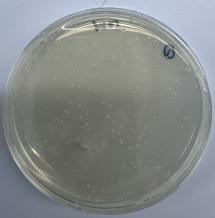
R238M assembly and transformation
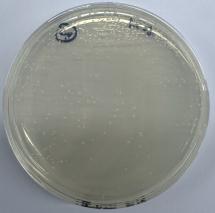
A248I assembly and transformation
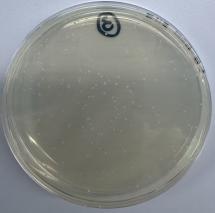
S244A assembly and transformation
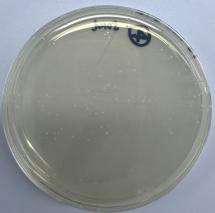
R237H assembly and transformation
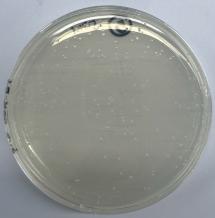
S249D assembly and transformation
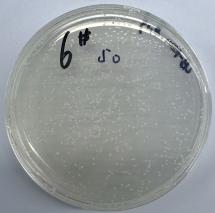
A254H assembly and transformation
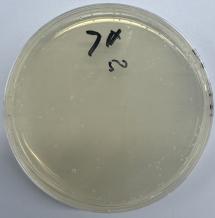
R250C assembly and transformation
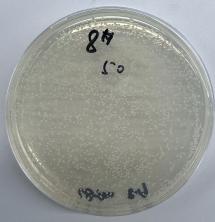
A225S assembly and transformation
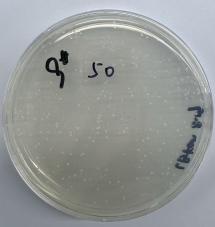
Y239T assembly and transformation
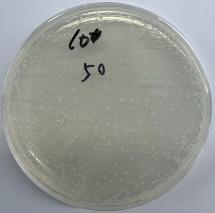
H224A assembly and transformation
Figure 11. DNA assembly and transformation results for the individual fragments.
6. Colony PCR results for pID05 and pID06 co-transformants:
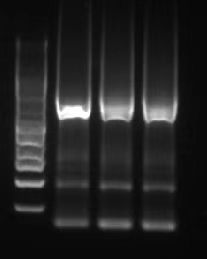
Figure 12. Agarose gel electrophoresis of colony PCR products from pID05 and pID06 co-transformants.
Date: August 17–21
Participants: Zimeng Jessie Yu, Zedong Jin, Fengwu Wang, Muyan Wang, Ruixi Huang, Yichen Sun, Yiding Yuan, Kele Zhang, Lifei Shu, Chenfan Wu
7. Gel extraction results for PCR products from pID05 and pID06 co-transformants:
Table 18. DNA concentrations after gel extraction
Sample | Concentration (ng/μL) |
|---|---|
pID05+pID06-1 | 58.684 |
pID05+pID06-2 | 51.44 |
pID05+pID06-3 | 65.551 |
Date: August 24–28
Participants: Kele Zhang, Zhiheng Xu, Ruohan Shen, Celine Zhang, Chenfan Wu, Yuxi Bai, Haotian Lu, Zimeng Jessie Yu, Lingwei Li, Fengwu Wang, Ruixi Huang.
1. Perform PCR using bacterial cultures co-transformed with pID05 and pID06, followed by agarose gel electrophoresis, gel extraction, and sequencing.
2. Culture bacteria carrying pID06 or pID07 with shaking. Isolate plasmid DNA the next day in preparation for co-transformation.
3. PCR amplification of the target fragments:
Table 19. PCR reaction composition
Component | Volume (μL) |
|---|---|
pID05 plasmid | 2 |
Forward primer | 2 |
7.24 E60Q-R | 2 |
Enzyme reagent | 25 |
ddH2O | 19 |
The amplified fragments were designated as follows:
1: R238M-F; 2: A248I-F; 3: S244A-F; 4: R237H-F; 5: S249D-F; 6: A254H-F; 7: R250C-F; 8: A225S-F; 9: Y239T-F; 10: H224A-F.
Table 20. PCR reaction composition
Component | Volume (μL) |
|---|---|
pID05 plasmid | 2 |
7.24 E60Q-F | 2 |
Reverse primer | 2 |
Enzyme reagent | 25 |
ddH2O | 19 |
Date: August 24–28
Participants: Kele Zhang, Zhiheng Xu, Ruohan Shen, Celine Zhang, Chenfan Wu, Yuxi Bai, Haotian Lu, Zimeng Jessie Yu, Lingwei Li, Fengwu Wang, Ruixi Huang.
The amplified fragments were designated as follows:
11: R238M-R; 12: A248I-R; 13: S244A-R; 14: R237H-R; 15: S249D-R; 16: A254H-R; 17: R250C-R; 18: A225S-R; 19: Y239T-R; 20: H224A-R.
4. DNA assembly and transformation:
Table 21. DNA assembly of fragments R238M-F and R238M-R
Component | Volume (μL) |
|---|---|
R238M-F | 2.5 |
R238M-R | 2.5 |
2×CE Mix | 5 |
Incubate the assembly reaction at 50 °C for 1 h, then transform the products into DH5α competent cells.
Incubate at 37 °C overnight (plate labeled E60A) and examine the results the next day.
5. Pick three single E60Q colonies and culture with shaking.
6. Isolate the E60Q plasmids and submit them for sequencing. All three samples had the expected sequence.
Results:
1. Agarose gel electrophoresis of PCR products from bacterial cultures co-transformed with pID05 and pID06:
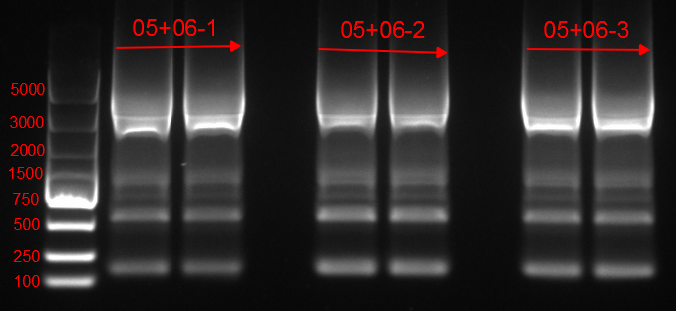
Figure 13. Agarose gel electrophoresis of colony PCR products from pID05 and pID06 co-transformants.
Date: August 24–28
Participants: Kele Zhang, Zhiheng Xu, Ruohan Shen, Celine Zhang, Chenfan Wu, Yuxi Bai, Haotian Lu, Zimeng Jessie Yu, Lingwei Li, Fengwu Wang, Ruixi Huang.
2. Gel extraction results are shown below:
Table 22. DNA concentrations after gel extraction
Sample | Concentration (ng/μL) |
|---|---|
pID05+pID06-1 | 49.102 |
pID05+pID06-2 | 33.888 |
pID05+pID06-3 | 49.657 |
3. Plasmid isolation results:
Table 23. DNA concentrations after plasmid isolation
Sample | Concentration (ng/μL) |
|---|---|
pID06 | 126.371 |
pID07 | 121.349 |
4. Agarose gel electrophoresis of PCR products:
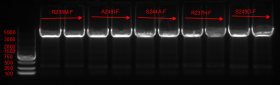
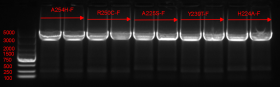
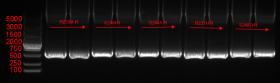
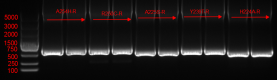
Figure 14. Agarose gel electrophoresis after amplification of the target gene.
Date: August 24–28
Participants: Kele Zhang, Zhiheng Xu, Ruohan Shen, Celine Zhang, Chenfan Wu, Yuxi Bai, Haotian Lu, Zimeng Jessie Yu, Lingwei Li, Fengwu Wang, Ruixi Huang.
5. Gel extraction results are shown below:
Table 24. DNA concentrations after gel extraction
Sample | Concentration (ng/μL) |
|---|---|
1: R238M-F | 64.252 |
2: A248I-F | 64.466 |
3: S244A-F | 42.908 |
4: R237H-F | 42.107 |
5: S249D-F | 63.068 |
6: A254H-F | 71.44 |
7: R250C-F | 69.984 |
8: A225S-F | 64.096 |
9: Y239T-F | 78.708 |
10: H224A-F | 64.527 |
11: R238M-R | 83.861 |
12: A248I-R | 88.048 |
13: S244A-R | 90.036 |
14: R237H-R | 100.929 |
15: S249D-R | 95.911 |
16: A254H-R | 96.178 |
17: R250C-R | 98.09 |
18: A225S-R | 107.245 |
19: Y239T-R | 123.701 |
20: H224A-R | 157.453 |
Date: August 24–28
Participants: Kele Zhang, Zhiheng Xu, Ruohan Shen, Celine Zhang, Chenfan Wu, Yuxi Bai, Haotian Lu, Zimeng Jessie Yu, Lingwei Li, Fengwu Wang, Ruixi Huang.
6. DNA assembly and transformation results for E60Q:
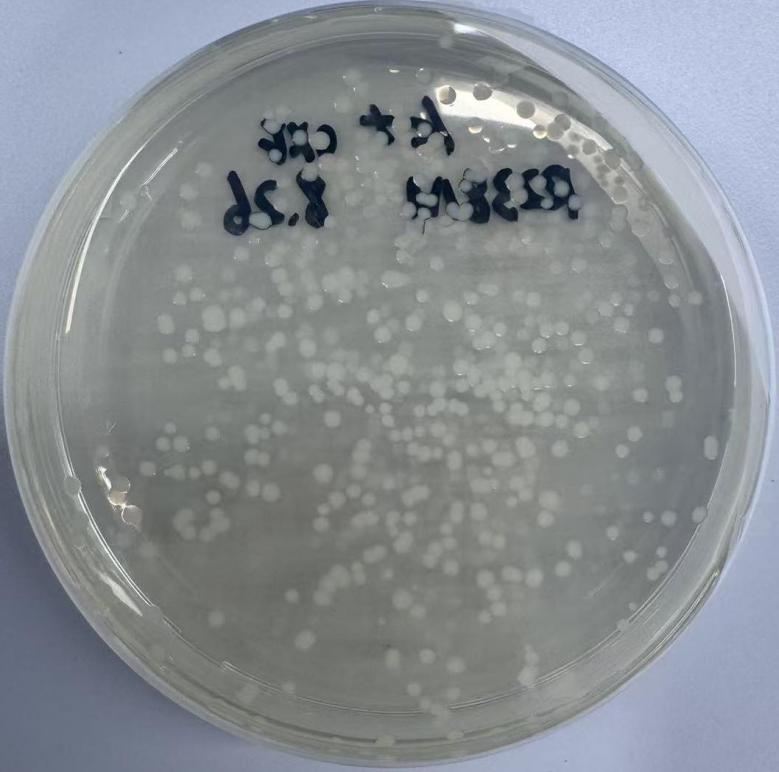
Figure 15. DNA assembly and transformation results for E60A.
7. E60Q plasmid isolation results:
Table 25. DNA concentrations after plasmid isolation
Sample | Concentration (ng/μL) |
|---|---|
E60Q-1 | 154.4 |
E60Q-2 | 169.45 |
E60Q-3 | 165.52 |
Date: August 31–September 4
Participants: Lifei Shu, Zedong Jin, Xiaohan Sophie Wang, Zhecheng Yue, Lingwei Li, Fengwu Wang, Muyan Wang, Zimeng Jessie Yu, Kele Zhang, Shiya Da, Celine Zhang, Chenfan Wu
1. Co-transformation:
Co-transform the E60Q and pID06 plasmids into DH5α competent cells.
Co-transform the pID05 and pID06 plasmids into DH5α competent cells.
2. Isolate plasmid DNA for R238M, A248I, S244A, R237H, S249D, A254H, R250C, A225S, Y239T, and H224A.
3. Pick three single colonies from the E60Q + pID06 co-transformation plate and three single colonies from the pID05 + pID06 co-transformation plate. Culture each colony with shaking.
4. Quantitative PCR (qPCR) workflow:
Table 26. Sample layout
1 | 2 | 3 | 4 | 5 | 6 | |
|---|---|---|---|---|---|---|
A | E60Q+pID06-1-A-1 | E60Q+pID06-1-A-2 | E60Q+pID06-1-B-1 | E60Q+pID06-1-B-2 | pID05+pID06-1-AmpR-1 | pID05+pID06-1-AmpR-2 |
B | E60Q+pID06-2-A-1 | E60Q+pID06-2-A-1 | E60Q+pID06-2-B-1 | E60Q+pID06-2-B-2 | pID05+pID06-2-AmpR-1 | pID05+pID06-2-AmpR-2 |
C | E60Q+pID06-3-A-1 | E60Q+pID06-3-A-1 | E60Q+pID06-3-B-1 | E60Q+pID06-3-B-2 | pID05+pID06-3-AmpR-1 | pID05+pID06-3-AmpR-2 |
D | E60Q+pID06-1-AmpR-1 | E60Q+pID06-1-AmpR-2 | pID05+pID06-1-A-1 | pID05+pID06-1-A-2 | pID05+pID06-1-B-1 | pID05+pID06-1-B-2 |
E | E60Q+pID06-2-AmpR-1 | E60Q+pID06-2-AmpR-2 | pID05+pID06-2-A-1 | pID05+pID06-2-A-2 | pID05+pID06-2-B-1 | pID05+pID06-2-B-2 |
F | E60Q+pID06-3-AmpR-1 | E60Q+pID06-3-AmpR-2 | pID05+pID06-3-A-1 | pID05+pID06-3-A-2 | pID05+pID06-3-B-1 | pID05+pID06-3-B-2 |
Table 27. qPCR reaction composition
Component | Volume (μL) |
|---|---|
Hieff UNICON® Universal Blue qPCR SYBR Green Master Mix | 10 |
Forward Primer (10 μM) | 0.4 |
Reverse Primer (10 μM) | 0.4 |
Template DNA | 1 |
Sterile ultrapure water | 8.2 |
Date: August 31–September 4
Participants: Lifei Shu, Zedong Jin, Xiaohan Sophie Wang, Zhecheng Yue, Lingwei Li, Fengwu Wang, Muyan Wang, Zimeng Jessie Yu, Kele Zhang, Shiya Da, Celine Zhang, Chenfan Wu
Table 28. qPCR cycling conditions
Cycling step | Temperature | Time | Cycles |
|---|---|---|---|
Initial denaturation | 95 °C | 2 min | 1 |
Denaturation | 95 °C | 10 s | 40 |
Annealing/extension | 60 °C | 30 s* | |
Melting curve | Instrument default settings | 1 | |
5. Co-transform each of the R238M, A248I, S244A, R237H, S249D, A254H, R250C, A225S, Y239T, and H224A plasmids with pID06.
Table 29. Co-transformation sample identifiers
No. | Plasmid combination |
|---|---|
1 | R238M+pID06 |
2 | A248I+pID06 |
3 | S244A+pID06 |
4 | R237H+pID06 |
5 | S249D+pID06 |
6 | A254H+pID06 |
7 | R250C+pID06 |
8 | A225S+pID06 |
9 | Y239T+pID06 |
10 | H224A+pID06 |
Date: August 31–September 4
Participants: Lifei Shu, Zedong Jin, Xiaohan Sophie Wang, Zhecheng Yue, Lingwei Li, Fengwu Wang, Muyan Wang, Zimeng Jessie Yu, Kele Zhang, Shiya Da, Celine Zhang, Chenfan Wu
Use 3 μL of each plasmid for each co-transformation.
Experimental results:
1. Co-transformation results are shown below:
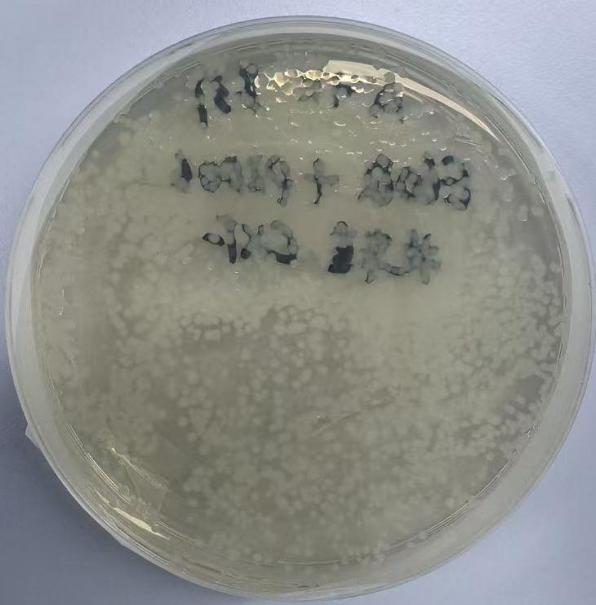
Figure 16. Co-transformation of E60Q and pID06 into DH5α competent cells.
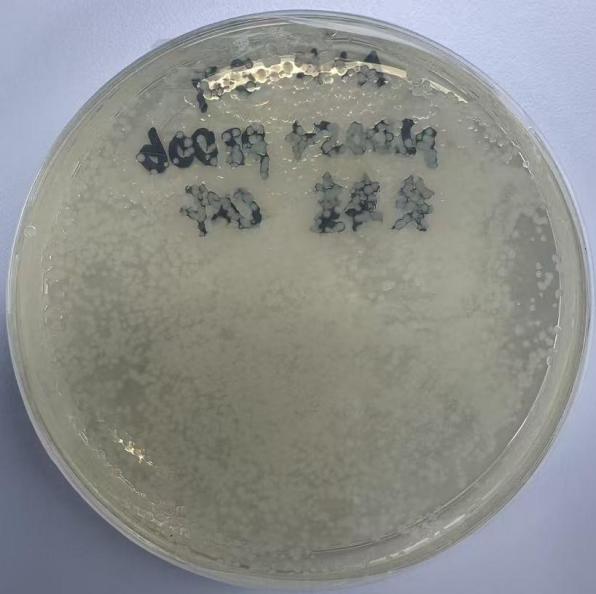
Figure 17. Co-transformation of pID05 and pID06 into DH5α competent cells.
2. Plasmid isolation results are shown below:
Table 29. DNA concentrations after isolation of the 10 plasmids
Sample | Concentration (ng/μL) |
|---|---|
R238M | 122.268 |
A248I | 103.691 |
S244A | 122.411 |
R237H | 131.197 |
S249D | 149.307 |
A254H | 170.422 |
R250C | 149.156 |
A225S | 142.16 |
Y239T | 142.108 |
H224A | 193.163 |
Date: August 31–September 4
Participants: Lifei Shu, Zedong Jin, Xiaohan Sophie Wang, Zhecheng Yue, Lingwei Li, Fengwu Wang, Muyan Wang, Zimeng Jessie Yu, Kele Zhang, Shiya Da, Celine Zhang, Chenfan Wu
3. qPCR results:
[admin_2026-09-03 14-12-24_BR001408 - End Point Results.xlsx]
[admin_2026-09-03 14-12-24_BR001408 - Quantification Cq Results.xlsx]
4. Co-transformation results:
R238M+pID06 co-transformation
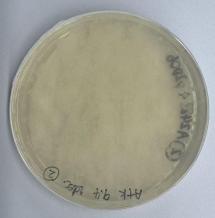
A248I+pID06 co-transformation
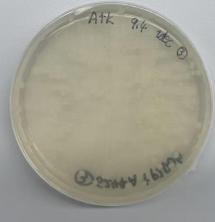
S244A+pID06 co-transformation
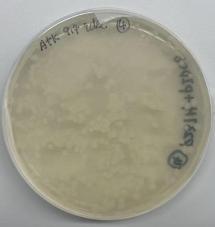
R237H+pID06 co-transformation
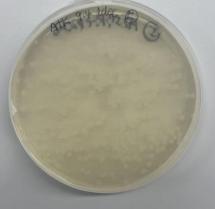
S249D+pID06 co-transformation
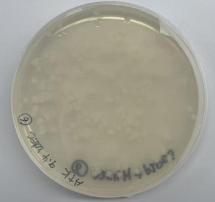
A254H+pID06 co-transformation
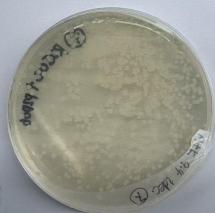
R250C+pID06 co-transformation
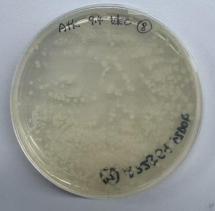
A225S+pID06 co-transformation
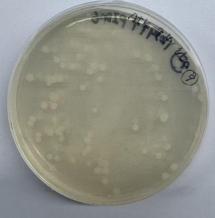
Y239T+pID06 co-transformation
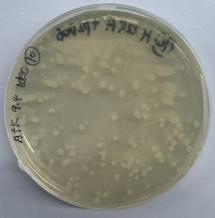
H224A+pID06 co-transformation
Figure 18. Co-transformation results for each of the 10 plasmids with pID06.
Date: September 7–11
Participants: Shiya Da, Zhiheng Xu, Ruixi Huang, Yichen Sun, Yiding Yuan, Ruohan Shen, Celine Zhang, Lifei Shu, Zedong Jin, Yuxi Bai, Xiaohan Sophie Wang, Lingwei Li, Muyan Wang
1. Pick single colonies from each plate: (1) R238M + pID06, (2) A248I + pID06, (3) S244A + pID06, (4) R237H + pID06, (5) S249D + pID06, (6) A254H + pID06, (7) R250C + pID06, (8) A225S + pID06, (9) Y239T + pID06, and (10) H224A + pID06. Culture with shaking. The next day, preserve the bacterial strains and adjust the OD600 values.
2. Take 1 mL from each of the 30 cultures derived from the selected single colonies and concentrate the cells. After concentration, dilute each suspension to an OD600 of approximately 0.035, then perform qPCR.
The qPCR sample loading order is shown in the following tables:
Table 30. qPCR plate layout 1
1 | 2 | 3 | 4 | 5 | 6 | 7 | 8 | 9 | 10 | 11 | 12 | |
|---|---|---|---|---|---|---|---|---|---|---|---|---|
A | R238M+pID06-1-A-1 | R238M+pID06-1-A-2 | R238M+pID06-1-AmpR-1 | R238M+pID06-1-AmpR-2 | R238M+pID06-1-B-1 | R238M+pID06-1-B-2 | A248I+pID06-1-A-1 | A248I+pID06-1-A-2 | A248I+pID06-1-AmpR-1 | A248I+pID06-1-AmpR-2 | A248I+pID06-1-B-1 | A248I+pID06-1-B-2 |
B | R238M+pID06-2-A-1 | R238M+pID06-2-A-2 | R238M+pID06-2-AmpR-1 | R238M+pID06-1-AmpR-2 | R238M+pID06-2-B-1 | R238M+pID06-2-B-2 | A248I+pID06-2-A-1 | A248I+pID06-2-A-2 | A248I+pID06-2-AmpR-1 | A248I+pID06-1-AmpR-2 | A248I+pID06-2-B-1 | A248I+pID06-2-B-2 |
C | R238M+pID06-3-A-1 | R238M+pID06-3-A-2 | R238M+pID06-3-AmpR-1 | R238M+pID06-3-AmpR-2 | R238M+pID06-3-B-1 | R238M+pID06-3-B-2 | A248I+pID06-3-A-1 | A248I+pID06-3-A-2 | A248I+pID06-3-AmpR-1 | A248I+pID06-3-AmpR-2 | A248I+pID06-3-B-1 | A248I+pID06-3-B-2 |
D | S244A+pID06-1-A-1 | S244A+pID06-1-A-2 | S244A+pID06-1-AmpR-1 | S244A+pID06-1-AmpR-2 | S244A+pID06-1-B-1 | S244A+pID06-1-B-2 | R237H+pID06-1-A-1 | R237H+pID06-1-A-2 | R237H+pID06-1-AmpR-1 | R237H+pID06-1-AmpR-2 | R237H+pID06-1-B-1 | R237H+pID06-1-B-2 |
E | S244A+pID06-2-A-1 | S244A+pID06-2-A-2 | S244A+pID06-2-AmpR-1 | S244A+pID06-1-AmpR-2 | S244A+pID06-2-B-1 | S244A+pID06-2-B-2 | R237H+pID06-2-A-1 | R237H+pID06-2-A-2 | R237H+pID06-2-AmpR-1 | R237H+pID06-2-AmpR-2 | R237H+pID06-2-B-1 | R237H+pID06-2-B-2 |
F | S244A+pID06-3-A-1 | S244A+pID06-3-A-2 | S244A+pID06-3-AmpR-1 | S244A+pID06-3-AmpR-2 | S244A+pID06-3-B-1 | S244A+pID06-3-B-2 | R237H+pID06-3-A-1 | R237H+pID06-3-A-2 | R237H+pID06-3-AmpR-1 | R237H+pID06-3-AmpR-2 | R237H+pID06-3-B-1 | R237H+pID06-3-B-2 |
G | S249D+pID06-1-A-1 | S249D+pID06-2-A-1 | S249D+pID06-3-A-1 | S249D+pID06-1-AmpR-1 | S249D+pID06-2-AmpR-1 | S249D+pID06-3-AmpR-1 | S249D+pID06-1-B-1 | S249D+pID06-2-B-1 | S249D+pID06-3-B-1 | N/A-1 ddH2O 20 μL | ||
H | S249D+pID06-1-A-2 | S249D+pID06-2-A-2 | S249D+pID06-3-A-2 | S249D+pID06-1-AmpR-2 | S249D+pID06-2-AmpR-2 | S249D+pID06-3-AmpR-2 | S249D+pID06-1-B-2 | S249D+pID06-2-B-1 | S249D+pID06-3-B-2 | N/A-2 ddH2O 20 μL |
Table 31. qPCR plate layout 2
1 | 2 | 3 | 4 | 5 | 6 | 7 | 8 | 9 | 10 | 11 | 12 | |
|---|---|---|---|---|---|---|---|---|---|---|---|---|
A | A254H+pID06-1-A-1 | A254H+pID06-1-A-2 | A254H+pID06-1-AmpR-1 | A254H+pID06-1-AmpR-2 | A254H+pID06-1-B-1 | A254H+pID06-1-B-2 | R250C+pID06-1-A-1 | R250C+pID06-1-A-2 | R250C+pID06-1-AmpR-1 | R250C+pID06-1-AmpR-2 | R250C+pID06-1-B-1 | R250C+pID06-1-B-2 |
B | A254H+pID06-2-A-1 | A254H+pID06-2-A-2 | A254H+pID06-2-AmpR-1 | A254H+pID06-1-AmpR-2 | A254H+pID06-2-B-1 | A254H+pID06-2-B-2 | R250C+pID06-2-A-1 | R250C+pID06-2-A-2 | R250C+pID06-2-AmpR-1 | R250C+pID06-1-AmpR-2 | R250C+pID06-2-B-1 | R250C+pID06-2-B-2 |
C | A254H+pID06-3-A-1 | A254H+pID06-3-A-2 | A254H+pID06-3-AmpR-1 | A254H+pID06-3-AmpR-2 | A254H+pID06-3-B-1 | A254H+pID06-3-B-2 | R250C+pID06-3-A-1 | R250C+pID06-3-A-2 | R250C+pID06-3-AmpR-1 | R250C+pID06-3-AmpR-2 | R250C+pID06-3-B-1 | R250C+pID06-3-B-2 |
D | A225S+pID06-1-A-1 | A225S+pID06-1-A-2 | A225S+pID06-1-AmpR-1 | A225S+pID06-1-AmpR-2 | A225S+pID06-1-B-1 | A225S+pID06-1-B-2 | Y239T+pID06+pID06-1-A-1 | Y239T+pID06+pID06-1-A-2 | Y239T+pID06+pID06-1-AmpR-1 | Y239T+pID06+pID06-1-AmpR-2 | Y239T+pID06+pID06-1-B-1 | Y239T+pID06+pID06-1-B-2 |
E | A225S+pID06-2-A-1 | A225S+pID06-2-A-2 | A225S+pID06-2-AmpR-1 | A225S+pID06-1-AmpR-2 | A225S+pID06-2-B-1 | A225S+pID06-2-B-2 | Y239T+pID06+pID06-2-A-1 | Y239T+pID06+pID06-2-A-2 | Y239T+pID06+pID06-2-AmpR-1 | Y239T+pID06+pID06-2-AmpR-2 | Y239T+pID06+pID06-2-B-1 | Y239T+pID06+pID06-2-B-2 |
F | A225S+pID06-3-A-1 | A225S+pID06-3-A-2 | A225S+pID06-3-AmpR-1 | A225S+pID06-3-AmpR-2 | A225S+pID06-3-B-1 | A225S+pID06-3-B-2 | R237H+pID06-3-A-1 | Y239T+pID06+pID06-3-A-2 | Y239T+pID06+pID06-3-AmpR-1 | Y239T+pID06+pID06-3-AmpR-2 | Y239T+pID06+pID06-3-B-1 | Y239T+pID06+pID06-3-B-2 |
G | H224A+pID06+pID06-1-A-1 | H224A+pID06+pID06-2-A-1 | H224A+pID06+pID06-3-A-1 | H224A+pID06+pID06-1-AmpR-1 | H224A+pID06+pID06-2-AmpR-1 | H224A+pID06+pID06-3-AmpR-1 | H224A+pID06+pID06-1-B-1 | H224A+pID06+pID06-2-B-1 | H224A+pID06+pID06-3-B-1 | N/A-1 ddH2O 20 μL | ||
H | H224A+pID06+pID06-1-A-2 | H224A+pID06+pID06-2-A-2 | H224A+pID06+pID06-3-A-2 | H224A+pID06+pID06-1-AmpR-2 | H224A+pID06+pID06-2-AmpR-2 | H224A+pID06+pID06-3-AmpR-2 | H224A+pID06+pID06-1-B-2 | H224A+pID06+pID06-2-B-1 | H224A+pID06+pID06-3-B-2 | N/A-2 ddH2O 20 μL |
Date: September 7–11
Participants: Shiya Da, Zhiheng Xu, Ruixi Huang, Yichen Sun, Yiding Yuan, Ruohan Shen, Celine Zhang, Lifei Shu, Zedong Jin, Yuxi Bai, Xiaohan Sophie Wang, Lingwei Li, Muyan Wang
Table 32. qPCR plate layout 3
1 | 2 | 3 | 4 | 5 | 6 | |
|---|---|---|---|---|---|---|
A | E60Q+pID06-1-A-1 | E60Q+pID06-1-A-2 | E60Q+pID06-1-AmpR-1 | E60Q+pID06-1-AmpR-2 | E60Q+pID06-1-B-1 | E60Q+pID06-1-B-2 |
B | E60Q+pID06-2-A-1 | E60Q+pID06-2-A-1 | E60Q+pID06-2-AmpR-1 | E60Q+pID06-2-AmpR-2 | E60Q+pID06-2-B-1 | E60Q+pID06-2-B-2 |
C | E60Q+pID06-3-A-1 | E60Q+pID06-3-A-1 | E60Q+pID06-3-AmpR-1 | E60Q+pID06-3-AmpR-2 | E60Q+pID06-3-B-1 | E60Q+pID06-3-B-2 |
D | pID05+pID06-1-A-1 | pID05+pID06-1-A-2 | pID05+pID06-1-AmpR-1 | pID05+pID06-1-AmpR-2 | pID05+pID06-1-B-1 | pID05+pID06-1-B-2 |
E | pID05+pID06-2-A-1 | pID05+pID06-2-A-2 | pID05+pID06-2-AmpR-1 | pID05+pID06-2-AmpR-2 | pID05+pID06-2-B-1 | pID05+pID06-2-B-2 |
F | pID05+pID06-3-A-1 | pID05+pID06-3-A-2 | pID05+pID06-3-AmpR-1 | pID05+pID06-3-AmpR-2 | pID05+pID06-3-B-1 | pID05+pID06-3-B-2 |
3. Co-transform A225S, E60Q, and pID05 separately with pID06.
4. Co-transform A225S, E60Q, and pID05 separately with pID07.
Experimental results:
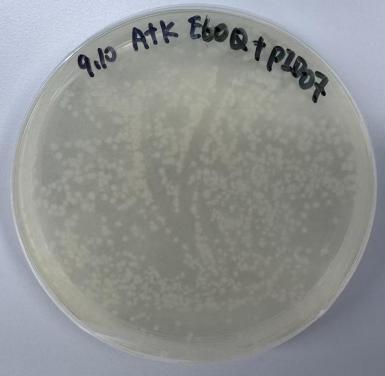
E60Q + pID07 co-transformation
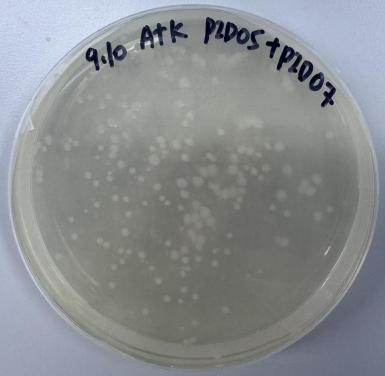
pID05 + pID07 co-transformation
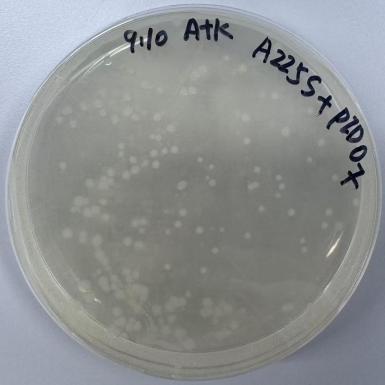
A225S + pID07 co-transformation
Date: September 7–11
Participants: Shiya Da, Zhiheng Xu, Ruixi Huang, Yichen Sun, Yiding Yuan, Ruohan Shen, Celine Zhang, Lifei Shu, Zedong Jin, Yuxi Bai, Xiaohan Sophie Wang, Lingwei Li, Muyan Wang
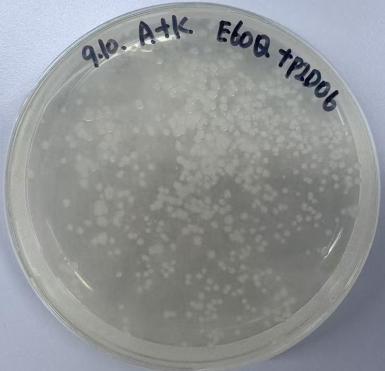
E60Q + pID06 co-transformation
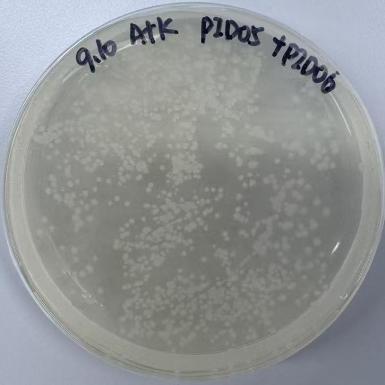
pID05 + pID06 co-transformation
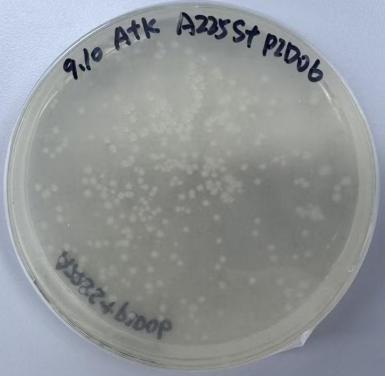
A225S + pID06 co-transformation
Figure 19. Co-transformation results for E60Q, pID05, and A225S with pID07 or pID06.